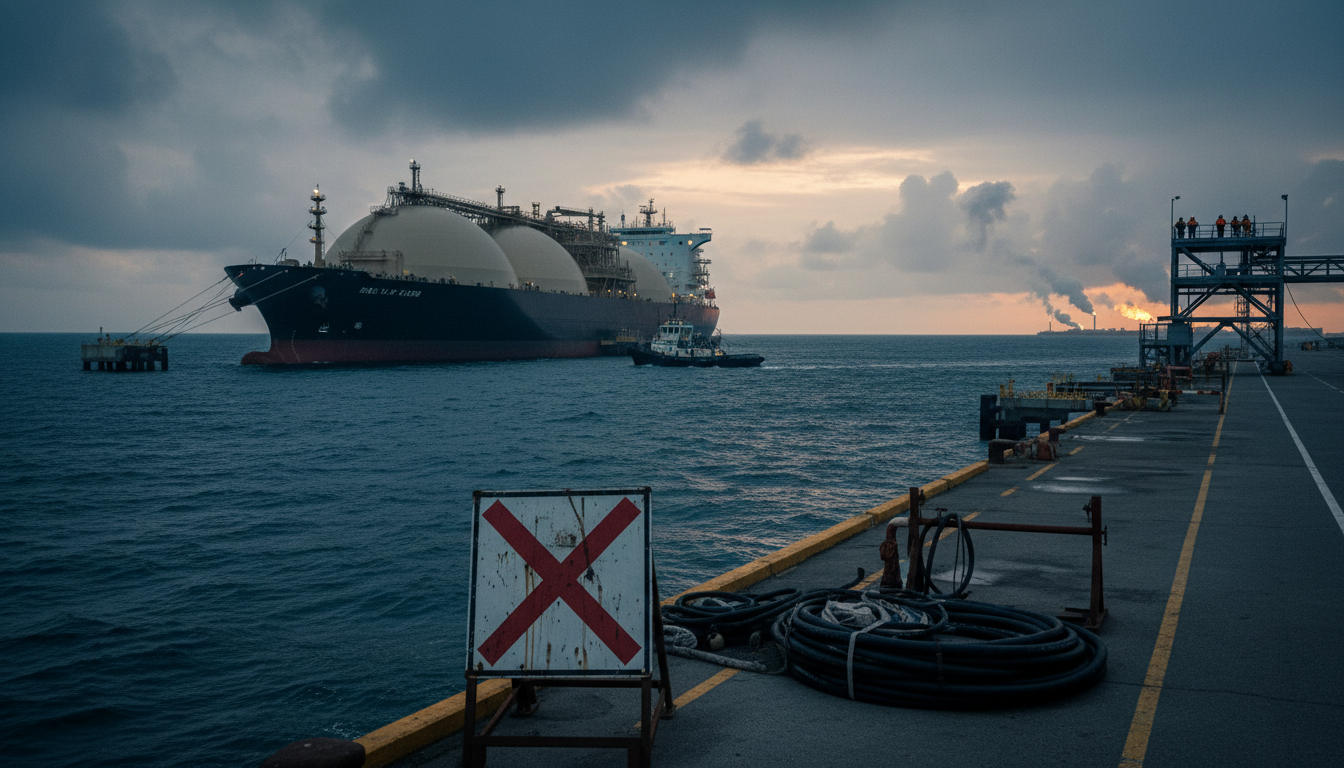
In a move underscoring the severe strain on its energy budget, Pakistan has reportedly rejected all offers received under an urgent tender for two liquefied natural gas (LNG) cargoes, citing unacceptably high prices. This decision, emerging from a tender launched earlier this month for late October delivery, signals a deepening energy crisis for the South Asian nation and sends ripples through the global LNG market, particularly for investors closely tracking Asian natural gas dynamics.
The urgency behind Pakistan’s procurement drive was palpable, prompted by a critical gas and power shortfall compounded by significant disruptions to established LNG supply chains from the Middle East. Seeking to bridge immediate supply gaps, the country solicited bids for two crucial LNG shipments. Industry giants and major trading houses responded, including BP, Vitol, TotalEnergies, Azerbaijan’s SOCAR Trading, Emirati-based OQ Trading, and PetroChina, among others. In total, seven bids were submitted, indicating strong market interest despite the challenging circumstances.
However, the financial parameters proved to be the stumbling block. The received offers reportedly ranged from a low of $16.98 per million British thermal units (mmBtu) to a high of $18.58 per mmBtu. TotalEnergies submitted the most competitive bid at the lower end of this spectrum, while OQ Trading presented the highest. For a nation grappling with persistent economic challenges, even the lowest offer was evidently deemed too costly, leading to the outright rejection of all proposals.
Geopolitical Tensions Reshaping Pakistan’s Energy Landscape
This dramatic tender outcome is a direct consequence of a seismic shift in Pakistan’s energy security framework, driven largely by escalating geopolitical tensions in the Middle East. Historically, Pakistan has relied heavily on long-term, relatively affordable LNG supply contracts with Qatar. This stable arrangement provided the backbone for its energy needs, allowing the cash-strapped state to manage its import bill effectively.
However, the recent conflict in the broader Middle East region has severely impacted Qatari LNG production and export capabilities. This disruption has effectively choked off Pakistan’s most reliable and economical supply channel, forcing the nation to pivot towards the far more volatile and expensive spot market. The situation highlights the intricate link between geopolitical stability and energy commodity prices, a factor that seasoned oil and gas investors constantly monitor.
Furthermore, the conflict has had broader ramifications for regional LNG flows. Reports suggest that significant volumes of Middle Eastern LNG from both Qatar and the UAE have been effectively constrained behind the Strait of Hormuz. This bottleneck has exacerbated an already tight Asian spot LNG market, sending prices surging. For Pakistan, which had largely abstained from the spot market for nearly three years, this re-entry comes at a particularly inopportune moment, coinciding with peak pricing and intense competition for available cargoes.
The Price Dilemma: Spot Market Volatility vs. National Imperative
The rejection of the recent bids, despite the pressing need, underscores a critical dilemma for Pakistan: balancing the urgent requirement for natural gas to avert widespread power outages against the prohibitive costs of prevailing spot prices. This decision also raises pertinent questions regarding the viability of future spot purchases for the import-dependent country, which faces an ongoing challenge in securing adequate and affordable energy supplies.
A benchmark for Pakistan’s recent procurement strategy can be found earlier this month, when the nation successfully acquired a 140,000 cubic meter LNG cargo from TotalEnergies. This specific shipment, priced at $18.40 per mmBtu, originated from Cheniere Energy’s Sabine Pass LNG facility in the United States. The fact that the highest bid in the recent rejected tender ($18.58/mmBtu) was only marginally above this previously accepted price point, while even the lowest rejected bid ($16.98/mmBtu) was significantly below it, illustrates Pakistan’s acute price sensitivity and potentially its expectations for a market correction.
The disconnect between Pakistan’s perceived acceptable price and the current market reality presents a challenging outlook. The global LNG market remains tight, driven by persistent demand in Asia and Europe, coupled with ongoing supply chain vulnerabilities. Major LNG producers and traders like BP, Vitol, and Cheniere Energy continue to find strong demand for their cargoes, suggesting limited downward pressure on prices in the near term.
Investment Implications and Market Outlook
For investors in the oil and gas sector, Pakistan’s predicament serves as a stark reminder of several key market dynamics. First, the geopolitical risk premium on energy commodities, particularly LNG, remains elevated. Companies with diversified supply portfolios and those operating in regions less susceptible to immediate geopolitical disruption, such as North American LNG exporters like Cheniere Energy, may see continued demand for their production.
Second, the incident highlights the ongoing challenges faced by emerging markets in securing affordable energy amidst global supply constraints. This could lead to a two-tiered market, where wealthier nations can absorb higher spot prices, leaving cash-strapped economies increasingly vulnerable to supply disruptions and economic instability. This divergence could influence future investment decisions in LNG infrastructure and long-term contracting strategies.
Finally, the rejection underscores the enduring role of spot market volatility in shaping national energy policies. While long-term contracts offer price stability, the current geopolitical climate is forcing more nations into the spot market, creating significant price swings and operational headaches. Companies with robust trading arms, capable of navigating and profiting from such volatility, like Vitol and SOCAR Trading, are well-positioned in this environment.
As Pakistan grapples with its immediate energy crisis, the outcome of this tender casts a long shadow over its ability to secure vital LNG supplies. The interplay of geopolitical events, surging global natural gas prices, and critical domestic energy needs will continue to define the market for import-dependent nations, making sustained energy security a pressing concern for both governments and investors alike.


