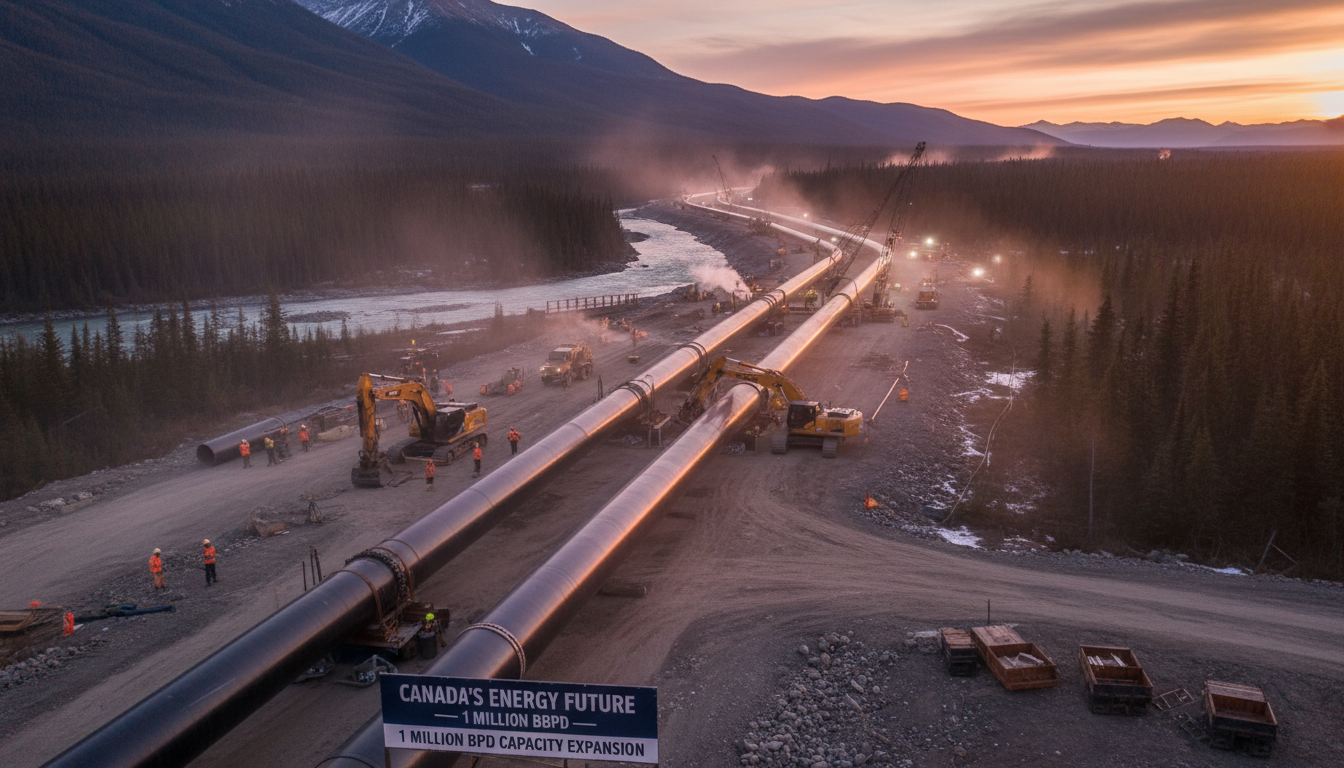
Canada Unlocks Export Potential: A New Era for Oil & Gas Investment
After a decade of regulatory hurdles and political gridlock, Canada’s vast oil reserves are poised for unprecedented access to global markets. This week marks a significant pivot, with Prime Minister Mark Carney confirming a direct push from Ottawa to advance plans for a major new oil pipeline. This transformative project aims to transport at least 1 million barrels per day (bpd) of Alberta’s crude, addressing long-standing export constraints and signaling a renewed commitment to energy infrastructure development across the nation.
Federal-Provincial Détente Fuels Investor Confidence
The strategic shift extends beyond infrastructure. Prime Minister Carney’s announcement includes a crucial meeting between federal and Alberta officials to finalize this pipeline initiative, coupled with the unveiling of a new industrial carbon pricing agreement. This move represents a calculated effort to de-escalate the long-standing tensions between Ottawa and Canada’s energy heartland. For investors, this federal-provincial rapprochement significantly de-risks future energy projects, fostering a more stable and predictable environment for capital deployment in Canadian oil and gas. A unified approach from Canada’s leadership could unlock substantial value for stakeholders.
Global Volatility Elevates Canadian Crude Appeal
The timing of this Canadian policy shift is no coincidence. Global oil markets remain profoundly rattled by geopolitical instabilities, particularly the Iran war and the persistent threat to Persian Gulf exports via the Strait of Hormuz. In this volatile environment, Canadian crude, derived from a stable, democratic nation, suddenly appears significantly more attractive to international buyers seeking reliable and secure energy supplies. This premium on energy security provides a robust demand-side imperative for expanding Canadian export capacity, positioning the nation as a crucial anchor in the global energy supply chain. Investors should recognize Canada’s strengthened strategic position amidst these global uncertainties.
Dual-Track Pipeline Expansion Signals Market Strength
The federal government’s initiative arrives alongside other significant private sector-led developments. Earlier this month, oil producers demonstrated strong commercial support by committing at least 400,000 bpd to another proposed export pipeline system. This separate venture, backed by South Bow Corp. and Bridger Pipeline, aims to connect Canadian crude to the United States through Montana and Wyoming. Initially, this project would move 550,000 bpd, with ambitious plans to scale its capacity to over 1.1 million bpd. The concurrent advancement of these two major projects underscores a powerful market signal that Ottawa can no longer afford to ignore, indicating a collective industry-wide push for enhanced crude oil takeaway capacity.
Unleashing Production Growth and Maximizing Value
Canada, which currently produces approximately 5.5 million bpd, anticipates reaching 6.1 million bpd by 2030. Historically, inadequate pipeline infrastructure has consistently hampered the Canadian oil sector, trapping barrels inland and leading to significant price discounts for Canadian crude whenever takeaway capacity tightened. While the Trans Mountain expansion (TMX) offered some relief, it proved insufficient to fully resolve the issue. Now, with Enbridge actively expanding its networks and discussions of further TMX expansion ongoing, Ottawa’s commitment to new, large-scale export infrastructure directly addresses these long-standing bottlenecks. This proactive stance promises to maximize the value of Canadian crude and ensure that future production growth translates directly into enhanced returns for investors.
A Strategic Shift Towards Energy Superpower Ambitions
The political landscape within Canada’s energy sector is undergoing a fundamental transformation. Prime Minister Carney’s strategic move to forge an industrial carbon pricing agreement with Alberta indicates a crucial understanding at the federal level: Canada cannot aspire to become a global energy superpower while simultaneously impeding the construction of essential energy infrastructure. This policy evolution represents a powerful signal to the global investment community that Canada is serious about leveraging its vast natural resources. By aligning environmental policy with economic imperatives, Ottawa is clearing a path for sustained investment and growth in the Canadian oil and gas sector, positioning the nation to play a more prominent and reliable role in meeting global energy demand for decades to come. This commitment opens a compelling window of opportunity for long-term investors in Canadian energy assets.


