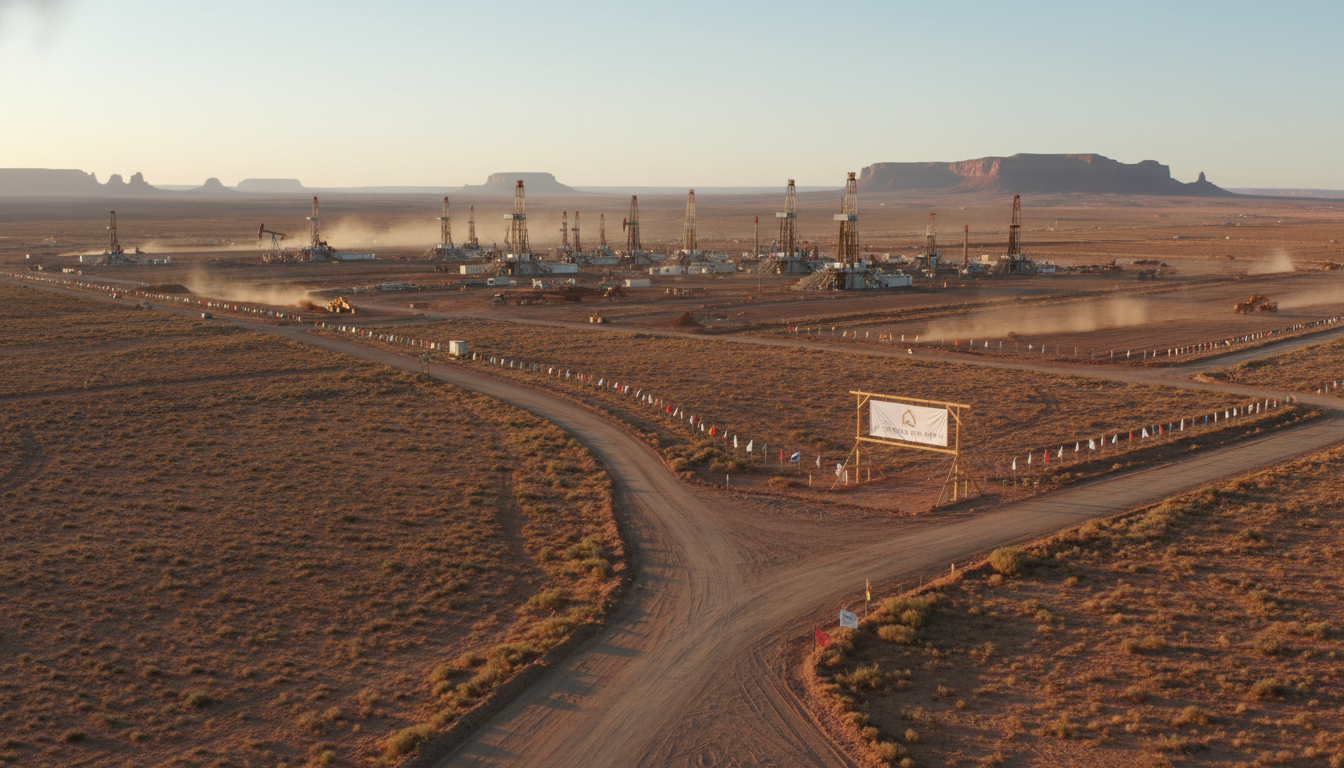
Federal Lands Open for Business: BLM Unveils New Montana, North Dakota Lease Sale Amid Policy Shift
The Bureau of Land Management (BLM) is advancing another significant round of federal oil and gas lease sales, offering 66 parcels across Montana and North Dakota. This move, set for a July auction, signals a continued and increasingly robust shift in Washington’s energy policy towards facilitating domestic hydrocarbon exploration and production.
Scheduled for July 14, this upcoming lease sale encompasses 29,087 acres spread across these two key energy-producing states. While the acreage may appear modest compared to some mega-sales, its strategic importance for the upstream sector and investor sentiment cannot be understated. Prospective bidders, primarily independent exploration and production (E&P) firms, must navigate the well-established federal energy process, which includes extensive paperwork, rigorous environmental reviews, and public comment periods, often culminating in legal challenges before a single drilling rig can be deployed.
The initial scoping phase for these parcels concluded earlier this year, with public comments closing on May 8. A subsequent protest period is slated to open on June 1 and will run through July 1, preceding the official bidding commencement. This multi-stage process, while standard, underscores the time and capital commitment required for operators pursuing federal acreage.
Beyond the Acreage: Signalling a Predictable Path for E&P Investors
Indeed, a package of 29,000 acres in Montana and North Dakota might not grab headlines like the recent historic lease sales in Alaska. Earlier this year, the National Petroleum Reserve-Alaska (NPR-A) witnessed its first lease sale in seven years, generating a staggering record $163.7 million in bids. Industry titans such as Exxon, ConocoPhillips, and Shell demonstrated their bullish commitment to Arctic frontier development, securing vast swaths of high-potential acreage. In comparison, the current Montana and North Dakota offering is a smaller-scale proposition.
However, the underlying direction of federal policy is paramount for investors. The current administration has clearly prioritized federal leasing as a cornerstone of its energy agenda. This marks a distinct departure from the often unpredictable and sporadic leasing schedules that characterized prior years. For the oil and gas industry, this consistent approach sends a powerful message: federal acreage will be made available with greater regularity, reducing uncertainty and allowing E&P companies to engage in more predictable long-term planning for their capital expenditures and resource development strategies.
This commitment to a more consistent leasing program has already translated into tangible financial results. Federal lease sales recorded nearly $593 million in revenue during the first quarter of 2026. This performance marks the strongest calendar-year start in the history of the Bureau of Land Management, highlighting robust industry demand for federal drilling opportunities and a significant boon for government coffers.
From Lease to Production: Understanding the Upstream Investment Journey
While securing a federal lease is a critical initial step, investors must recognize that it merely opens the door to potential development; it does not guarantee immediate production. The journey from lease acquisition to flowing oil involves several additional, complex hurdles that operators must successfully clear. Following the lease sale, companies must then formulate detailed drilling plans, which undergo further rigorous environmental scrutiny. Subsequently, they need to navigate a labyrinth of permitting processes at both federal and state levels before a single barrel of oil can be extracted from the ground.
This multi-stage regulatory framework means that an investment in federal leasehold can entail significant lead times and require patient capital. E&P firms must allocate substantial resources not only for the lease bids themselves but also for geological and geophysical studies, environmental impact assessments, legal counsel, and the permitting phase. This operational reality is a crucial consideration for investors evaluating the risk-reward profile of companies heavily reliant on federal land for their growth.
Investor Outlook: Capitalizing on Federal Policy Momentum
For investors focused on the upstream sector, the continued momentum in federal oil and gas leasing presents both opportunities and challenges. The increased predictability in lease offerings de-risks, to some extent, the strategic planning for E&P companies, potentially fostering greater investment in domestic resource development. This proactive stance from Washington helps bolster America’s energy security and provides a stable framework for industry growth. Companies with strong balance sheets and proven capabilities in navigating federal regulatory environments are particularly well-positioned to capitalize on these opportunities.
However, the persistent threat of environmental litigation and the inherent complexities of federal permitting remain factors to monitor. Successful execution hinges not just on winning acreage but on efficiently and responsibly moving through the development pipeline. As the BLM continues to offer federal lands, investors should track not only the bid values but also the subsequent permitting success rates and the timelines to first production, which are the true indicators of value creation in this highly regulated segment of the oil and gas industry.


