Eni Forges Strategic Path: Unlocking Billions from Floating LNG Amid Global Energy Realignments
In a bold move signaling a significant shift in capital allocation strategies among European energy giants, Italian major Eni is actively pursuing a substantial financial injection into its burgeoning floating liquefied natural gas (FLNG) portfolio. This strategic initiative aims to monetize valuable infrastructure assets without relinquishing operational control, reflecting a savvy approach to navigating complex market dynamics and investor demands.
Sources indicate that Eni has enlisted the expertise of financial powerhouse Morgan Stanley to spearhead discussions with prominent infrastructure investment firms. Early-stage engagements are reportedly underway with global titans such as Apollo, KKR, and Stonepeak, as Eni explores a novel deal structure. This arrangement would allow external investors to contribute capital to a dedicated vehicle, with returns directly linked to the predictable cash flows generated by Eni’s floating LNG operations. Industry observers suggest this transaction could unlock at least €1 billion for the company, providing crucial capital for future endeavors.
The Rising Imperative for Flexible LNG Solutions
The global LNG market finds itself under immense pressure, caught in the crosscurrents of escalating geopolitical tensions. The ongoing conflict in Iran and the inherent instability surrounding the vital Strait of Hormuz have intensified the global scramble for natural gas cargoes. Both European and Asian economies are locked in an increasingly aggressive competition, highlighting the urgent need for diversified and resilient supply chains.
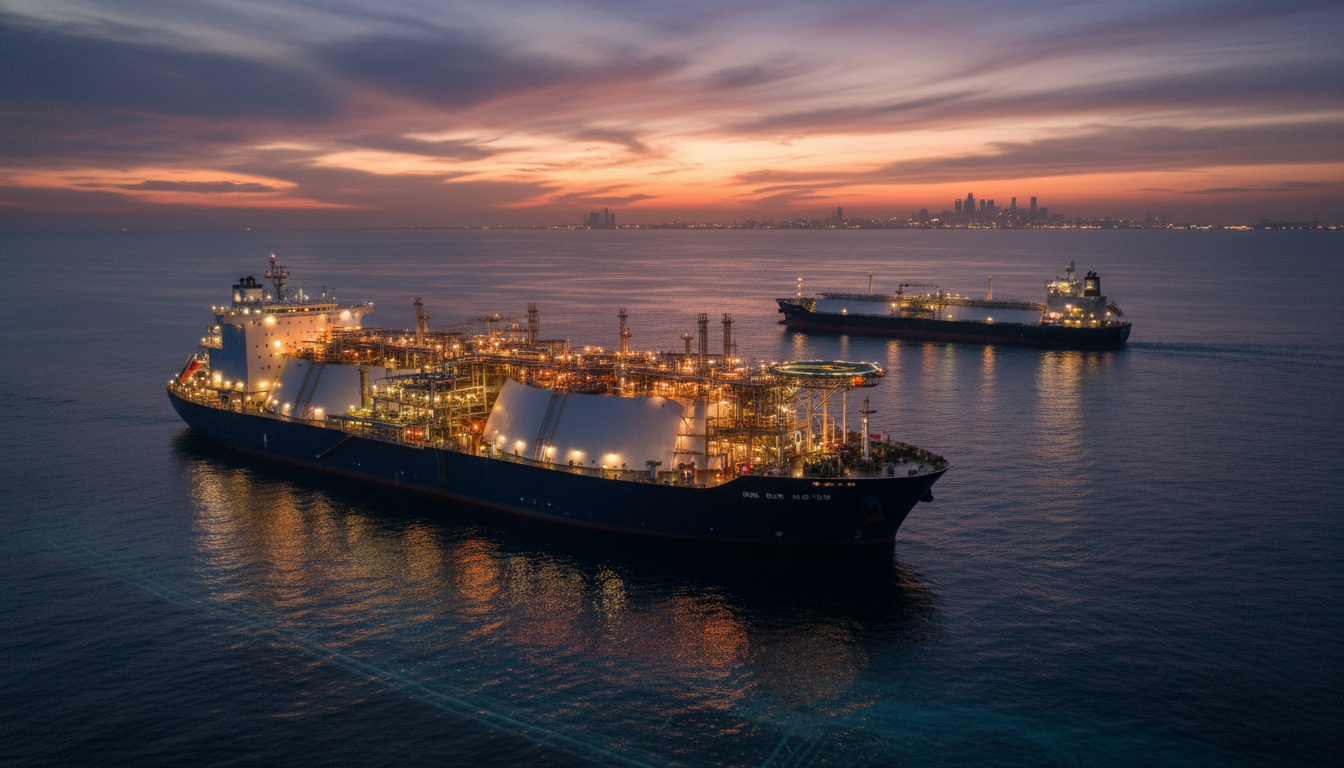
Within this volatile landscape, floating LNG assets have rapidly emerged as highly attractive investments. Their inherent mobility and rapid deployment capabilities offer a distinct advantage: they can monetize offshore gas reserves far quicker than traditional, land-based export terminals. Crucially, FLNG units often circumvent the very geopolitical chokepoints that threaten established shipping routes, presenting a more secure and agile pathway to global gas markets. This operational flexibility and reduced exposure to regional instability are proving to be premium attributes in the current energy climate.
Eni’s Strategic Dominance in the FLNG Sector
Eni already boasts one of the most developed and strategically positioned floating LNG portfolios among its European peers, underscoring its foresight in this critical technology. The company currently operates FLNG units off the coasts of Mozambique and Congo, significant assets that are already contributing to global energy supply. Furthermore, Eni has ambitious plans for additional deployments, with new FLNG projects earmarked for Mozambique and Argentina in the coming years. This robust pipeline cements Eni’s leadership in leveraging this innovative technology to tap into offshore gas resources efficiently and flexibly.
Infrastructure Capital Eyes Predictable, Toll-Road-Style Returns
The financial community’s perception of FLNG assets is undergoing a profound transformation. Increasingly, these sophisticated offshore facilities are viewed less as traditional upstream infrastructure and more as “toll-road-style” energy generators. This reclassification makes them exceptionally appealing to infrastructure funds, which typically seek investments characterized by long-life assets, contractually guaranteed revenues, and stable cash flows. FLNG offers precisely this profile: it provides access to robust global gas markets without exposing investors to direct commodity price volatility, a crucial differentiator in today’s unpredictable energy landscape.
Balancing Act: European Majors Navigate Growth, Transition, and Shareholder Demands
This strategic maneuver by Eni is not an isolated incident but rather indicative of a broader pattern unfolding across European energy majors. These companies face the complex challenge of simultaneously funding capital-intensive growth projects, accelerating their energy transition initiatives, and maintaining attractive shareholder payouts. Just last week, for instance, Eni shareholders formally approved a substantial €4 billion share buyback program, alongside ongoing dividend payments, underscoring the relentless pressure to deliver value to investors.
In this challenging environment, divesting stakes in infrastructure-linked assets has become one of the most effective and financially “clean” methods for freeing up significant capital. This approach allows companies to inject liquidity into their balance sheets and reallocate funds towards strategic priorities, all without diminishing the underlying operational scale or control of their core businesses. It’s a testament to the ingenuity required to satisfy diverse stakeholder expectations in a rapidly evolving energy sector.
De-Risking LNG Exposure Amidst Geopolitical Volatility
From an investor’s perspective, the appetite for LNG exposure has never been stronger, particularly for sources located outside the politically sensitive Persian Gulf region. With the Middle East remaining a hotbed of instability, and the Strait of Hormuz perpetually just one potential incident away from sparking another global shipping crisis, investors are actively seeking to diversify their energy portfolios. Projects in Africa, once perhaps viewed with caution, suddenly appear significantly less politically risky when juxtaposed against the acute vulnerability of traditional shipping lanes.
This convergence of geopolitical anxieties and the fundamental demand for reliable energy sources has elevated LNG flexibility into a premium business. Eni’s proactive strategy to bring in infrastructure partners for its FLNG assets not only secures crucial funding but also aligns perfectly with the evolving risk appetite of global investors, offering a compelling proposition in a market increasingly prioritizing resilience and strategic positioning.


