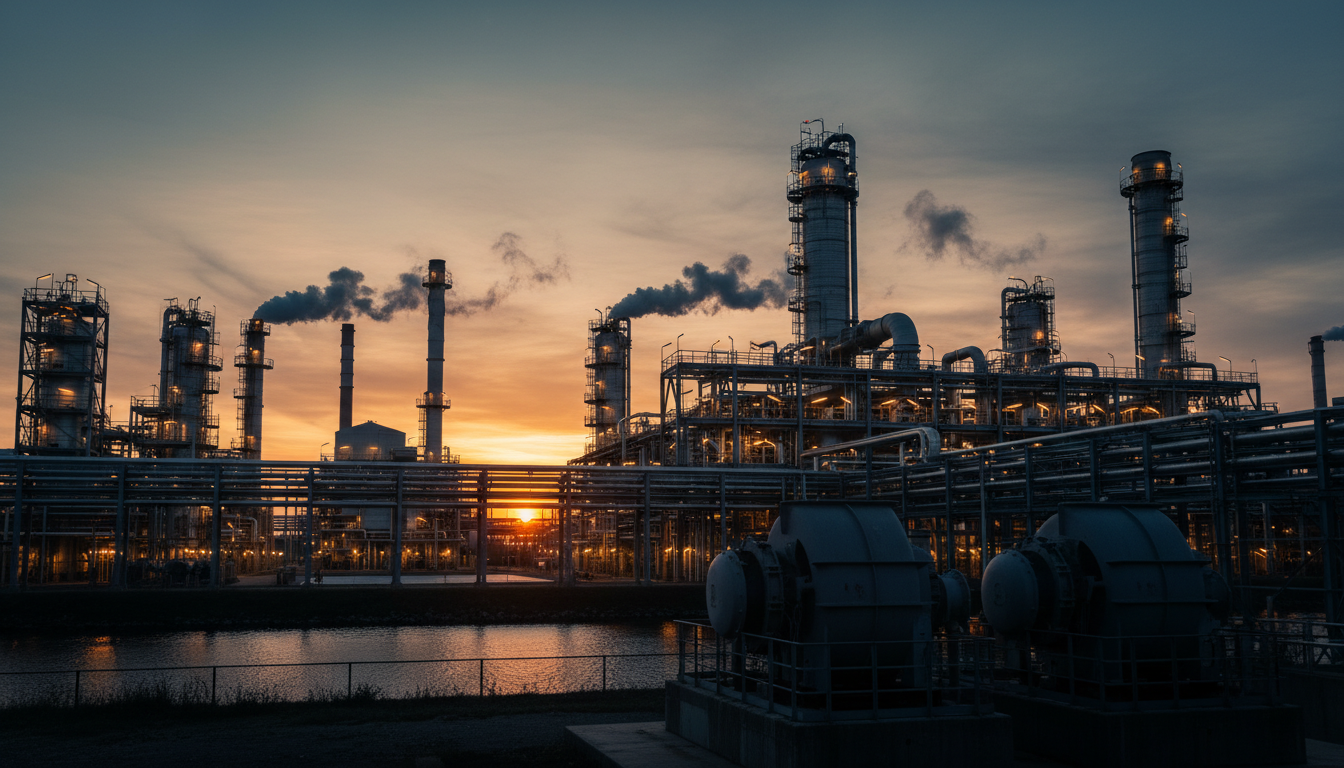
The intricate dance between geopolitical upheaval and global supply chains has delivered an unexpected twist for the beleaguered European chemicals industry. After navigating a challenging period marked by the 2022 energy crisis, the sector recently reported a first quarter that, while modest, exceeded low expectations. This surprising glimmer of positive momentum largely stems from a severe supply shock that has crippled key Asian petrochemical manufacturers, illustrating the profound impact regional conflicts can have on global industrial economics and, consequently, investor sentiment in energy-related sectors.
Asia’s vast petrochemical infrastructure relies heavily on a steady stream of critical feedstocks emanating from the Persian Gulf. Naphtha, liquefied petroleum gas (LPG), and methanol form the backbone of numerous downstream chemical processes across the continent. Recent escalations in Middle Eastern geopolitical tensions have severely disrupted these vital supply routes, notably impacting the free flow of commodities through critical chokepoints like the Strait of Hormuz. For Asian petrochemical firms, this disruption has translated directly into acute shortages of essential raw materials, forcing many to curtail production significantly and grapple with escalating input costs.
Geopolitics Reshapes Petrochemical Supply Dynamics
The ripple effect of these Middle Eastern supply constraints has proven a lifeline for European chemical producers, who have struggled to maintain competitiveness against lower-cost Asian rivals for years. While Asian manufacturers face an unprecedented scarcity of key inputs, European companies are experiencing a temporary resurgence in demand. Customers, unable to secure consistent supplies from their traditional Asian partners, are increasingly redirecting orders towards European suppliers. This shift highlights how regional instability can rapidly reconfigure global trade flows and create transient advantages for seemingly disadvantaged players.
Industry leaders are quick to acknowledge this unexpected turn. Matthias Zachert, CEO of German chemicals giant LANXESS, commented on the first-quarter performance, noting, “The start of the year was weak, but since March, we have seen a slight positive momentum.” He explicitly linked this improvement to the Middle East conflict, observing that “the supply chains of many Asian competitors have been disrupted, causing customers to turn back to European suppliers such as LANXESS.” For now, “supply capability is currently a significant competitive advantage,” Zachert affirmed, though he also pointed out that LANXESS has proactively increased prices across many products to offset rising raw material, energy, and logistics expenditures.
Temporary Boost for European Giants Amidst Caution
Similar sentiments echoed across the European chemicals landscape. Evonik, another prominent player, reported an uptick in sales volumes in specific business segments since March. This increase is largely attributed to what executives describe as “pre-buying” by customers eager to secure supplies amidst the volatile global environment. Meanwhile, Solvay, a Belgian chemicals leader, delivered a robust first-quarter performance but tempered expectations by stating, “we do not expect the operating environment to improve in the short term.” Such cautious optimism underscores the perceived fleeting nature of the current European advantage.
Investors must critically assess the sustainability of this European revival. While the immediate boost is undeniable, industry analysts and executives uniformly caution against over-optimism. The underlying structural challenges that have long plagued European competitiveness, particularly higher energy costs compared to Asian counterparts, remain fundamentally unchanged. Once stability returns to the Strait of Hormuz and feedstock flows to Asia normalize, the inherent cost efficiencies of Asian producers are expected to reassert themselves. This scenario suggests that the current advantage in “supply capability” will dissipate as global supply chains rebalance.
Navigating the Investor Landscape: Beyond Short-Term Gains
For investors focused on the oil and gas sector and its downstream derivatives, the current dynamics offer a crucial lesson in market volatility and the intricate connections between geopolitics, commodity prices, and industrial performance. The price and availability of crude oil and natural gas directly influence the cost of naphtha, LPG, and methanol – feedstocks essential for the petrochemical industry. Disruptions in these markets create cascading effects, demonstrating the interconnectedness of energy, chemicals, and broader manufacturing sectors.
The message from European leadership is clear: this is not a sustained recovery, but rather a temporary respite born from global instability. As LANXESS CEO Zachert emphatically put it, “There is no reason to be swept up by euphoria.” For investors, this translates into a need for careful analysis. While European chemical companies might report stronger-than-expected short-term results, their long-term competitive positioning against Asia hinges on fundamental factors like energy costs and operational efficiency, not merely on temporary disruptions to competitor supply chains. Monitoring geopolitical developments in the Middle East, alongside global energy price trends and shipping logistics, will remain paramount for understanding the future trajectory of the global petrochemical market and identifying genuinely sustainable investment opportunities.


