India’s Prime Minister, Narendra Modi, issued a stark appeal to the nation on Sunday, urging citizens to drastically curb fuel consumption, reconsider international travel, and postpone gold acquisitions. This direct intervention underscores the profound economic reverberations now being felt across the subcontinent as the ongoing conflict in the Middle East sends global energy costs soaring.
Addressing the public from Hyderabad, Modi highlighted the dramatic escalation in global fuel prices. He implored Indians to embrace public transportation, prioritize remote work arrangements, and adopt carpooling initiatives as crucial steps to conserve precious fuel resources. India joins a growing cohort of Asian economies actively promoting reduced energy consumption in the face of persistent volatility in the Middle East.
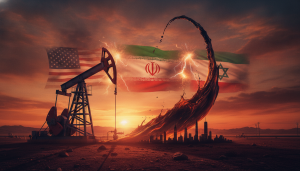
The geopolitical landscape further deteriorated on Sunday when U.S. President Donald Trump categorically dismissed Iran’s latest counterproposal to resolve the protracted conflict with the United States and Israel as “TOTALLY UNACCEPTABLE!” This declaration extinguished any lingering hopes for immediate peace, sending an immediate ripple through the global commodity markets and pushing crude oil prices even higher.
India’s Vulnerability to Global Energy Swings
As the world’s third-largest energy consumer, India remains critically exposed to international oil price fluctuations. The nation imports an astonishing 85% of its total fuel requirements. Furthermore, its lifeline through the Strait of Hormuz is indispensable, funneling approximately 50% of its crude oil imports, 60% of its liquefied natural gas (LNG), and virtually all its liquefied petroleum gas (LPG) supplies. The recent surge in global energy benchmarks directly threatens India’s economic stability.
The immediate macroeconomic consequence of these elevated energy costs is an anticipated and significant widening of India’s trade deficit and its current account deficit. The Indian rupee has already begun to buckle under the pressure, trading perilously close to an all-time low against the U.S. dollar, exacerbating import costs and foreign exchange outflows.
Modi’s strategic call to reduce discretionary foreign travel and scale back gold imports aims to safeguard India’s critical foreign currency reserves, which are being increasingly depleted by the burgeoning oil import bill. For investors tracking the Indian market, these policy directives signal the severity of the economic headwinds.
Market Reaction and Economic Fallout
The market’s immediate response to the Prime Minister’s plea was palpable. On Monday, shares of leading Indian jewelry companies experienced sharp declines, with some falling by as much as 10%. Titan, the prominent jeweler owned by the Tata group, saw its stock price slide by nearly 6% in early trading, reflecting investor concerns over reduced consumer demand for luxury goods.
Similarly, IndiGo, a major Indian flight carrier, witnessed its shares drop by 2.8%. This downturn comes as the airline had been aggressively expanding its international network, with expectations that overseas routes would comprise 40% of its daily services by 2030. The proposed curtailment of foreign travel directly impacts the airline sector’s growth trajectory and profitability outlook.
Deepening Economic Challenges
An examination of India’s economic structure reveals its profound dependence on imported commodities. In the financial year concluded March 2026, India allocated a staggering $174.9 billion towards crude oil and petroleum products, constituting 22% of its total import expenditure. Beyond energy, India holds the position of the world’s second-largest gold buyer, trailing only China, with gold imports reaching nearly $72 billion annually. These figures highlight the dual vulnerability to energy and precious metal price surges.
Adding to the pressure, the volume of Indian citizens traveling abroad is substantial. In 2025 alone, approximately 32.7 million Indians ventured overseas, with over 14 million of these journeys classified as leisure travel. Any reduction in this activity, while conserving foreign exchange, will impact tourism-related industries both domestically and internationally.
Financial analysts are revising their outlooks for India’s economic trajectory. UBS Securities, in a May 4 note, characterized the Middle East conflict as a “historically large energy shock with asymmetric macro risks.” Consequently, the brokerage firm lowered its forecast for India’s economic growth in the financial year ending March 2027, from an earlier projection of 6.7% down to 6.2%.
While some experts, like Nirupama Rao, former Indian ambassador to the U.S., China, and Sri Lanka, expressed skepticism about an imminent “economic shock,” she candidly acknowledged the nation faces “difficult times ahead” absent a significant de-escalation or resolution of the Middle East crisis. This sentiment reinforces the heightened risk perception for the Indian market.
Government Policy and Future Prospects
Despite the mounting economic pressure, the Indian government has largely maintained stability in retail fuel pump prices. Instead of passing on the full burden of higher global crude costs to consumers, authorities have opted to cut taxes, effectively cushioning the impact on domestic oil marketing companies. This strategy has, in turn, kept fuel demand largely inelastic and unaffected by the price surge. For energy investors, this indicates sustained domestic consumption volumes despite geopolitical headwinds.
There was widespread expectation among analysts that Modi’s administration would unveil more stringent economic measures following the ruling Bharatiya Janata Party’s recent victories in key state elections. However, these anticipated policy shifts have yet to materialize, leaving some uncertainty about the government’s long-term strategy for managing the current crisis.
Back in March, India’s Chief Economic Advisor, V. Anantha Nageswaran, issued a prescient warning that the country’s trade deficit would “rise significantly” in the upcoming financial year ending March 2027. He emphasized that “keeping it manageable will require burden-sharing between the government, via fiscal absorption, and households and businesses.” This foreshadows potential fiscal adjustments or consumer-oriented initiatives if the energy crisis persists.
For investors, India’s current predicament presents a complex interplay of geopolitical risk, macroeconomic vulnerability, and government intervention. Monitoring crude oil price movements, the evolution of Middle East tensions, and any further policy announcements from New Delhi will be paramount in navigating the investment landscape surrounding one of the world’s most dynamic, yet energy-dependent, major economies.