Revolutionizing Offshore Energy: Wireless Charging Poised to Transform Marine Operations and Drive Investment
The global offshore energy sector stands on the cusp of a significant operational transformation, driven by an innovative leap in marine electrification. A collaborative effort between Norway’s Selskapet for Industriell og Teknisk Forskning (SINTEF), a leading scientific research organization, and the shipbuilding experts at Vard, is spearheading the Ocean Charger project. This pioneering initiative aims to develop a robust wireless charging solution for battery-electric ships at sea, eliminating the need for traditional physical cable connections. For investors tracking the evolving energy landscape, this technology presents a compelling case for enhanced operational efficiency, reduced maintenance costs, and a greener footprint across critical marine infrastructure, including future applications in oil and gas.
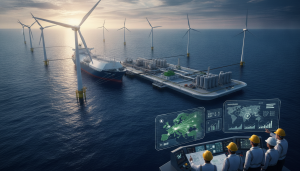
The primary application targeted by these Norwegian innovators focuses on service operation vessels (SOVs) vital for maintaining offshore wind farms. As wind energy expands further from coastlines, these SOVs, increasingly powered by battery-electric systems, require extended operational ranges. The ability to recharge vessel batteries directly at the wind farm while technicians conduct maintenance work offers profound benefits. This not only maximizes vessel uptime but also significantly reduces the need for return trips to port for charging, translating directly into operational savings and increased energy production from these crucial renewable assets. The strategic implications for long-term project viability and return on investment in offshore wind are substantial.
Conventional charging methods, relying on mechanical plug connections, face formidable challenges in the harsh offshore environment. The relentless assault of salty, humid air inevitably leads to corrosion, even with protective measures, driving up long-term maintenance expenses and risking premature equipment failure. Furthermore, ensuring a secure and stable charging connection in rough seas is a continuous battle, with the potential for cables and plugs to be damaged or dislodged. These operational vulnerabilities underscore the financial and safety risks inherent in traditional systems. The Ocean Charger project directly addresses these critical pain points by fundamentally rethinking the charging interface, aiming to transmit power inductively and bypass the inherent flaws of physical contact connections.
Engineering Resilient Power Transfer: Inductive Charging’s Strategic Edge
The SINTEF and Vard solution represents a paradigm shift. While still involving a physical engagement between components, it critically eliminates direct contact between current-carrying parts. Developers liken the robust mechanical coupling to a “cup holder,” where components securely slot together without requiring electrical terminals to touch. The inherent advantage of this design lies in the complete encapsulation of the power transmission coils on both the sending and receiving units. This protective barrier shields the sensitive electronics from saltwater ingress and corrosive elements, drastically reducing wear and tear. The result is a system that promises significantly lower maintenance requirements and a far greater operational lifespan than its wired counterparts. Moreover, should extreme sea conditions temporarily disrupt the connection, the sealed contacts remain protected from impacts and environmental damage, ensuring rapid and safe re-engagement.
Highlighting the meticulous development process, Giuseppe Guidi, a senior research scientist at SINTEF, elaborated on the rigorous testing involved. “We’ve explored numerous concepts,” Guidi stated, “and ultimately validated a solution that operates much like a conventional electrical contact, yet it effectively circumvents all typical offshore challenges. This is achieved by transferring power inductively through a design where the critical plug elements are sealed within materials engineered to withstand virtually anything the marine environment can throw at them.” This commitment to durability and reliability is paramount for investors looking at long-term infrastructure plays.
Currently, the technology remains in the laboratory development phase. While the performance metrics of the existing prototype are not yet sufficient for the substantial battery capacities of large ships, the SINTEF and Vard team has already successfully demonstrated inductive power transmission at 50 kilowatts. The roadmap ahead is ambitious and clear: the system is projected to achieve a fifty-fold increase in power output, reaching capabilities of up to five megawatts. Future deployments will also see the connection process automated, utilizing a sophisticated crane-like boom rather than manual handling, further enhancing safety and efficiency in dynamic offshore conditions. This planned scalability and automation signal a readiness for widespread adoption across a variety of marine applications.
Expanding Horizons: New Opportunities for Oil & Gas Electrification
The successful establishment of such wireless charging infrastructure at sea holds profound implications beyond renewable energy. For the oil and gas sector, it unlocks a critical pathway towards greater electrification of offshore platforms and supporting vessels. Oil and gas rigs, which historically rely on fossil fuels for their power needs, could increasingly adopt electric propulsion for their service fleets and even integrate charging capabilities directly into platform operations. This enables vessels serving these rigs to recharge at sea, significantly extending their operational windows and reducing emissions associated with traditional refueling. Investors focused on ESG (Environmental, Social, and Governance) factors will note this technology’s potential to dramatically lower the carbon footprint of offshore oil and gas production, aligning with global sustainability mandates and attracting new capital.
The ability to wirelessly charge vessels at oil and gas installations paves the way for a more sustainable, efficient, and cost-effective operational model. Reduced maintenance on charging interfaces, enhanced safety in challenging weather, and the potential for a fully electric offshore supply chain represent substantial financial upsides. As the energy transition accelerates, technologies like the Ocean Charger project are not merely incremental improvements; they are foundational innovations that will redefine operational paradigms and create new avenues for robust investment across the entire offshore energy complex, solidifying returns for forward-thinking portfolios.