Geopolitical Tensions Ignite Energy Markets Amid Hormuz Standoff
The global energy landscape finds itself navigating treacherous waters as heightened military confrontations between the United States and Iran near the critical Strait of Hormuz threaten to dismantle an already precarious ceasefire. This latest escalation sends ripples of uncertainty through international markets, putting the fragile prospects of a lasting peace deal in jeopardy and underscoring the enduring volatility in a region vital for global oil and gas flows.
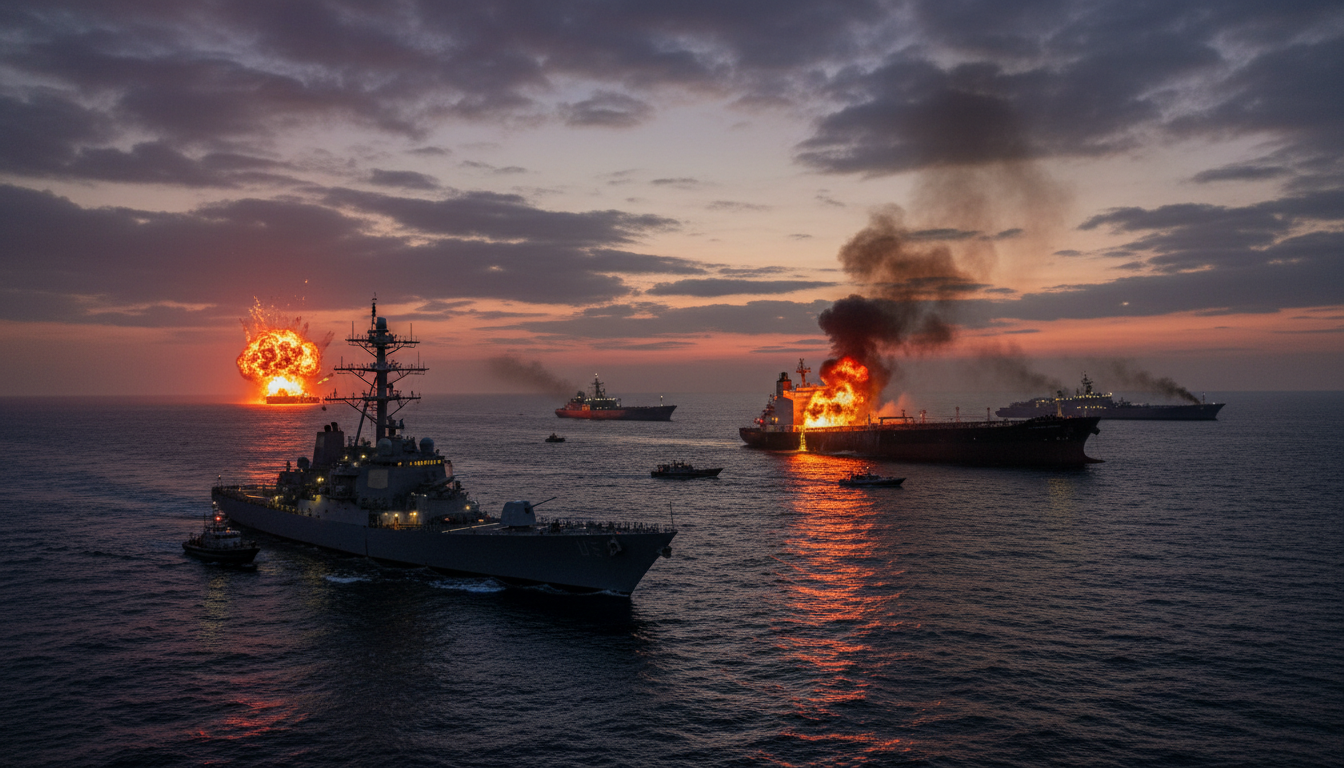
US military forces confirmed targeting missile and drone launch sites, along with other strategic military assets within Iran, asserting these facilities were responsible for recent aggressive actions against three American warships traversing the Strait. Despite these alleged attacks, US Central Command reported that no US naval vessels sustained damage, with the USS Truxtun, USS Rafael Peralta, and USS Mason successfully completing their transit into the Gulf of Oman. Notably, President Donald Trump reiterated that a month-long ceasefire between the two nations technically remains active, even as the latest hostilities unfolded.
Market Reacts to Heightened Risk
The immediate market response to these geopolitical tremors was pronounced. Brent crude oil futures, a key international benchmark, surged by 1.3 percent, closing at $101.38 per barrel, reflecting renewed concerns over supply disruptions from the Middle East. Beyond crude, the European natural gas market also experienced an uptick, with front-month futures advancing by 3.8 percent during thin Asian trading hours. Simultaneously, broader financial markets registered caution, with Asian equities retreating by 1.1 percent, pulling back from recent record highs, mirroring a similar decline observed in Wall Street benchmarks.
The Strait of Hormuz, a narrow maritime chokepoint, serves as the conduit for approximately one-fifth of the world’s crude oil and liquefied natural gas (LNG) shipments. Its effective closure at the onset of the conflict in February, initiated by US and Israeli strikes on Iran, immediately triggered a global energy crisis. The prospect of further destabilization in this vital artery invariably injects significant premium into energy prices, directly impacting investors and consumers worldwide.
Diplomatic Efforts and Firm Stances
This latest flashpoint complicates ongoing negotiations aimed at securing a US-proposed agreement to end the protracted conflict. Iran is anticipated to deliver its official response to the proposed terms within the next 48 hours, conveyed through Pakistan, which has assumed a mediating role. However, President Trump issued a stark warning, indicating that a refusal by Iran to accept his terms would result in “more intense strikes.” In a social media post, he declared, “Just like we knocked them out again today, we’ll knock them out a lot harder, and a lot more violently, in the future, if they don’t get their Deal signed, FAST.” Later, addressing reporters, Trump added a note of cautious optimism about an agreement, stating, “It might not happen, but it could happen any day,” yet also issued a chilling warning about the ceasefire’s potential collapse: “You’re not going to have to know, you’ll just have to look at one big glow coming out of Iran.” Such rhetoric underscores the high stakes for global energy stability.
Meanwhile, Iranian state media, citing the country’s joint military command, countered US claims by reporting that American forces had targeted two Iranian oil tankers in the vicinity. Iran also accused the US of striking civilian targets along its southern coastline and Qeshm Island, alleging collaboration with unnamed regional allies. Regional tensions are clearly simmering, with the United Arab Emirates reporting early Friday morning that its air defenses were actively intercepting incoming missiles and drones targeting the nation – a country that has previously borne the brunt of Iranian retaliatory strikes against US partners.
The US Central Command reiterated that it “does not seek escalation but remains positioned and ready to protect American forces,” emphasizing that its actions were defensive in nature, neutralizing threats and targeting facilities responsible for attacks on its personnel.
Path to Resolution Remains Opaque
Despite diplomatic overtures, there has been little indication that Iranian leadership is prepared to concede on key US demands, particularly regarding its nuclear program or agreeing to a moratorium on uranium enrichment. These remain central sticking points in any potential peace accord. Washington reportedly conveyed a concise, one-page memorandum to the Islamic Republic outlining terms that could facilitate the reopening of the Strait of Hormuz and the lifting of the existing US blockade, an essential step before a month of intensive talks aimed at a final agreement to conclude the 10-week conflict.
In a related development crucial for energy transit, Saudi Arabia and Kuwait have reportedly eased restrictions on the US military’s access to regional bases, as reported by the Wall Street Journal. This strategic shift could potentially enable the Trump administration to reactivate “Project Freedom,” an initiative previously suspended, designed to secure safe passage for shipping through the Strait. A Central Command official, while declining to speculate on the project’s revival, referred inquiries about base access to Riyadh and Kuwait City, neither of which has yet responded.
Wider Implications for Global Economics
Beyond the immediate military and market reactions, the ongoing instability has broader economic ramifications. US gasoline prices have breached the $4.50 per gallon mark for the first time since July 2022, according to the American Automobile Association. This surging cost of fuel places additional pressure on the administration, particularly with midterm elections just six months away, where energy costs are poised to be a central electoral issue.
Internationally, the unresolved conflict casts a shadow over critical diplomatic engagements. A planned summit between President Trump and Chinese President Xi Jinping in Beijing, scheduled for May 14-15, has already been rescheduled once due to the war. Sources indicate a palpable unease among Chinese officials regarding the high-stakes meeting proceeding before a resolution to the Iranian situation is achieved. Furthermore, regional conflicts continue to simmer; Israel reported the killing of a Hezbollah commander in a southern Beirut suburb, marking its first strike on the city since a ceasefire was established in Lebanon last month. Investors must remain highly attentive to these interconnected developments, as each factor contributes to the complex risk profile of the global energy sector.


