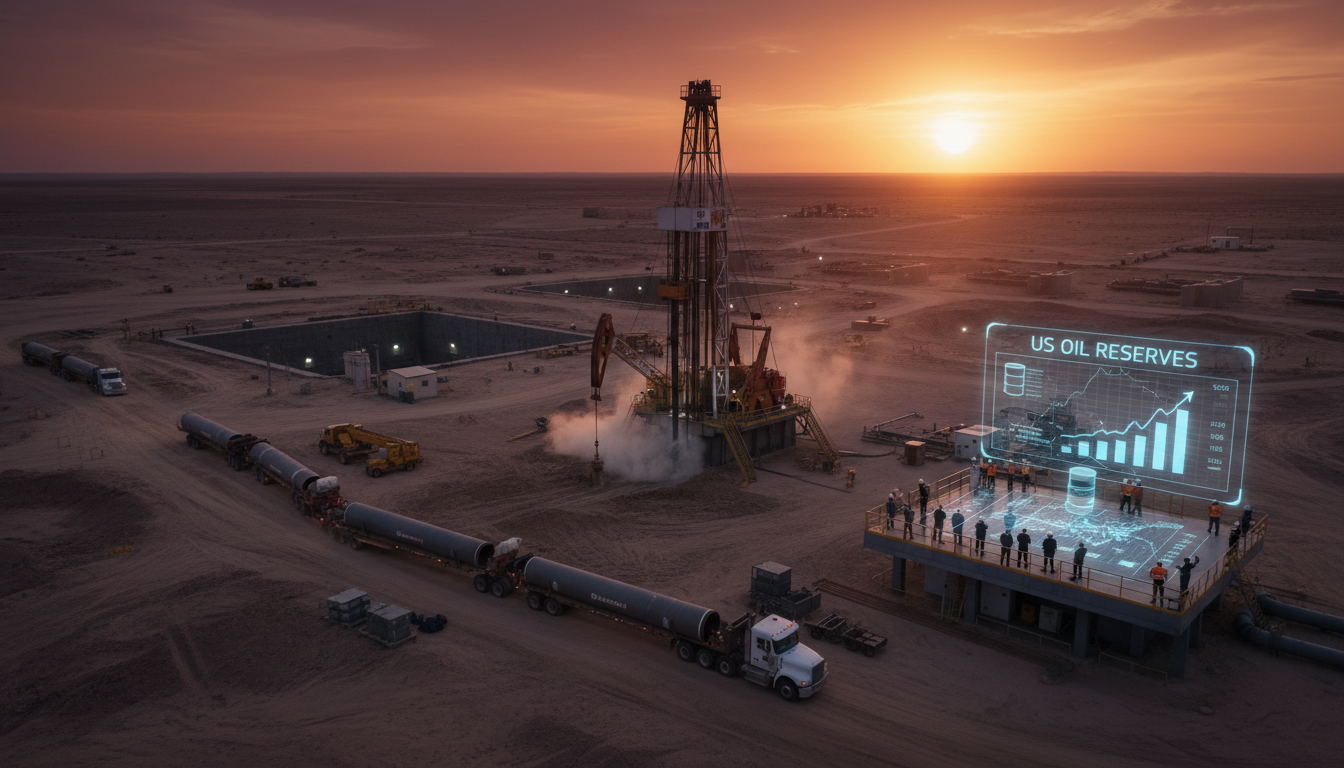
U.S. Explores Unconventional Path to Fortify Strategic Petroleum Reserve: Drilling Under Military Bases
In a significant strategic pivot, the Trump administration is actively investigating the unprecedented deployment of oil and gas drilling operations on U.S. military installations and other Department of War properties. This bold initiative aims to bolster the nation’s rapidly depleting Strategic Petroleum Reserve (SPR), signaling a new era in federal energy policy and national security. While still in preliminary stages, the proposal highlights a determined effort to find innovative, government-controlled solutions to an urgent energy crisis.
The imperative for such a move is clear. The Strategic Petroleum Reserve, established in the wake of the 1970s Arab oil embargo, now teeters on the brink of its lowest level since 1982. This critical vulnerability stems from a confluence of recent geopolitical events. The previous Biden administration executed a historic drawdown to stabilize skyrocketing gasoline prices following Russia’s invasion of Ukraine. Subsequently, the Trump administration authorized a substantial 172 million-barrel release to counteract surging energy costs exacerbated by the escalating conflict with Iran, further stressing the nation’s emergency crude stockpiles.
Investors must closely monitor the current energy landscape. The near-closure of the vital Strait of Hormuz has ignited a global fuel crunch, directly translating into higher costs for consumers. American retail gasoline prices have already breached the $4.50 per gallon mark this week, a level not seen since July 2022, just as the nation prepares for its peak summer travel season. This immediate market pressure underscores the administration’s stated commitment to making SPR replenishment a paramount national security concern.
While the direct impact of drilling under military bases on immediate energy prices is unlikely, the long-term strategic and financial implications are profound. This approach would empower the U.S. government to directly own the crude produced, circumventing the need to purchase oil from private producers for replenishment. Such a strategy becomes particularly compelling given the previous Biden administration’s struggle with funding limitations for additional SPR crude acquisitions. By creating its own supply, the government effectively hedges against market volatility and congressional funding hurdles.
The concept is gaining traction at the highest levels. Energy Secretary Chris Wright recently hinted at this transformative vision during a public forum. He articulated a clear intent for the administration to engage in “pragmatic things” utilizing energy resources under federal dominion, emphasizing the necessity of “creative ways” to rebuild the reserve. Secretary Wright directly cited the illogical scenario of military bases situated atop rich oil fields without any active development, stating, “We have military bases or facilities that are in the middle of oil fields, but there is no development under those resources—that’s crazy. It’s right there. We will see some creative things.” This public endorsement signals a serious intent behind the exploratory efforts.
While seemingly radical, the notion of energy extraction on military lands is not entirely unprecedented. Oil and gas leasing has been permitted for decades at certain installations. For example, in September 2025, the Trump administration previously sold drilling rights for nearly 2,000 acres at Barksdale Air Force Base in Louisiana, a crucial site hosting B-52 bombers. This historical precedent demonstrates the feasibility and existing frameworks for such activities, albeit on a larger, more integrated scale with the current proposal.
The potential for these federal lands is immense. A 2025 analysis by the U.S. Geological Survey estimated that federal properties, including those managed by the Department of Defense, the Interior Department, and other agencies, collectively hold approximately 29.4 billion barrels of technically recoverable oil, alongside a staggering 391 trillion cubic feet of natural gas. Tapping into even a fraction of these resources could significantly enhance the nation’s energy independence and long-term supply resilience.
Former President Trump has vocally criticized the prior administration’s SPR drawdowns, vowing to refill the nation’s emergency cache “right to the top” on his first day back in office. However, securing the billions of dollars required for open-market crude purchases has consistently faced resistance from Congress. This fiscal constraint strengthens the economic argument for government-owned production from federal lands, offering a more self-sustaining pathway to national energy security.
It is important to differentiate this potential new production strategy from existing refill mechanisms. The Energy Department has stated that the recent 172 million-barrel SPR release was structured as an exchange, essentially a loan to private companies that must be returned with interest. This arrangement is expected to see approximately 200 million barrels, or 20% more than what was initially released, returned to the SPR within the next year. The proposed drilling initiative represents an entirely separate, complementary strategy aimed at fundamentally altering how the U.S. government acquires and controls its strategic oil reserves, moving beyond simple market purchases or exchanges towards direct resource stewardship.
For investors, this development signals a significant policy shift that could impact U.S. crude supply dynamics, national energy independence, and the long-term stability of the domestic oil market. The potential for federal lands to become a consistent, government-controlled source of crude could diminish reliance on volatile international markets and provide a more robust buffer against future geopolitical disruptions, ultimately strengthening the foundation of American energy security.