The global energy landscape is undergoing a profound transformation, and nowhere is this shift more evident than in the automotive sector. For oil and gas investors, developments in electric vehicle (EV) infrastructure, particularly rapid charging networks, represent a critical barometer of future liquid hydrocarbon demand. Chinese automotive giant BYD is making aggressive moves on this front, rolling out a high-speed “Flash Charging” network across key international markets, a strategic play that demands close attention from those invested in traditional energy assets.
Rapid EV Charging: A Direct Challenge to Fuel Convenience
BYD’s ambitious expansion plan for its Flash Charging ecosystem highlights a concerted effort to dismantle one of the last major convenience advantages held by gasoline and diesel vehicles: the speed of refueling. The company has announced the imminent launch of these advanced charging stations in Australia and New Zealand, with the first sites expected to be operational before the end of the year. This rollout is synchronized with the introduction of new vehicle models, such as the Denza Z9 GT, scheduled for release in Australia and New Zealand in the third quarter. This battery-electric shooting brake is among the first of the manufacturer’s global offerings to feature its second-generation Blade Battery, specifically engineered to capitalize on these new, high-capacity chargers.
Strategic Deployment Down Under and Beyond
The initial phase of Flash Charger deployment in Australia will see three stations established by October, strategically co-located with select Denza showrooms in major metropolitan centers including Adelaide, Melbourne, and Sydney. The long-term vision involves integrating these chargers into existing BYD dealerships as the network expands. Similarly, in New Zealand, the Chinese automaker plans to initiate its high-output charging infrastructure at Denza dealerships, though specific locations and the initial footprint remain undisclosed. This targeted approach in developed markets signals a clear intent to capture early adopters and solidify a market presence with cutting-edge technology.
However, the scope of BYD’s strategy extends far beyond the Antipodes. Diego Pareschi, BYD Europe’s Director of EV Charging, recently confirmed that Flash Chargers are slated for rapid deployment across Europe, Latin America, the Middle East & Africa, and the broader Asia-Pacific region. This expansive geographical reach underscores the company’s global aspirations and its determination to significantly accelerate EV adoption worldwide. Within the next twelve months, BYD aims to establish a staggering 6,000 Flash Charging stations internationally, with a substantial 3,000 of these earmarked for Europe alone. This represents a monumental investment in alternative fuel infrastructure that will inevitably reshape energy consumption patterns.
Technical Prowess and the Pace of Electrification
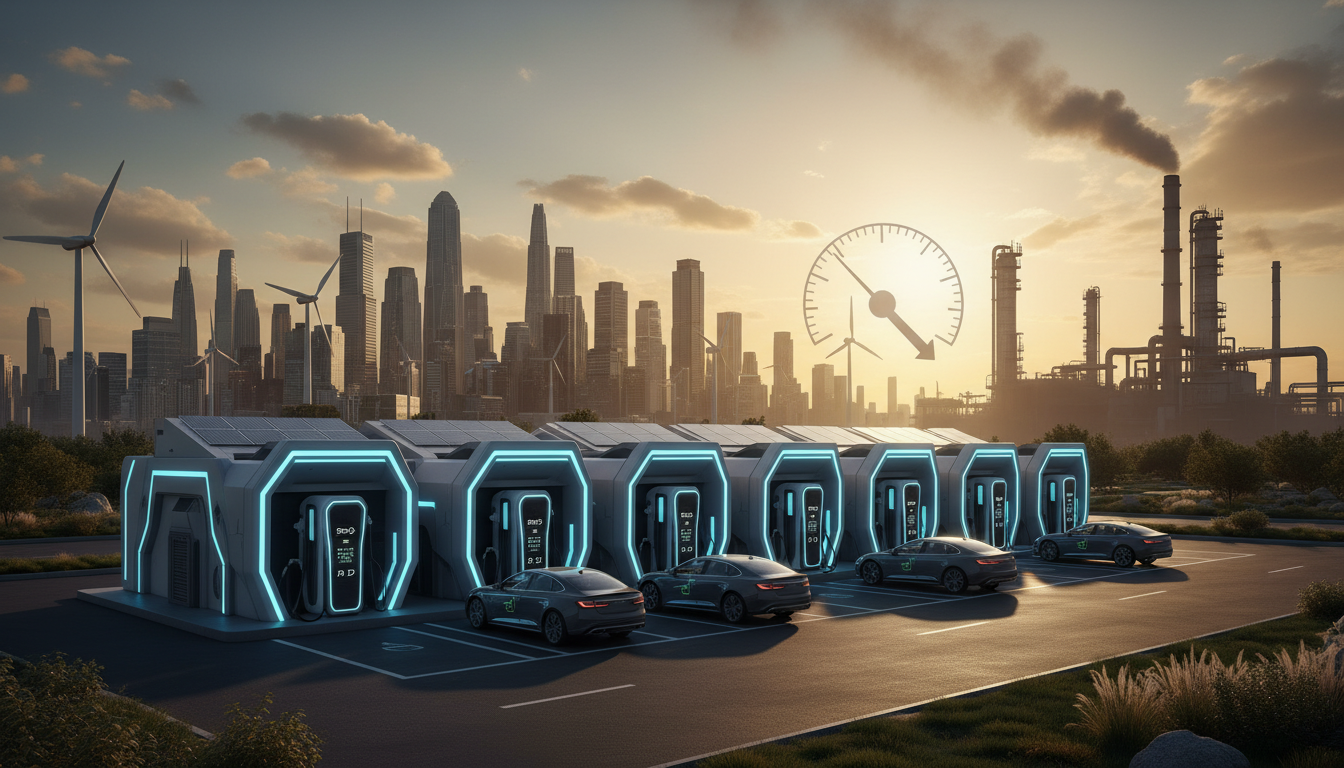
The technical specifications of BYD’s Flash Charging technology are particularly noteworthy for energy investors monitoring the pace of electrification. During the European launch of the Denza Z9 GT in Paris this April, a Flash Charger was showcased boasting a formidable rated power of 2 megawatts (MW). This impressive capacity allows for the simultaneous charging of two electric vehicles at 1 MW each, or a single vehicle at up to 1.5 MW. For a Euro-spec Z9 GT, equipped with a substantial 122.49 kWh battery pack, this translates into unprecedented charging speeds: a 10 to 70 percent state-of-charge (SoC) can be achieved in just five minutes, and a 10 to 90 percent SoC in a mere nine minutes. Such rapid charging capability directly erodes the convenience advantage traditionally held by liquid fuels, presenting a significant competitive threat to gasoline and diesel demand in the coming decade.
China’s Blueprint for Global EV Dominance
The blueprint for this international expansion is clearly evident within BYD’s home market. In China, the company has been aggressively implementing the necessary technical upgrades across its diverse range of EV brands to ensure compatibility with its Flash Charging technology. Lu Tian, General Manager of Sales for BYD’s Dynasty series, announced during the launch of the BYD Han EV Flash Charging Edition on April 28 that the company has already constructed over 5,500 Flash Charging stations across 311 cities nationwide. This existing, vast network in the world’s largest automotive market provides a powerful demonstration of the scalability and efficacy of BYD’s strategy. For oil and gas investors, China’s rapid adoption of such advanced EV infrastructure serves as a potent indicator of the accelerated energy transition and the potential for significant long-term demand erosion for crude oil in a crucial consumption hub.
Implications for Oil and Gas Investments
BYD’s global Flash Charging offensive carries profound implications for the oil and gas industry. The sheer scale of the planned infrastructure deployment – 6,000 stations within a year, half in Europe – signifies a major shift in capital allocation towards electric mobility. This robust investment in high-speed EV charging directly supports faster EV adoption, which in turn compresses future demand projections for refined petroleum products. Regions like the Middle East & Africa, traditionally reliant on hydrocarbon exports, will face increased pressure to diversify their energy matrices as EV penetration grows. Investors in oil and gas must carefully evaluate these trends, recognizing that the battle for the future of transportation fuels is intensifying. The rapid technological advancements in battery and charging infrastructure, exemplified by BYD, are not merely incremental changes but structural shifts that will redefine the energy sector and reshape long-term investment strategies.