Global Energy Markets Brace for Uncertainty as US-Iran Standoff Continues
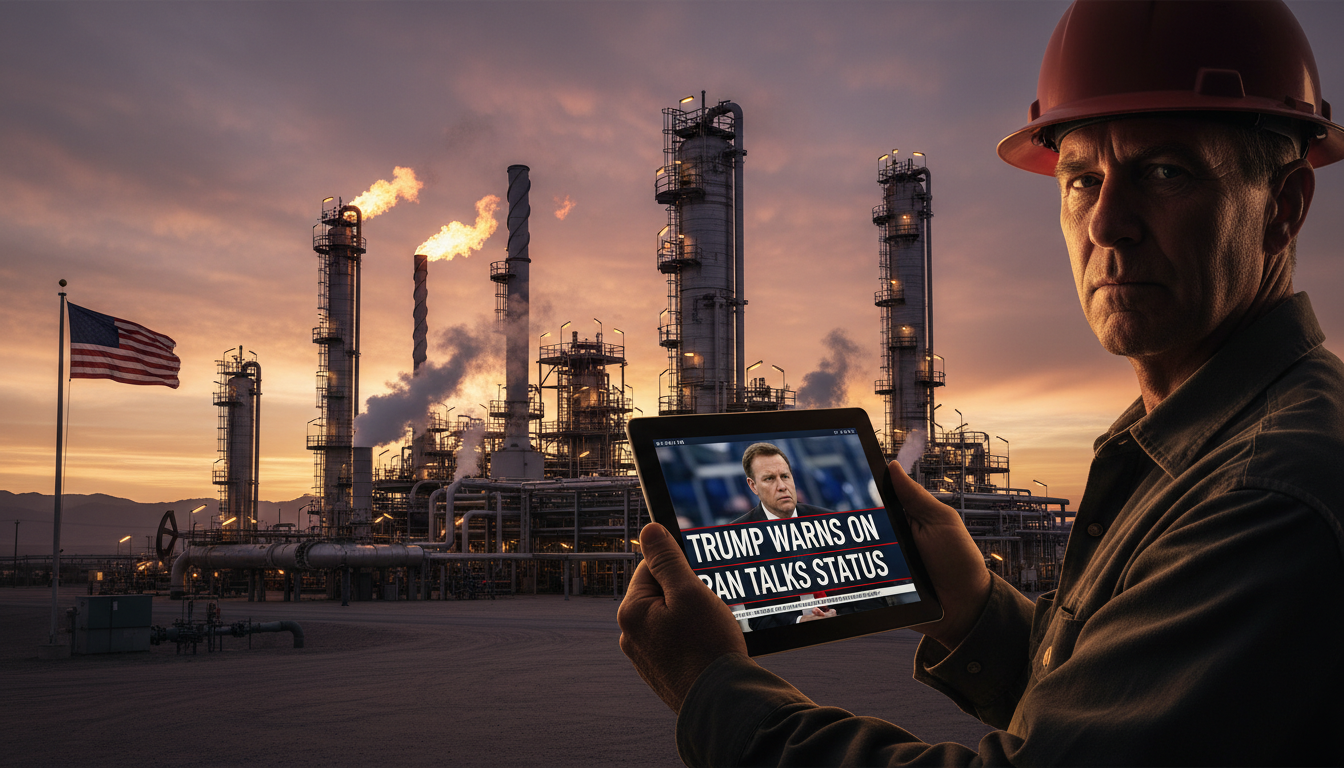
The protracted nine-week conflict between the United States and Iran continues to send ripples through global energy markets, keeping crude oil prices elevated and investors on edge. While President Donald Trump recently expressed dissatisfaction with ongoing negotiations, he refrained from signaling an immediate escalation of military action, a development closely watched by energy sector stakeholders navigating significant geopolitical risk.
Speaking from the White House on Friday, President Trump acknowledged the progress made in recent discussions with Iran but tempered expectations, stating, “They want to make a deal but I’m not satisfied with it.” He offered no specifics on the participants or timing of these latest talks, merely noting, “They’ve made strides, but I’m not sure if they ever get there.” This ambiguity leaves the oil and gas industry grappling with the profound uncertainty surrounding one of the world’s most critical energy-producing regions.
Oil Prices React to Diplomatic Tensions and Supply Concerns
The intricate dance of diplomacy and geopolitical maneuvering directly impacts crude oil benchmarks. On Friday, oil prices saw a slight pullback after reaching fresh wartime highs earlier in the week. Brent crude, the international benchmark, settled near $108 a barrel, while West Texas Intermediate (WTI), the US standard, edged lower by approximately 3% to close the session close to $102. This modest easing reflects a cautious sentiment among traders, who unwound positions ahead of the weekend, wary of potential escalations or breakthroughs that could dramatically shift market dynamics. The persistent high price environment underscores the tight global supply picture exacerbated by the ongoing regional instability.
A new Iranian proposal, relayed to Washington via Pakistan—which previously mediated initial direct negotiations last month—offers a potential path forward, according to Iran’s state-run Islamic Republic News Agency (IRNA). While the details remain scant, reports suggest Tehran is willing to discuss conditions for reopening the vital Strait of Hormuz, contingent on the US ceasing its attacks and lifting the current blockade. It remains unclear if President Trump’s Friday comments directly addressed this specific proposal, adding another layer of complexity to the negotiation landscape.
In a related development, the White House formally communicated to top lawmakers that the current ceasefire effectively pauses the 60-day statutory limit under the War Powers Act, which would otherwise necessitate congressional authorization to continue military engagement. This legal interpretation highlights the administration’s intent to manage the conflict’s duration without immediate legislative constraint, a critical factor for long-term strategic planning and market stability analysis.
The Strait of Hormuz: A Global Chokepoint Under Siege
At the heart of the current stalemate lies the Strait of Hormuz, a narrow maritime artery through which an estimated one-fifth of the world’s crude oil and liquefied natural gas (LNG) flowed before the conflict erupted. President Trump emphatically asserted the effectiveness of the US-led blockade on the strait, describing it as “incredible” and “100% shut down.” This strategic choke point has become a central bargaining chip, with both Washington and Tehran signaling their readiness for the other side to make the initial move before easing restrictions on vessel traffic. For energy investors, the prolonged closure or severely restricted passage through Hormuz represents a significant and ongoing supply chain risk, impacting global shipping costs, insurance premiums, and the very availability of critical energy resources.
While IRNA offered no specifics on what the Iranian proposal contained regarding Hormuz or the nation’s controversial nuclear activities, the insistence on the strait’s reopening as a prerequisite for further talks remains a firm Iranian demand. The US, for its part, has maintained that its blockade of Iranian ports aims to deprive the Islamic Republic of crucial oil revenue, thereby compelling Tehran to return to the negotiating table. Washington has also issued stern warnings about sanctions risks for any entity paying tolls to Iran for safe passage through the strait, further tightening the economic screws.
Economic Pressure and Internal Iranian Dynamics
The economic pressure on Iran appears to be mounting. Recent reports indicate a fresh low for the Iranian currency, signaling increasing strain on the nation’s economy. However, Iranian officials, including Parliament Speaker Mohammad Bagher Ghalibaf, have publicly dismissed the efficacy of the blockade, pointing to Iran’s vast borders and asserting that its continuation will only further inflate global oil prices. Ghalibaf’s defiant stance, shared on social media, underscores the internal resolve within Iran, even as the new supreme leader, Mojtaba Khamenei, cast doubt on a deal, vowing to protect the country’s nuclear and missile technologies and maintain control over Hormuz.
President Trump, acknowledging what he termed a “very disjointed leadership” within Iran, characterized the situation as challenging for Tehran to reach internal consensus. This perception of internal divisions further complicates the negotiation process and contributes to the protracted nature of the crisis, an important consideration for investors assessing the likelihood of a swift resolution. Despite the challenges, Trump mused on the administration’s options, weighing the desire to “make a deal” against the possibility of more decisive military action, ultimately favoring a non-military resolution on “a human basis.”
US Energy Policy and Regional Security Initiatives
The US President also reiterated his belief that the surge in oil prices, while significant, is temporary and ultimately beneficial to American energy exports. He highlighted robust domestic oil production, stating, “We have more oil production right now than any time in history. And if you take a look at the ships, they’re all coming up to Texas, Louisiana, Alaska.” This perspective frames the high global prices as a boon for US producers and its export capabilities, even as American consumers face higher gasoline costs.
Beyond the direct conflict, the US is actively engaged in regional diplomatic and security efforts. Defense Secretary Pete Hegseth recently faced scrutiny from lawmakers regarding the conflict’s financial burden, with Democratic legislators arguing that the Pentagon’s $25 billion cost estimate is significantly understated, potentially representing less than a quarter of the true expenditures. Such budgetary debates highlight the immense financial implications of the ongoing standoff for all parties involved.
Furthermore, Washington is extending invitations to key regional allies, with President Trump inviting Iraq’s prime minister nominee to visit the capital once a new government is formed. This diplomatic overture underscores a strategic aim to curtail Iranian influence within the Arab nation, a critical component of broader Middle East stability. Concurrently, the US is proposing a joint naval force to secure the Strait of Hormuz, an initiative aimed at safeguarding international shipping lanes. While New Zealand has acknowledged receiving the proposal, it has conditioned its support for a US-led coalition on the establishment of a sustainable ceasefire, signaling the international community’s desire for a de-escalation of hostilities.
Outlook for Oil and Gas Investors
The current landscape presents a complex array of risks and potential opportunities for energy investors. The immediate concern remains the operational status of the Strait of Hormuz and the potential for supply disruptions that could further elevate crude oil and LNG prices. While the US asserts its record oil production provides a buffer, a prolonged closure of this vital chokepoint would undoubtedly trigger significant market volatility and could necessitate a re-evaluation of global energy supply chains.
Investors should closely monitor the diplomatic channels, particularly any substantive details emerging from the Iranian proposal and the US response. The internal dynamics within Iran and the unity, or lack thereof, within its leadership will also be crucial determinants of future progress. The ongoing debate within the US Congress regarding the War Powers Act and the true cost of the conflict signals a robust internal discussion that could influence the administration’s strategy. While military escalation remains a distinct possibility, President Trump’s stated preference for a deal offers a glimmer of hope for a negotiated settlement.
The current environment favors agility and diversification within investment portfolios. Companies with strong balance sheets, diversified asset bases, and resilient logistics capabilities are better positioned to weather the storm of geopolitical uncertainty. Long-term energy demand projections, coupled with the inherent supply vulnerabilities exposed by this conflict, suggest that strategic investments in secure and diversified energy sources will remain paramount. The path to resolution is fraught with challenges, ensuring that oil and gas markets will remain a focal point for global financial scrutiny for the foreseeable future.


