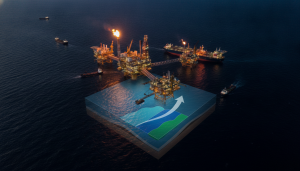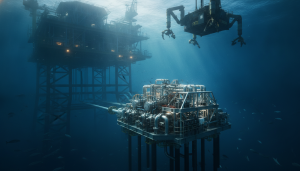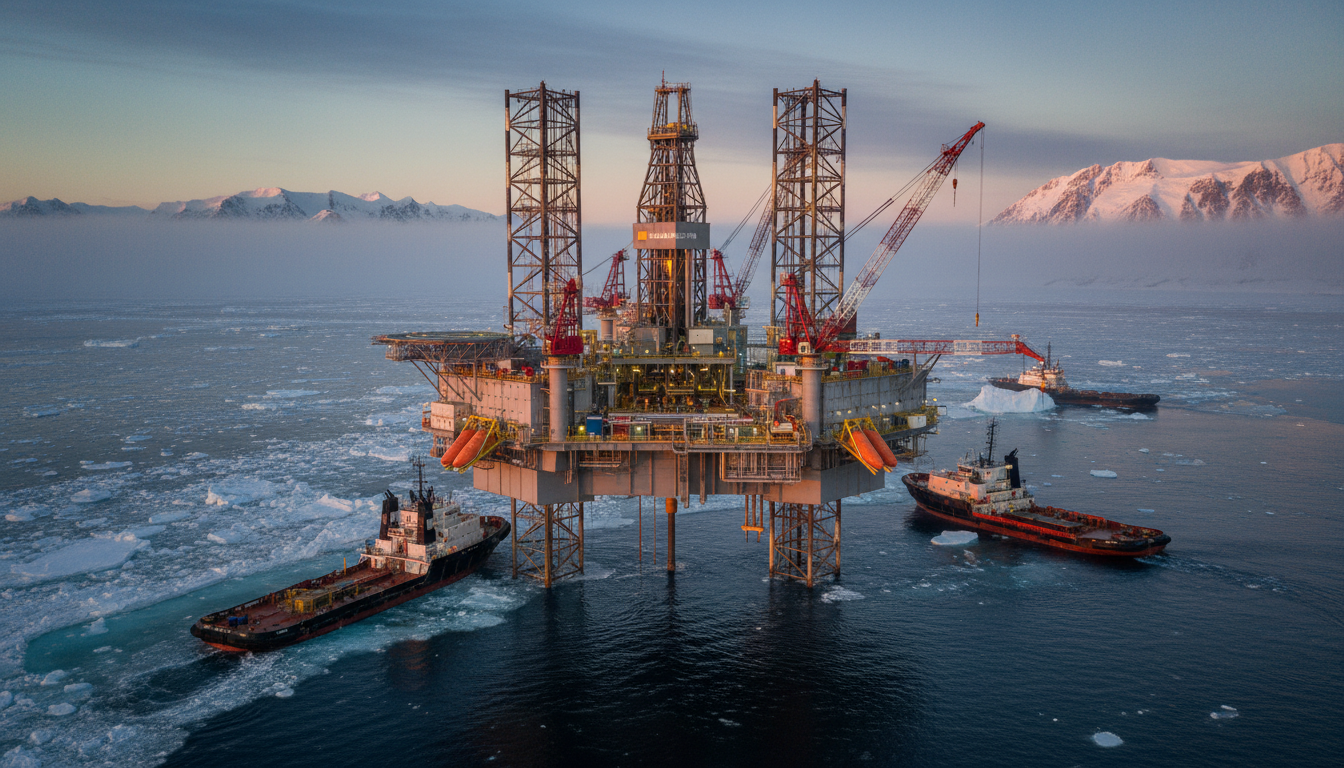
Halliburton’s recent agreement to provide comprehensive integrated services for Greenland Energy’s ambitious onshore drilling campaign in the Jameson Land basin marks a pivotal moment for both the oilfield services giant and the broader Arctic energy landscape. This landmark deal, slated for 2026, signals a strategic expansion into one of the world’s last true frontier exploration regions. For discerning investors, this move underscores a growing industry appetite for untapped hydrocarbon potential, despite the inherent logistical and environmental challenges. Analyzing this development through the lens of current market dynamics and future projections offers critical insights into Halliburton’s long-term strategy and the evolving global energy investment landscape.
Halliburton’s Strategic Foray into Greenland’s Frontier
The Jameson Land basin in eastern Greenland represents a significant, yet largely unexplored, frontier in global energy exploration. Its drilling history is remarkably limited, positioning this upcoming campaign as a pioneering effort. Halliburton’s extensive scope of involvement, ranging from initial well planning to advanced drilling services and complex logistics, places it at the operational heart of this high-stakes venture. This comprehensive approach is vital for navigating the notoriously harsh Arctic conditions, remote access challenges, and nascent infrastructure characteristic of the region. For Halliburton, this contract is a testament to its deep technical expertise and its commitment to pushing the boundaries of energy development. The strategic rationale articulated by Greenland Energy Company’s CEO, Robert Price, highlights Halliburton’s reputation for operational excellence and its advanced technologies, which are crucial for enhancing drilling accuracy, safety, and efficiency in such extreme environments. This partnership is not just about drilling; it’s about establishing a template for future Arctic resource development, aligning with an industry trend to diversify beyond mature basins and secure future reserve potential.
Current Market Tailwinds and Investor Focus on Future Supply
This long-term strategic play by Halliburton comes amidst a period of robust crude oil prices, which naturally enhances the attractiveness of challenging, high-CAPEX projects like frontier Arctic exploration. As of today, Brent Crude trades at $110.72, reflecting a 0.29% gain within a day range of $110.49 to $112.43. Similarly, WTI Crude is at $104.59, though showing a slight dip of 0.46% today. The 14-day trend for Brent crude has been particularly strong, climbing from $99.36 on April 13th to $111.70 by April 30th, a significant increase of $12.34 or 12.4%. Such sustained strength in crude prices provides a powerful incentive for energy companies to invest in future supply. Our proprietary reader intent data at OilMarketCap.com clearly indicates that investors are keenly focused on “crude oil price trends” and are actively seeking to “build a base-case Brent price forecast for next quarter.” Questions about “which OPEC+ members are over-producing this month” further underscore the market’s obsession with supply-side dynamics. Against this backdrop, Halliburton’s move into Greenland, while a 2026 endeavor, signals a commitment to securing future production streams that could be vital in a market consistently scrutinizing long-term supply stability. This deal directly addresses the underlying investor anxiety about securing future hydrocarbon resources, even if the payoff is years away.
Forward Outlook: Navigating Risks and Future Catalysts
The 2026 drilling campaign in Jameson Land is a long-lead-time project, yet its success hinges on meticulous planning and execution in the intervening years. For investors, monitoring the broader energy market through upcoming events will provide critical context for the viability and valuation of such long-term ventures. In the next 14 days alone, we anticipate key reports such as the Baker Hughes Rig Count (May 1st & 8th), the EIA Short-Term Energy Outlook (May 2nd), API Weekly Crude Inventory (May 5th & 12th), EIA Weekly Petroleum Status Report (May 6th & 13th), and the IEA Oil Market Report (May 12th). While these events do not directly impact the Greenland project’s operational timeline, they shape the overarching investment climate, influence capital allocation decisions, and provide insights into global supply-demand balances that will ultimately determine the profitability of Arctic oil and gas in 2026 and beyond. A continuously strong market, as indicated by these reports, will reinforce the strategic value of Halliburton’s frontier exploration. Conversely, any significant shifts in global energy policy or demand projections could introduce new layers of risk. Investors should watch for further announcements from Greenland Energy or Halliburton regarding progress on logistical preparations, environmental impact assessments, and detailed project financing as the 2026 drilling window approaches, as these will serve as critical milestones for this pioneering Arctic endeavor.
Investment Implications for Halliburton and the Arctic Narrative
For Halliburton shareholders, this Greenland contract offers a compelling long-term growth vector and diversification into a potentially lucrative, albeit high-risk, market. Securing such a comprehensive, integrated services deal positions Halliburton as a preferred partner for complex, frontier projects, reinforcing its technological leadership and operational prowess. Successful execution in Greenland could unlock significant future revenue streams and elevate Halliburton’s standing in the burgeoning Arctic exploration sector. However, the investment thesis also carries inherent risks, including potential operational challenges in an extreme environment, regulatory hurdles, and the ever-present volatility of future commodity prices. The long lead time means that the project’s ultimate profitability will depend heavily on the market conditions prevailing in the mid-2020s and beyond. Nevertheless, this landmark deal sends a clear signal that the industry is willing to commit substantial resources to unlock new hydrocarbon basins, betting on sustained global energy demand. For investors tracking the evolution of global energy supply and the companies best positioned to capitalize on its expansion, Halliburton’s strategic move into Greenland’s Jameson Land is a development that warrants close attention.