A $500 Million Bet on Circularity: Sedron and the Evolving Energy Investment Landscape
In an increasingly complex energy market, smart capital is seeking opportunities that transcend traditional fossil fuel extraction, focusing instead on efficiency, sustainability, and the circular economy. The recent commitment of up to $500 million by private equity firm Ara Partners into Sedron Technologies is a potent signal of this shift. This substantial capital injection positions the Washington-based waste upcycling solutions provider for aggressive expansion across North America, aiming to redefine how industries and municipalities manage waste. For investors navigating volatile commodity cycles, Sedron’s focus on transforming liabilities into valuable, carbon-negative assets offers a compelling narrative of long-term value creation within the broader industrial decarbonization trend.
Varcor Technology: Unlocking Value from Waste Streams
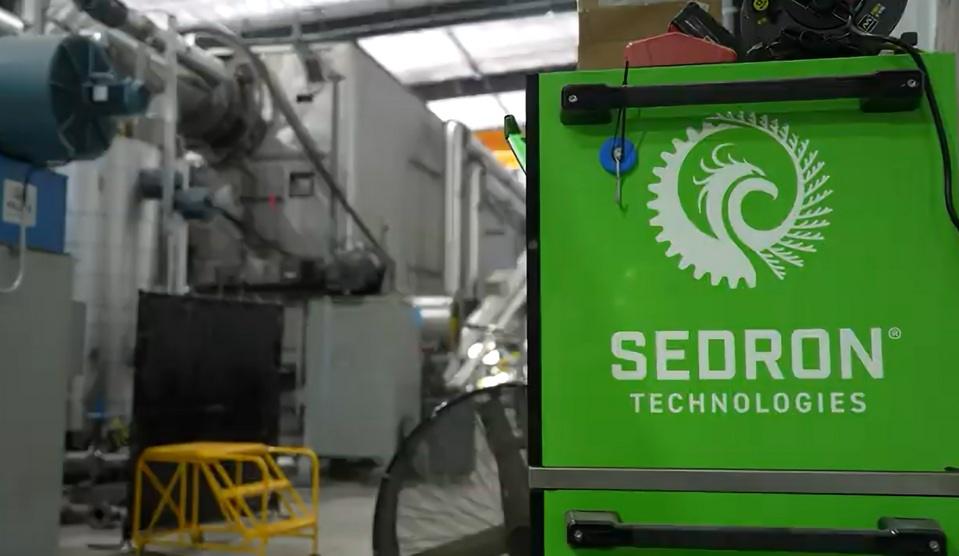
Sedron’s core innovation, the Varcor technology, represents a paradigm shift in waste management. This proprietary system is engineered to recover both clean water and essential nutrients from diverse liquid waste streams, drastically reducing the volume of material requiring disposal. Traditionally, waste disposal has been an environmental burden and a significant operational cost. Sedron flips this equation, converting what were once liabilities into tangible assets: purified water, renewable energy, and various carbon-negative products. This versatility is a key differentiator, enabling applications across two critical sectors: municipal biosolids upcycling and agriculture upcycling. In the municipal sphere, wastewater biosolids are transformed into purified water and a concentrated fuel, capable of generating carbon-negative electricity. Similarly, in agriculture, the technology addresses waste challenges, turning them into valuable resources. This dual-pronged strategy offers investors exposure to a technology with broad market applicability and consistent demand, less susceptible to the cyclical pressures that often impact direct energy commodities.
Navigating Energy Markets: Stability Amidst Volatility
While Sedron operates in the waste-to-value sector, its growth trajectory is inextricably linked to the broader energy investment landscape. As of today, Brent Crude trades at $94.66, reflecting a 1.52% gain within a daily range of $91.39-$95.05. WTI Crude also saw upward movement, reaching $91.27, up 1.78%. These price points come after a period of fluctuation, with Brent having declined by $7.07, or 7%, over the past 14 days from $101.16 on April 1st. Even with gasoline prices climbing to $3.17, up 1.28% today, investors are increasingly looking beyond the immediate swings of the crude market. Our proprietary data indicates a growing appetite among investors for opportunities that offer a degree of insulation from geopolitical shocks and supply-demand imbalances. Sedron’s model, generating renewable energy and valuable commodities from predictable waste streams, provides a counter-cyclical element to a diversified energy portfolio. It represents a hedge against pure commodity price volatility, offering revenue streams tied to essential municipal services and agricultural efficiency rather than speculative oil price movements.
Addressing Investor Focus: Beyond Crude Price Predictions
Our analytics indicate that investors are asking increasingly sophisticated questions, moving beyond just “is WTI going up or down?” There’s a clear intent to understand the long-term trajectory of energy markets, identifying stable growth drivers and diversification opportunities. The underlying question is often about where to find sustainable value in a rapidly evolving energy landscape. Sedron’s expansion plan, backed by $500 million, directly addresses this investor sentiment. By deploying its Varcor technology across North America, Sedron is tapping into a fundamental need for sustainable waste management solutions. This isn’t just about environmental compliance; it’s about creating economic value from what was previously discarded. The consistent demand for waste processing, coupled with the rising value of reclaimed water and renewable energy, positions Sedron in a market segment with robust, long-term growth potential, distinct from the more speculative aspects of traditional oil and gas exploration and production. This appeals to investors seeking more predictable returns and a clearer path to impact.
Forward Outlook: Macro Events and Micro Catalysts
For investors monitoring the energy sector, understanding the broader macro environment is crucial, even for investments in adjacent segments like waste-to-value. Upcoming energy events, while not directly impacting Sedron’s daily operations, shape overall market sentiment and capital allocation. This week, the EIA Weekly Petroleum Status Report (April 22nd and April 29th) will offer insights into crude inventories and demand, influencing general market psychology. The Baker Hughes Rig Count (April 24th and May 1st) provides a pulse on upstream activity. Crucially, the EIA Short-Term Energy Outlook, due on May 2nd, will offer a comprehensive forecast for energy supply, demand, and prices across various commodities. This outlook will indirectly inform the economic viability of Sedron’s renewable energy outputs and the broader market’s appetite for clean energy investments. While Sedron’s growth is driven by fundamental waste management needs and technological deployment, these macro reports provide essential context, helping investors gauge the overall health and direction of the energy sector, and thus, the climate for future capital deployment into innovative solutions like Sedron’s. The continued expansion of Sedron’s Varcor system across municipal and agricultural applications will serve as its own set of micro-catalysts, demonstrating tangible progress and further validating the waste-to-value investment thesis.


