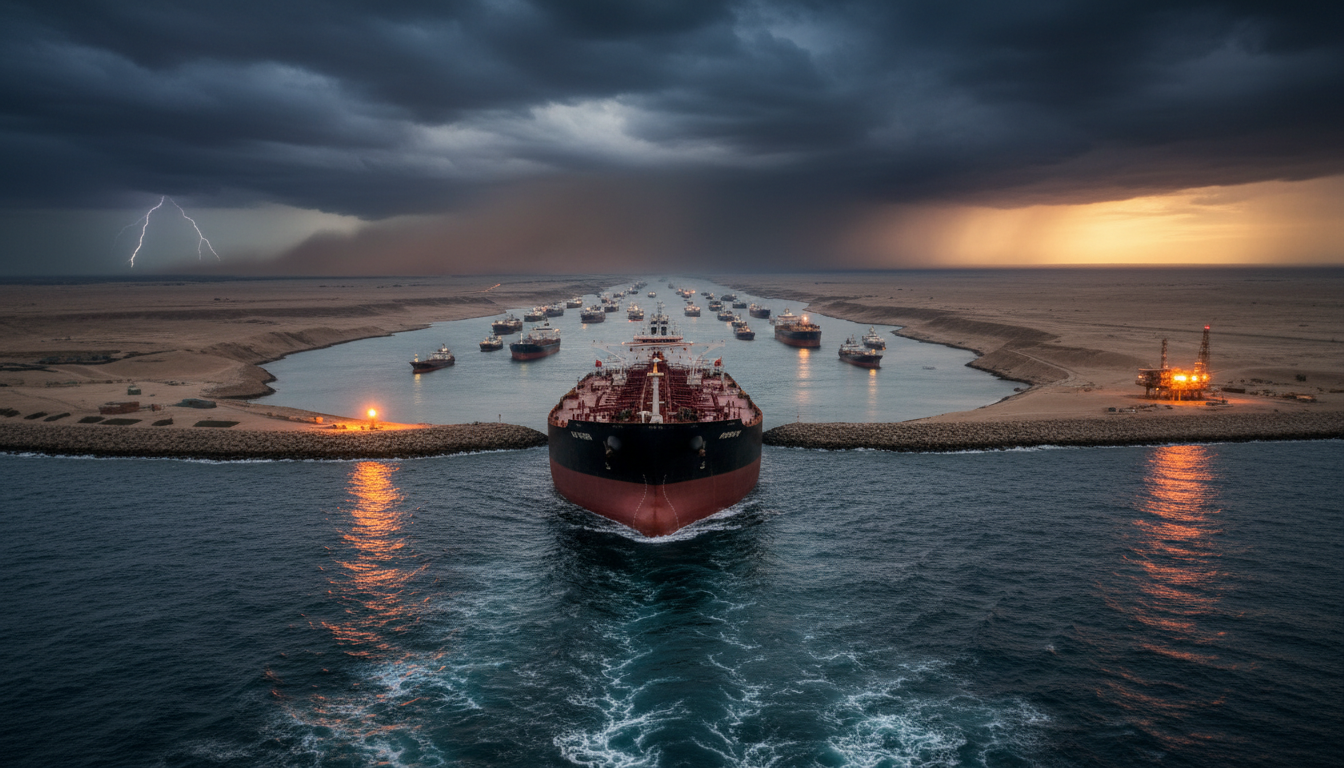
Global energy markets face immediate and significant upheaval following Iran’s reported closure of the Strait of Hormuz. This critical maritime chokepoint, vital for a substantial portion of the world’s oil and liquefied natural gas (LNG) supplies, has been sealed off in direct response to alleged Israeli military actions in Lebanon. This dramatic development, reported by state media and cited by the Associated Press on April 9, 2026, shatters a precarious ceasefire with the United States and injects a profound level of uncertainty into the global energy landscape, demanding immediate attention from investors in the oil and gas sector.
The strategic waterway’s closure directly threatens the smooth transit of approximately one-fifth of the world’s crude oil and LNG volumes. For energy investors, this translates into an instant surge in geopolitical risk premium, with immediate and potentially lasting impacts on commodity prices, shipping costs, and the profitability of energy companies worldwide. The move follows earlier warnings from Tehran that it might withdraw from the delicate truce with Washington, accusing Israel of persistent ceasefire violations through ongoing attacks in Lebanon.
The Undeniable Economic Leverage of the Strait of Hormuz
For investors monitoring global energy security, the Strait of Hormuz represents an unparalleled concentration of risk and strategic importance. Situated between Iran and Oman, this narrow passage connects the Persian Gulf’s major oil and gas producers—including Saudi Arabia, the United Arab Emirates, Qatar, Kuwait, Iraq, and Iran itself—to the global market. Its closure doesn’t merely disrupt supply; it effectively severs a critical artery of global energy trade. The statistics underscore its irreplaceable role: roughly 17 million barrels of oil and over 30% of the world’s seaborne LNG pass through this chokepoint daily under normal circumstances. Any disruption here has immediate, reverberating effects across the entire energy value chain, from upstream exploration and production to downstream refining and consumer energy prices.
The implications extend beyond crude oil. Qatar, a major global LNG exporter, relies almost entirely on the Strait of Hormuz for its shipments to Asia and Europe. A prolonged closure would not only tighten global LNG supplies but could also trigger a scramble for alternative sources, driving up natural gas prices globally. Tanker traffic, already operating with tight margins and sensitive to regional instability, will face unprecedented hurdles, leading to soaring insurance premiums and re-routing costs, further compounding supply chain pressures. Energy companies with significant exposure to Middle Eastern crude or LNG exports, or those heavily reliant on specific shipping routes, face an immediate re-evaluation of their risk profiles and operational strategies.
Geopolitical Dynamics Fueling Market Instability
The decision by Iran to close the Strait of Hormuz is presented as a direct consequence of escalating regional tensions. Iranian Foreign Minister Abbas Araghchi, in a significant diplomatic exchange with Pakistan’s army chief Asim Munir, explicitly raised what he termed “ceasefire violations” by Israel. According to an Iranian foreign ministry statement, Araghchi detailed “the Zionist regime’s violations of the ceasefire in Iran and Lebanon.” This statement underlines Iran’s justification for its actions, framing them as a retaliatory measure amidst a perceived breach of the established truce. The reference to “violations in Iran” further suggests an even broader scope of alleged infringements, signaling deep-seated grievances that have now manifested in this critical energy blockade.
This incident is a stark reminder of the interconnectedness of geopolitical stability and global energy security. The Middle East remains a crucible of political and military tensions, and conflicts, even those seemingly localized, carry the potential for immediate and profound impacts on international commodity markets. For energy investors, understanding these complex diplomatic and military undercurrents is paramount, as they directly inform market volatility and the underlying risk premium associated with energy assets. The fragility of ceasefires and the propensity for rapid escalation in the region mean that investors must maintain heightened vigilance.
Investment Strategy Amidst Hormuz Headwinds
In this rapidly unfolding scenario, investors must critically assess their portfolios. The immediate aftermath of such a dramatic event typically sees a sharp spike in crude oil futures, with both Brent and WTI benchmarks likely to reflect a significant supply disruption premium. Companies engaged in oil and gas exploration and production (E&P) might initially benefit from higher commodity prices, potentially seeing an uplift in their stock valuations. However, the sustainability of such gains hinges on the duration of the closure and the broader geopolitical response.
Conversely, companies heavily involved in maritime shipping, particularly those with significant tanker fleets operating in or near the Persian Gulf, face immediate operational challenges and increased financial burdens through higher insurance and security costs. Refiners, while potentially seeing increased output value, will also contend with higher input crude costs, potentially squeezing margins depending on their ability to pass these costs onto consumers. Long-term energy infrastructure projects and investments in new supply regions that bypass traditional chokepoints could see renewed strategic interest and accelerated development.
The closure of Hormuz also underscores the strategic value of energy diversification and regional supply security. Nations and companies with robust strategic petroleum reserves or diversified sourcing capabilities will be better positioned to weather the immediate shock. For investors, this event highlights the enduring importance of evaluating geopolitical risk as a fundamental component of energy investment decisions, moving beyond conventional supply-demand dynamics alone.
Looking Ahead: Pathways and Pitfalls
The global community now faces immense pressure to de-escalate the situation and restore stability to the Strait of Hormuz. Diplomatic efforts will intensify, and the actions of major global powers will be closely watched. Any prolonged closure carries the risk of severe economic consequences, potentially triggering a global energy crisis and broader economic slowdown. Conversely, a swift resolution, while certainly mitigating the worst outcomes, may not fully erase the heightened risk premium now embedded in energy markets. The precedent set by this closure will likely influence future assessments of maritime security and global supply chain resilience.
For savvy energy investors, this period demands not just monitoring but active strategy. Identifying companies with resilient balance sheets, diversified asset bases, or those positioned to benefit from higher energy prices or alternative supply routes will be key. Hedging strategies may become more critical, and a keen eye on international diplomacy, military maneuvers, and the rhetoric from key regional players will be essential for anticipating market shifts. The closure of the Strait of Hormuz is not merely a headline; it is a profound market signal that warrants an immediate re-evaluation of global energy investment strategies.


