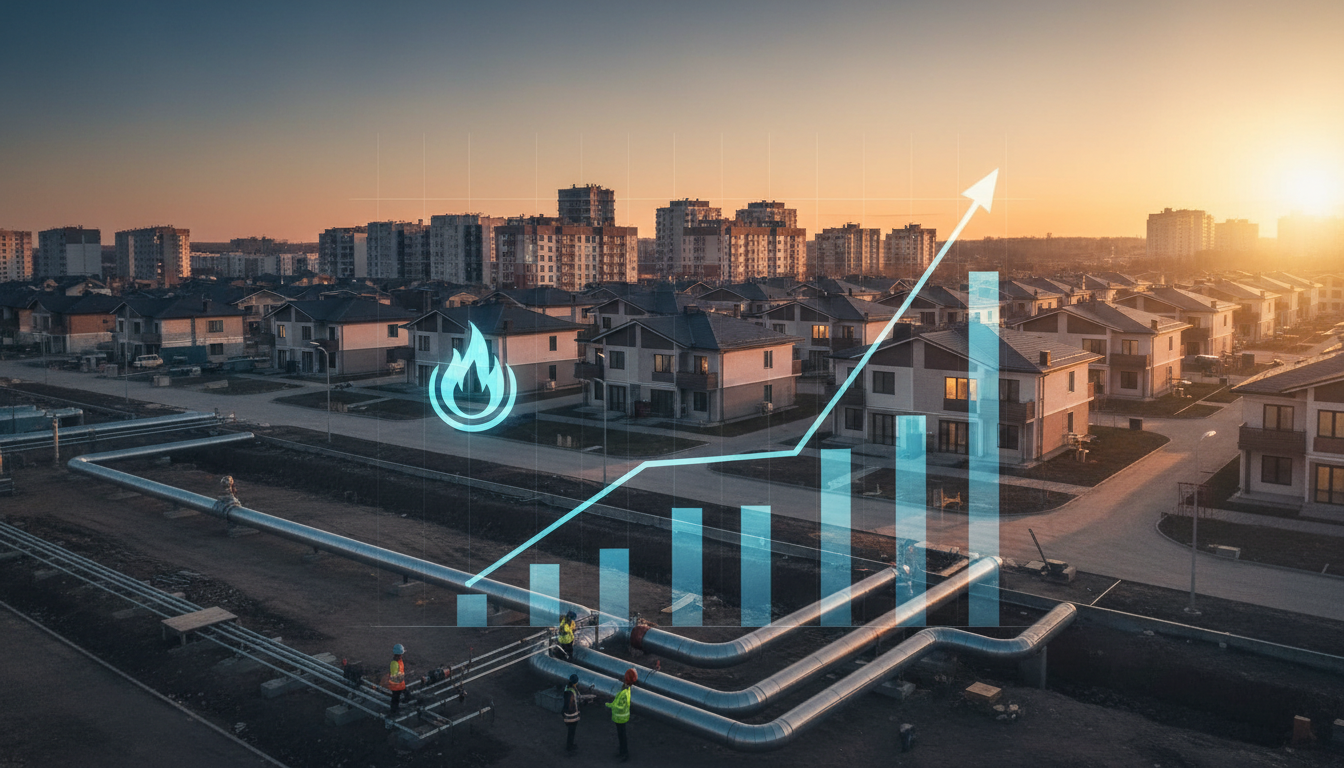
Patna, a key urban center, is rapidly transitioning its domestic energy landscape, steering thousands of households towards Piped Natural Gas (PNG) amidst a backdrop of escalating global energy market volatility and recurrent liquefied petroleum gas (LPG) supply disruptions. This strategic shift, driven by concerns over consumer panic stemming from geopolitical conflicts in West Asia, presents a robust growth narrative for India’s city gas distribution (CGD) sector and offers a significant glimpse into the future of urban energy consumption.
State-owned Gas Authority of India Ltd (GAIL), a dominant player in the nation’s natural gas value chain, stands at the forefront of this transformation. The company has already established PNG connections for over 30,800 households across Patna, effectively laying the groundwork for a more stable and cost-efficient energy supply. Critically, GAIL has announced ambitious plans to extend its network to an additional 70,000 homes in the coming months, signaling a powerful commitment to expanding the reach of this vital infrastructure.
GAIL’s Strategic Network Expansion Underway
GAIL’s expansion strategy is geographically targeted, initially concentrating on high-density residential corridors. The company has successfully integrated areas stretching from Danapur to Gandhi Maidan along the bustling Bailey Road, with significant progress observed in localities such as Boring Road and Anisabad. The current phase of expansion is specifically prioritizing government residential zones, including Gardanibagh, R Block, and areas adjacent to the bypass, ensuring broad-based adoption across diverse socio-economic segments.
According to AK Sinha, General Manager and district in-charge for GAIL, the financial entry barrier for consumers remains remarkably low. An initial connection fee of just ₹500 makes PNG highly accessible, with subsequent billing based purely on actual consumption. Sinha highlighted the operational efficiency of the rollout, noting that “Once formalities are completed, setting up the pipeline and making it operational usually takes around three days,” minimizing disruption for new adopters.
Unpacking the Economic and Safety Advantages of PNG
For investors monitoring the energy sector, the compelling economics and inherent safety advantages of PNG are critical market drivers. PNG is positioned as approximately 20 percent cheaper than traditional LPG cylinders, offering significant household savings that directly impact consumer adoption rates. Furthermore, its superior safety profile provides a clear competitive edge. As Sinha explained, “Being lighter than air, PNG disperses quickly in case of leakage, unlike LPG cylinders, which can accumulate and pose hazards.” This intrinsic safety attribute resonates strongly with urban consumers and regulators alike, fueling demand.
User feedback underscores these benefits. Gitu Sinha, a PNG user for three months, expressed relief from the logistical burdens of LPG: “Handling cylinders every few weeks is tiring. With PNG, the supply is continuous and hassle-free.” Mukul Verma, a long-term PNG consumer for five years in Jagdeo Path, further elaborated on the financial benefits, stating that for a family of three or four, the monthly bill “rarely exceeds ₹800, which is cheaper than LPG.” Verma also praised the consistent gas pressure and minimal safety concerns, cementing the value proposition for households.
Surging Demand and Navigating Infrastructure Challenges
The burgeoning demand for PNG in Patna is palpable, with authorities reporting a consistent increase in new applications. On a recent Sunday alone, the city recorded 22 new domestic applications, illustrating the accelerating consumer shift. This organic growth underscores the market’s readiness for cleaner, more reliable fuel sources.
However, expansion is not without its hurdles. Infrastructure development projects, particularly the ongoing metro rail construction and other urban upgrades, present significant challenges for pipeline installation in specific pockets of the city. These logistical constraints necessitate careful planning and coordination to ensure uninterrupted network expansion, a common theme for CGD operators in rapidly developing urban environments.
Government and Policy Support Accelerating Adoption
Local authorities are actively championing the transition. Patna District Magistrate Thiyagarajan S M recently chaired a meeting to accelerate Domestic Piped Natural Gas (DPNG) connections, urging residents to embrace this cleaner fuel. GAIL is proactively organizing special camps to streamline the application process, further supported by the availability of online and digital platforms for easy access to new connections. This robust governmental and administrative backing is a powerful catalyst for market penetration.
Moreover, a clear policy directive is being implemented to facilitate this energy transition. Households that adopt PNG are being encouraged to surrender their LPG connections. Authorities have explicitly stated that consumers utilizing PNG will neither be issued LPG refills nor permitted to retain existing cylinders, thereby ensuring a complete and efficient transition away from the older fuel source. This strategic policy framework de-incentivizes hybrid usage, accelerating the city’s move towards a unified, piped gas infrastructure.
Investment Outlook: A Glimpse into India’s Energy Future
The Patna case study offers a compelling investment thesis for entities involved in India’s city gas distribution and natural gas sectors. GAIL’s aggressive expansion, coupled with the inherent economic and safety advantages of PNG, positions natural gas as a cornerstone of India’s urban energy transition. The proactive consumer adoption, strong governmental support, and strategic policy interventions create a favorable environment for sustained growth.
Investors should monitor the execution of GAIL’s expansion plans, paying close attention to overcoming infrastructure challenges and the efficiency of customer acquisition strategies. The rising demand for PNG in Patna is not an isolated incident but rather a microcosm of a larger national trend towards cleaner, more reliable, and economically viable energy sources. This shift represents a substantial long-term growth opportunity within the broader Indian energy market, highlighting the increasing importance of gas infrastructure development and distribution networks.


