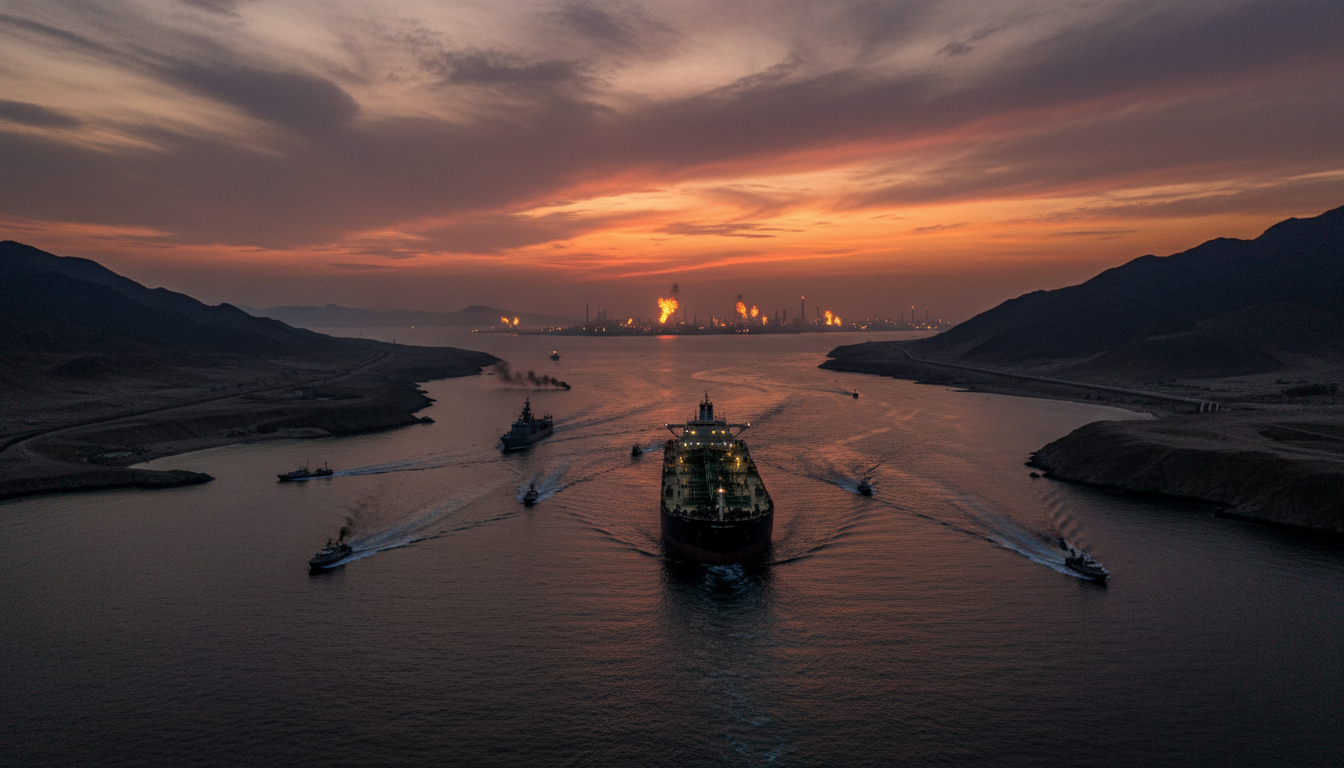
The geopolitical chessboard in the Middle East saw a significant escalation on Friday, with Iran asserting direct control over the vital Strait of Hormuz. This critical action, involving warnings to three commercial vessels, unfolds just one day after President Donald Trump’s decision to extend the US deadline for Iran to fully open the strategic waterway. For global oil and gas markets, this maneuver signals heightened supply risk and reinforces the region’s enduring volatility, demanding astute attention from investors.
Strait of Hormuz: A Chokepoint Under Pressure
Iran’s Revolutionary Guard delivered explicit warnings to two Chinese-owned ships and a vessel linked to a Hong Kong company, instructing them against passage through the Strait of Hormuz. Ship-tracking data from MarineTraffic confirmed that at least the two Chinese vessels altered course. This assertive stance follows Tehran’s move to formalize tolls for maritime transit, a legislative effort advancing through the Iranian parliament aimed at enshrining the nation’s “sovereignty, control and oversight” over the passage. While Iran has permitted some “nonhostile” nations, including China, to traverse the strait during much of the recent conflict, the formalization of fees and the direct warnings represent a substantial shift.
For investors, the implications are clear: the Strait of Hormuz accounts for approximately 20% of the world’s petroleum liquid consumption and a substantial volume of natural gas and fertilizer shipments. Any impedance, whether through explicit tolls or direct blockades, places immediate upward pressure on shipping costs, insurance premiums, and ultimately, global commodity prices. Secretary of State Marco Rubio, speaking after a G7 meeting in Paris, characterized Iran’s toll plan as “illegal,” urging affected nations to take action to secure unrestricted commercial shipping through the strait. The US has set an April 6 deadline for Iran to fully reopen the strait, with President Trump threatening to target Iranian power plants should compliance not be met.
Escalating Strikes and Strategic Targets
The Strait of Hormuz confrontation is occurring amidst a continuous barrage of retaliatory strikes across the region. Iranian state media reported that recent airstrikes on Iranian soil targeted a uranium processing plant, a nuclear research center, two steel plants, and another industrial complex. The Israeli military confirmed its involvement, stating it struck a heavy-water plant in Arak, a site linked to potential plutonium production. This particular facility has long been a source of international concern, though its reactor core was removed in 2016 under the nuclear deal struck with the Obama administration and European nations. The Israeli military indicated the strike targeted new construction at the site, which had sustained damage during last year’s 12-day conflict between Israel and Iran.
Iranian Foreign Minister Abbas Araghchi vehemently condemned the attacks, pledging a “forceful response” and asserting Iran would exact a “HEAVY price for Israeli crimes.” He accused the actions of violating President Trump’s pledge to avoid targeting Iranian energy infrastructure, highlighting the combustible nature of the current geopolitical environment and the potential for direct strikes on energy assets.
Regional Instability and Military Posturing
The conflict’s reach extends far beyond Iran and Israel. Kuwait’s main commercial port, Shuwaikh, suffered damage from a “hostile drone” attack on Friday, underscoring the vulnerability of Gulf State infrastructure to Iranian-launched drones and missiles. In Lebanon, the situation remains tense, with the Israeli military issuing further evacuation warnings for Beirut’s southern outskirts, a known Hezbollah stronghold, followed by subsequent airstrikes. Hezbollah, the powerful Iranian-backed militia, confirmed it targeted an Israeli tank in southern Lebanon, just five miles from the Israeli border.
Amidst these regional flare-ups, the Pentagon has augmented its ground troop presence in the Middle East. While President Trump has denied intentions of deploying ground forces into Iran, market speculation persists regarding potential operations, notably a push to seize Kharg Island, Iran’s primary oil export terminal. Such a move would represent an unprecedented escalation, directly threatening Iran’s ability to export crude and sending shockwaves through global energy markets. Secretary Rubio, however, downplayed the necessity of ground troops, suggesting the conflict could conclude “within weeks, not months,” and that the US could achieve its objectives without a ground invasion.
Diplomatic Deadlock and Investment Outlook
Despite a month of US and Israeli efforts to degrade Iran’s military capabilities, diplomatic resolution remains elusive. The Trump administration reportedly presented Iran with a 15-point plan, demanding a comprehensive shutdown of its nuclear program and severe restrictions on its missile arsenal. However, Secretary Rubio confirmed on Friday that Iran has yet to formally respond or indicate willingness to engage in negotiations. Iran, for its part, has declared it will only cease the conflict if the United States pays war reparations and formally recognizes its “exercise of sovereignty” over the Strait of Hormuz.
For energy investors, this intricate web of escalating military action, strategic chokepoint control, and diplomatic impasse translates into a significant geopolitical risk premium on oil prices. The potential for further supply disruptions from the Strait of Hormuz, direct attacks on energy infrastructure, or a broader regional conflict demands a cautious approach. While the exact trajectory remains uncertain, the current environment reinforces the imperative for market participants to closely monitor developments, assess supply chain vulnerabilities, and factor increased volatility into their investment strategies.


