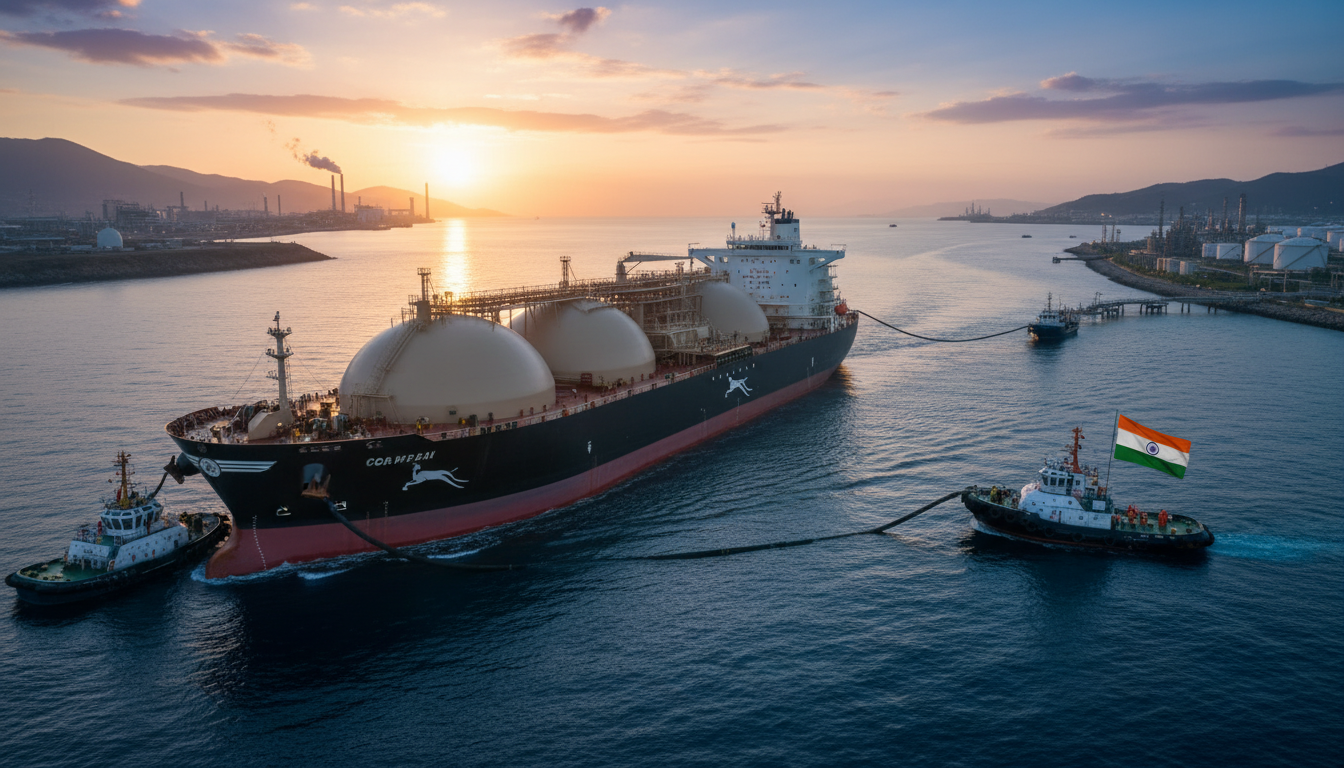
In a significant strategic pivot, Indian energy refiners have commenced the procurement of crude oil and liquefied petroleum gas (LPG) from Iran. This crucial move follows the temporary lifting of US sanctions, allowing a pathway for India to mitigate severe supply disruptions stemming from the volatile situation in the Strait of Hormuz. The near-closure of this vital maritime chokepoint has prompted an urgent re-evaluation of energy procurement strategies by one of the world’s largest energy consumers.
The first vessel carrying Iranian LPG is anticipated to dock this week, with further shipments of both crude oil and LPG expected to follow swiftly. Industry insiders confirm that Indian refiners are actively engaged in negotiations with the National Iranian Oil Co. (NIOC) to secure the maximum possible volumes in the immediate term. While specific short-term quantities remain undisclosed, sources close to the discussions indicate that several agreements have already been formalized. However, a note of caution persists among buyers, with one individual highlighting the critical need for these Iranian-origin cargoes to safely exit the conflict zone and be en route before they can be fully factored into supply forecasts.
Strait of Hormuz: A Geopolitical Lifeline
The impetus for this dramatic shift stems directly from the precarious situation in the Strait of Hormuz. Iran’s foreign minister, Abbas Araghchi, recently declared on Iranian state television that passage through the strategic waterway would be permitted for vessels from “friendly” nations, specifically naming India, China, Russia, Iraq, and Pakistan. This declaration aims to alleviate, to some degree, the acute pressure on fuel supplies that has seen numerous other tankers, including 20 India-flagged vessels, stranded in the Persian Gulf amidst threats of Iranian missile activity.
Araghchi clarified Iran’s position, stating that the Strait of Hormuz is “not completely closed,” but rather “closed only to enemies,” and that allowing the passage of adversary ships or their allies is not justified. This stance underscores the heightened geopolitical risks impacting global energy trade through this critical choke point, which facilitates roughly one-fifth of the world’s total oil consumption.
The international community has voiced deep concern over the escalating crisis. UN Secretary General Antonio Guterres recently called for the immediate reopening of the Strait, emphasizing its vital role beyond just oil and gas. Guterres highlighted that the “prolonged closure of the Strait of Hormuz is choking the movement of oil, gas and fertilizer at a critical moment in the global planting season,” pointing to severe harm and profound insecurity impacting civilians across the region and beyond. For investors, the stability of this waterway remains a paramount concern, directly influencing crude prices, shipping costs, and overall global supply chain resilience.
India’s Urgent Energy Security Imperative
India, heavily reliant on imports, particularly from the Gulf region, finds itself scrambling to secure energy supplies from diverse global sources to avert a potential fuel crisis. LPG, a critical cooking fuel for millions of Indian households, is of particular concern due to the nation’s high dependence on Gulf-origin imports. Iranian shipments offer a compelling advantage: they face no transit disruptions within the Gulf and can reach Indian ports significantly faster than alternative, long-haul supplies from outside the region.
Historically, Iran played a substantial role in India’s energy mix. Prior to the imposition of US sanctions in 2019, which effectively halted purchases, Iranian crude accounted for approximately 10% of India’s total oil imports. The nation currently imports around 60% of its total LPG requirements. While India has strategically ramped up domestic LPG production by an impressive 40% since the conflict began, now meeting roughly 56% of total consumption, import requirements remain substantial. This underscores the critical nature of diversified and secure supply lines for India’s energy stability.
The impact of the Strait of Hormuz disruptions is already evident in India’s import figures. Shipping data from energy intelligence firm Vortexa indicates that India’s crude imports between March 1 and March 18 were approximately 23% lower than in the preceding month. Analysts project that if the Strait remains inaccessible through the end of March, the full month’s crude imports could see a reduction of about one-fifth, based on current vessel movements towards India. Such a significant drop would undoubtedly put upward pressure on domestic fuel prices and could impact refinery throughputs and profitability.
Market Implications and Investor Outlook
The resumption of Iranian crude and LPG flows to India, albeit under temporary sanction relief, introduces a complex dynamic into global energy markets. While it offers a crucial lifeline for India’s immediate energy security needs and could temper some of the upward price pressure from the Strait’s near-closure, investors should remain cognizant of the inherent volatility. The temporary nature of sanctions relief and the ongoing geopolitical tensions in the Middle East mean that any supply gains could be quickly reversed. Furthermore, Reliance Industries publicly denied a recent media report claiming its purchase of Iranian-origin oil, highlighting the continued sensitivity surrounding such transactions even with temporary waivers.
For investors tracking the oil and gas sector, particularly those with exposure to Indian refining companies or global energy supply chains, this development warrants close attention. It underscores the profound impact of geopolitical events on energy flows, pricing, and national energy strategies. The ability of Indian refiners to successfully integrate Iranian supplies and the overall resolution of the Strait of Hormuz situation will significantly influence short-term energy market stability and the profitability of downstream operations in one of the world’s fastest-growing economies.


