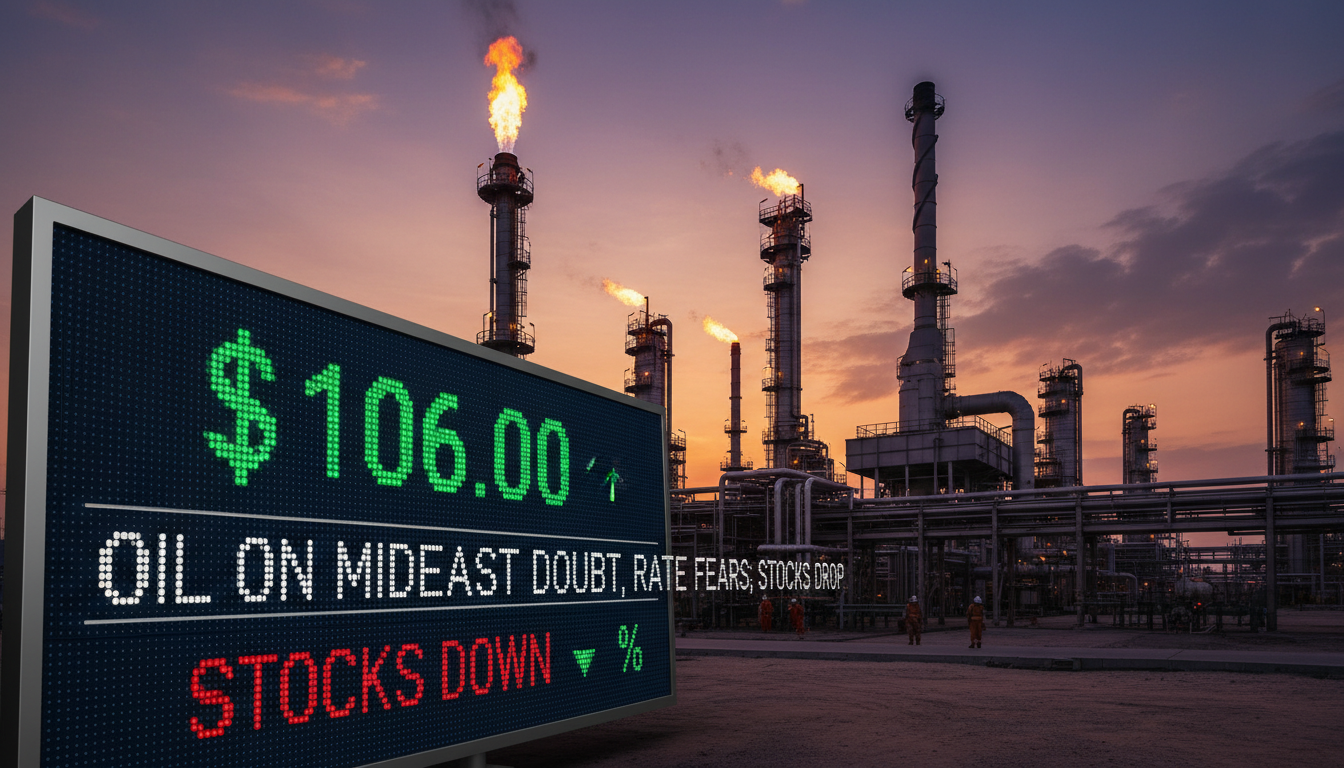
Geopolitical Tensions Propel Brent Crude to $106, Global Markets Brace for Sustained Volatility
The global energy landscape is once again dictating broader market sentiment as Brent crude prices surged to an alarming $106 a barrel on Thursday, igniting a fresh wave of selling across international stock markets. This significant upward movement in oil prices directly follows Iran’s firm denial of any ongoing dialogue with the United States, effectively dampening any hopes for a swift resolution or ceasefire in the escalating West Asian conflict, which has now spanned nearly a month. Investors are now grappling with heightened uncertainty, recalibrating risk assessments across their portfolios.
Energy Markets Under Pressure: Oil and Gas See Dramatic Gains
The immediate fallout from the geopolitical developments has manifested profoundly in the energy sector. Brent crude, the international benchmark, not only crossed the $106 mark but also demonstrated a gain exceeding 3% in a single day, cementing a staggering 45% increase for the month. European natural gas mirrored this aggressive climb, also rising over 3% to reach 54.5 per megawatt hour, marking an even more dramatic 70% surge over the past month. These substantial gains underscore a market increasingly pricing in a significant geopolitical risk premium, reflecting concerns over potential supply disruptions and a tightening global energy balance. For investors, this creates both opportunity and risk, emphasizing the critical need for vigilance in volatile commodity markets.
West Asian Conflict Fuels Broader Market Contagion
The reverberations from the West Asian conflict extend far beyond the energy complex. Conflicting reports regarding the scope of diplomatic engagement, coupled with the deployment of thousands of additional US troops to the region, abruptly halted a three-day rally in global equities. This uncertainty reignited aggressive selling pressure across sovereign debt markets worldwide. Asian markets experienced notable declines, prompting the Philippines to convene an unscheduled central bank meeting to address the unfolding turmoil. European stocks and government bond prices also fell sharply, as the specter of sustained inflation loomed larger.
Central Banks Eye Hawkish Stance Amid Inflationary Pressures
The surge in energy prices is placing renewed pressure on central banks globally to maintain a hawkish monetary policy stance. Joachim Nagel, the head of Germany’s central bank, explicitly stated in an interview that an interest rate hike by the European Central Bank (ECB) next month remains “an option.” He further elaborated, “I think we’ll have enough data by April to determine whether we need to take action or whether we can wait and see, but we shouldn’t shy away from it now just because we think it’s still too early.” This sentiment underscores a growing concern among policymakers that elevated energy costs could entrench inflationary expectations, necessitating further tightening.
Bond markets immediately reflected this hawkish outlook. Germany’s two-year bond yield, particularly sensitive to ECB rate expectations, rose by 6 basis points to 2.67%, reversing a 4-basis-point decline from the previous day. Across the Atlantic, the US two-year yield approached the critical 4% threshold, signaling increased market anticipation of Federal Reserve action. Meanwhile, in Asia, Japan’s two-year yield reached a 30-year peak at 1.33%, as traders solidified their bets on an imminent Bank of Japan rate hike, potentially as early as next month. These movements highlight a synchronized global push towards higher borrowing costs, a direct consequence of persistent inflationary pressures exacerbated by energy price spikes.
Navigating Investment Strategies in an Elevated Risk Environment
For investors focused on oil and gas, the current environment presents a complex interplay of forces. While rising energy prices clearly benefit producers, the broader macroeconomic implications of central bank tightening introduce a new layer of risk. Pascal Koeppel, Chief Investment Officer at Vontobel SFA, articulated this concern succinctly, noting that “prolonged disruption in the Strait could keep energy prices and inflation elevated, forcing central banks to tighten.” This scenario suggests that while energy sector revenues may increase, the global economic growth outlook could be curtailed by higher interest rates, potentially dampening demand in the longer term. Investors must therefore weigh the immediate upside from commodity prices against the broader economic headwinds posed by aggressive monetary policy.
The geopolitical undercurrents emanating from West Asia remain the primary driver for immediate oil market movements. Any perceived escalation or prolonged instability around critical transit chokepoints, such as the Strait of Hormuz, could send prices even higher. Conversely, any credible diplomatic breakthrough, however unlikely it appears currently, could trigger a sharp reversal. Diversification and dynamic risk management strategies are paramount for investors navigating these turbulent waters. Monitoring not just crude oil fundamentals but also global bond yields and central bank communications will be critical in formulating successful investment decisions within the oil and gas sector for the foreseeable future. The market remains on edge, with energy prices serving as a stark barometer of geopolitical and economic health.


