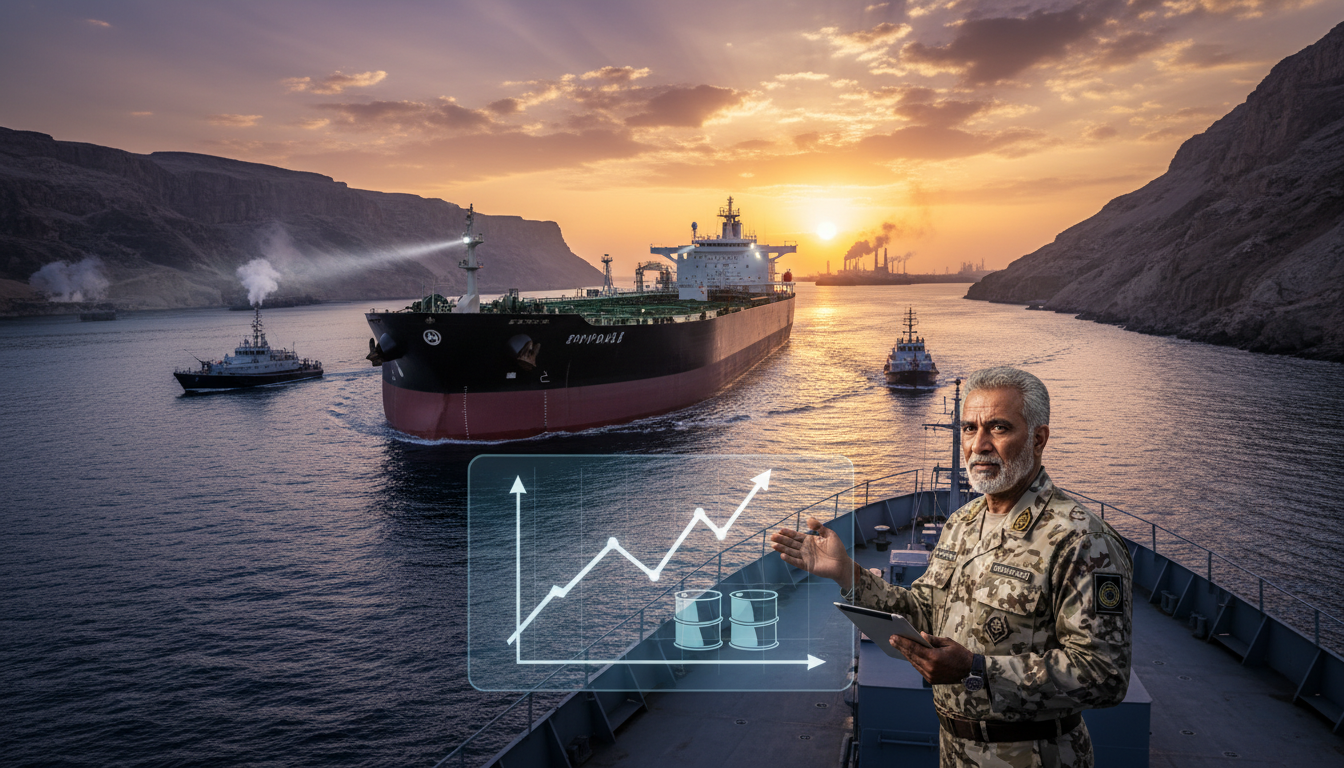
The Strait of Hormuz, a critical maritime artery responsible for the transit of nearly a third of all seaborne oil and a fifth of the world’s liquefied natural gas, is undergoing a profound transformation. Recent intelligence points to the effective implementation of a new, mandatory ‘toll booth’ system by Iran’s Islamic Revolutionary Guard Corps (IRGC) for vessels navigating this strategic choke point. This development marks a significant departure from established international maritime conventions, introducing unprecedented operational complexities and heightened risk premiums across global energy markets. For investors, understanding the immediate and long-term implications of this enforced compliance is paramount, as it directly impacts everything from crude oil prices to the profitability of shipping companies and the stability of global energy supply chains.
The Strait’s New Reality: Navigating Increased Risk Premiums
Since March 13, a new operational reality has taken hold in the Strait of Hormuz. Commercial vessels are now reportedly compelled to adhere to stringent protocols, including submitting comprehensive documentation, securing specific clearance codes, and accepting IRGC-escorted passage through a designated corridor. Our proprietary tracking data confirms that at least 26 vessels have successfully transited the Strait by submitting to this new vetting scheme. More strikingly, analysis of Automatic Identification System (AIS) data indicates that since March 15, no vessels have been observed using the conventional, unrestricted route. This abrupt shift underscores the IRGC’s asserted control and the shipping industry’s reluctant adaptation to the new regime.
For investors, this enforced compliance immediately translates into tangible financial impacts. Tanker operators face increased complexity, potentially longer transit times, and the associated rise in operational costs. This, in turn, is pushing freight rates higher and disrupting delivery schedules for crude oil and LNG. Insurers are actively reassessing coverage and adjusting premiums for voyages through the region, contributing to an overall increase in the cost of doing business for energy companies reliant on these vital shipping lanes. This perceived weaponization of a global maritime passage has the potential to inject significant volatility into crude oil and natural gas prices, directly affecting the valuations of upstream producers, midstream transporters, and downstream refiners globally.
Market Response and The Unseen Price Impact
Despite the substantial geopolitical implications, the immediate reaction in spot crude markets has been somewhat muted, reflecting a complex interplay of factors beyond just the Hormuz situation. As of today, Brent crude trades at $92.95, down 0.31% within a day range of $91.39 to $94.21. Similarly, WTI crude stands at $89.14, showing a 0.59% decline within its daily range of $87.64 to $90.71. Gasoline prices also reflect a slight dip, currently at $3.11 per gallon. This daily softening contrasts with the underlying tension in Hormuz, suggesting that other bearish pressures or a delayed market reaction are at play.
Looking at a broader horizon, Brent crude has actually trended downwards over the past 14 days, falling by 7% from $101.16 on April 1st to $94.09 on April 21st. This downward momentum suggests that while the Hormuz situation is a significant risk factor, it has not yet overcome broader market dynamics related to global demand outlooks or existing supply levels. Many investors are asking, “is WTI going up or down?” and the answer is nuanced: while geopolitical risk points upwards, current market trends show a short-term dip, likely influenced by broader inventory data or economic sentiment. The true impact of the Hormuz ‘toll’ is currently manifesting more as increased risk premiums in forward freight agreements and higher insurance costs, rather than an immediate, dramatic spike in crude prices.
Upcoming Data Points and Future Volatility Triggers
The coming weeks will be crucial for investors seeking to gauge the full impact of the Hormuz situation on energy prices, especially as new data points emerge. Our proprietary calendar of upcoming energy events highlights several key releases that will interact directly with the geopolitical risks emanating from the Strait. The EIA Weekly Petroleum Status Reports, scheduled for April 22nd, April 29th, and May 6th, will provide critical insights into U.S. crude oil and product inventories. Should these reports indicate tighter supplies or higher-than-expected demand, the perceived risk of disruptions in the Strait of Hormuz will be significantly amplified, potentially translating into upward price pressure.
Similarly, the API Weekly Crude Inventory reports on April 28th and May 5th will offer an early glimpse into inventory trends. These figures, alongside the Baker Hughes Rig Counts on April 24th and May 1st, will paint a clearer picture of supply-side dynamics. Perhaps most pivotal will be the EIA Short-Term Energy Outlook, slated for release on May 2nd. This comprehensive forecast could incorporate or explicitly address the escalating geopolitical risks in the Strait of Hormuz, providing a revised outlook for global oil and gas prices through the end of 2026. Investors asking “what do you predict the price of oil per barrel will be by end of 2026?” should closely monitor these reports, as they will shape the market’s long-term expectations and help define the true cost of navigating this new, riskier maritime landscape.
Geopolitical Standoff: Investment Implications Beyond Spot Prices
The international community’s reaction to these developments has been swift, though varied. India’s Ministry of Shipping, for example, has unequivocally rejected any notion of tolls or levies, asserting that the Strait remains an international passage governed by conventions guaranteeing freedom of navigation. This diplomatic pushback highlights the contentious nature of the IRGC’s new regime and the potential for prolonged geopolitical friction.
For investors, this standoff introduces a layer of systemic risk that extends far beyond daily spot price fluctuations. Companies with significant exposure to the Middle East, particularly those involved in maritime transport, face increased operational hurdles and potentially higher compliance costs. Investing in tanker companies, while potentially benefiting from higher freight rates driven by increased risk and longer transit times, must now factor in elevated insurance premiums and potential delays. Upstream producers, particularly those in the Middle East, could see their output become more susceptible to transit risks, even as global price volatility might offer opportunities. Downstream refiners, especially those heavily reliant on Middle Eastern crude, will need to build in greater resilience to supply chain disruptions and potentially higher input costs. The shift from free navigation to controlled passage represents a fundamental change in how a significant portion of the world’s energy is transported, demanding a thorough re-evaluation of portfolio strategies for long-term energy security and profitability.


