In a global energy market perpetually on edge, marked by geopolitical flare-ups and shifting demand dynamics, insights into strategic energy reserves offer a critical barometer for investors. While headlines often focus on immediate price swings, the underlying stability of major consuming nations provides a more profound signal about future supply risks and market resilience. Recent disclosures from a key Asian economy highlight a robust approach to energy security, painting a picture of deliberate planning that could mitigate downside risks even as crude prices exhibit recent volatility.
Strategic Reserves as a Bulwark Against Volatility
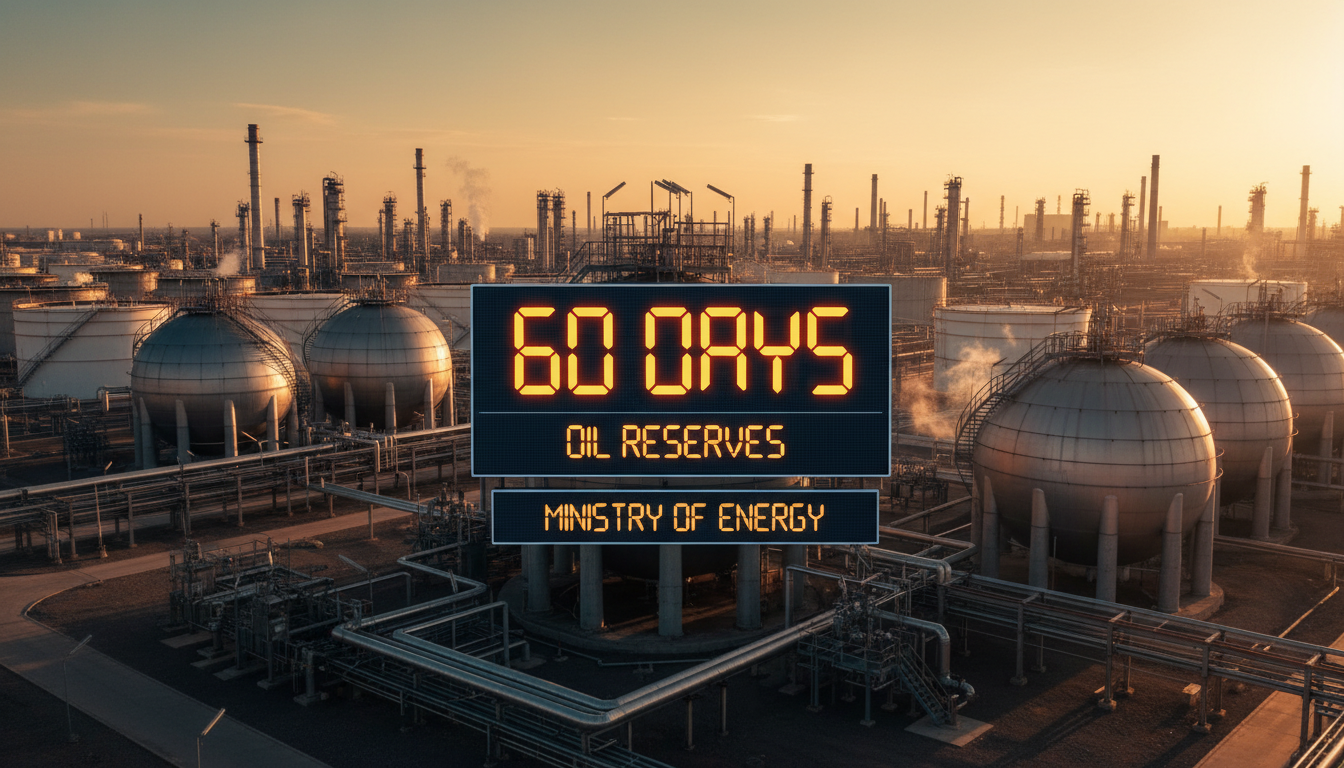
The concept of energy security has never been more pertinent for investors. A recent confirmation from a major global energy consumer reveals a substantial fuel stock cover extending for approximately 60 days, providing a significant buffer against potential disruptions. This figure, representing nearly two months of consistent energy supply, is a testament to meticulous planning and proactive sourcing. Furthermore, the nation’s comprehensive energy reserve capacity, encompassing crude oil, refined petroleum products, and critical strategic reserves, offers an even broader safety net, capable of sustaining demand for an impressive 74 days. For investors, these numbers are not mere statistics; they translate directly into tangible stability, significantly mitigating short-term market volatility risks. This strategic advantage is further reinforced by the confirmation that crude supplies for the upcoming 60-day period have already been firmly secured through forward contracting, a crucial move given ongoing geopolitical tensions impacting vital transit choke points.
Current Market Headwinds and Investor Outlook
The global crude market has seen its share of turbulence, with recent trading reflecting broader macroeconomic concerns. As of today, Brent Crude trades at $92.95, marking a marginal decline of 0.31% within a day range of $91.39 to $94.21. Similarly, WTI Crude stands at $89.14, down 0.59%, fluctuating between $87.64 and $90.71. This recent dip is part of a broader trend; Brent has seen a notable decline of $7.07, or approximately 7%, over the past 14 days, falling from $101.16 on April 1st to $94.09 yesterday. This downward pressure prompts a common investor question we’ve seen this week: “is WTI going up or down?” While short-term movements are influenced by daily news flow, the underlying demand stability from major consumers like the one discussed provides a counter-narrative to extreme bearish sentiment. The assurance of robust domestic supply and secured imports suggests that demand from this region remains resilient, potentially offering a floor to prices even amidst broader market jitters. Investors closely monitoring the global supply-demand balance should factor in such national-level energy security measures as they can significantly impact regional, and by extension, global crude flows and price stability.
Forward-Looking Catalysts and Supply Chain Resilience
Looking ahead, the energy market is replete with upcoming events that will further shape the supply and demand narrative, directly impacting investor decisions and, as many readers are asking, “what do you predict the price of oil per barrel will be by end of 2026?” The next two weeks alone present several critical data releases. Tomorrow, April 22nd, the EIA Weekly Petroleum Status Report will offer fresh insights into U.S. crude inventories and refining activity. This will be followed by the Baker Hughes Rig Count on April 24th, providing a pulse on upstream activity. The API Weekly Crude Inventory report on April 28th and another EIA report on April 29th will continue to refine our understanding of short-term supply dynamics. Crucially, the EIA Short-Term Energy Outlook, scheduled for May 2nd, will provide a more comprehensive forecast, offering a macro view that could influence long-term price predictions. The fact that a major consumer has already secured its crude supplies for the next 60 days effectively insulates a significant portion of global demand from these immediate market fluctuations, providing a cushion against potential price spikes or supply disruptions. This proactive approach suggests a degree of predictability in demand from this region that investors can build into their models, influencing not just crude futures but also the performance of integrated oil and gas companies.
Investment Implications and Dispelling Shortage Narratives
In a direct address to market concerns, the Ministry of Petroleum and Natural Gas has categorically stated the absence of any scarcity of petrol, diesel, or Liquefied Petroleum Gas (LPG) across the nation. Critically, no directives have been issued to ration fuel, a stark contrast to measures observed in other parts of the world. This official reassurance is vital for maintaining investor confidence in the operational continuity of the nation’s vast energy distribution network. The extensive network of over 100,000 retail fuel outlets nationwide remains fully operational, dispensing fuel without interruption. This unbroken service chain underscores the efficiency and resilience of the downstream sector. Unlike many countries grappling with significant price escalations, rationing schemes, vehicle restrictions, or even forced station closures, this nation’s robust energy infrastructure has obviated the need for any such extraordinary measures. For investors, this stability translates into a predictable operating environment for companies involved in refining, distribution, and retail, shielding them from the operational headaches and revenue uncertainties seen elsewhere. While questions like “How well do you think Repsol will end in April 2026?” highlight a focus on individual company performance, the stability of key consuming markets provides a foundational support for global energy sector profitability.


