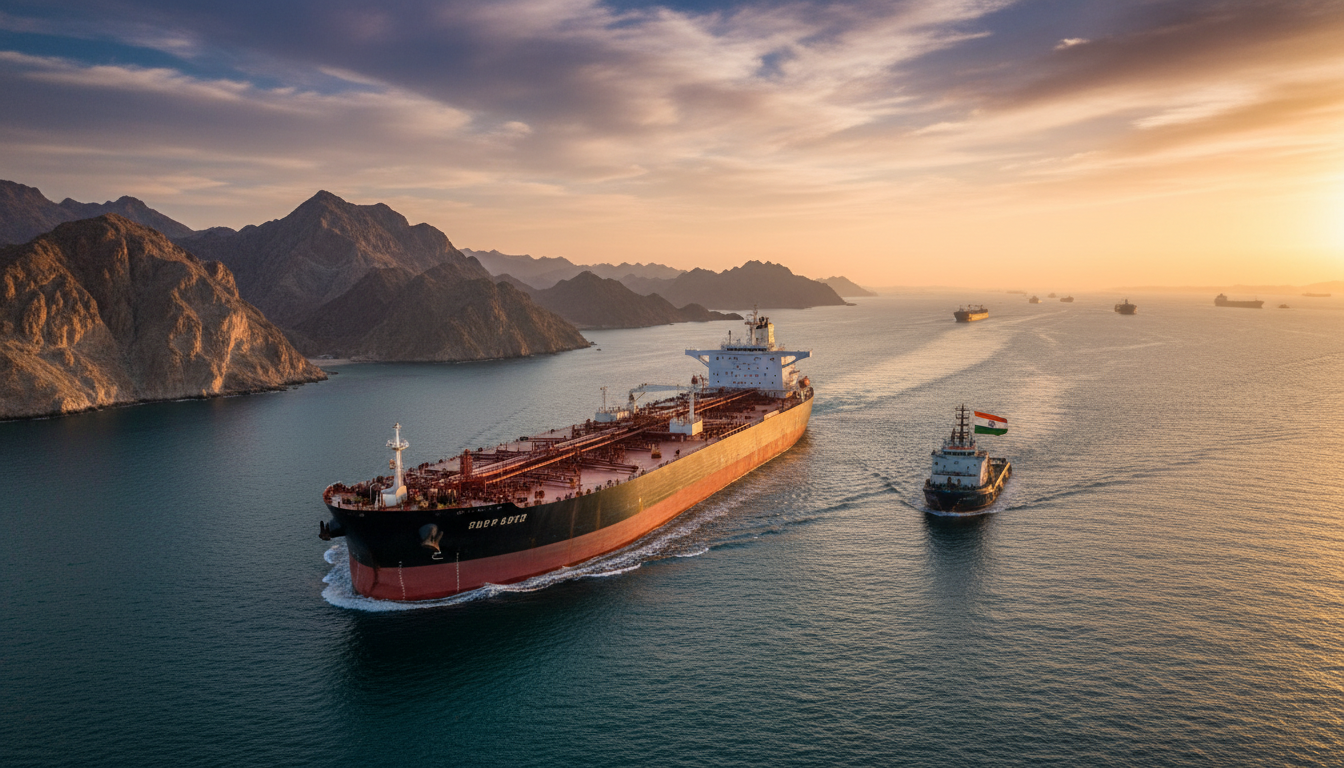
The global energy landscape received a significant calming signal with Iran’s recent confirmation that it will allow vessel transit through the strategic Strait of Hormuz for a select group of “friendly nations.” This announcement directly addresses persistent concerns over the uninterrupted flow of crude oil and liquefied natural gas (LNG) through the world’s most critical maritime chokepoint. For energy investors, this development offers a crucial, albeit potentially temporary, reprieve from the geopolitical anxieties that have recently dominated market sentiment, particularly as the broader West Asian security situation remains complex. The explicit inclusion of major energy consumers like India, China, and Russia, alongside regional partners Iraq and Pakistan, underscores Iran’s recognition of the interconnectedness of global energy trade and provides a tangible reduction in immediate supply risk for these key economies.
Geopolitical Easing and the Hormuz Arterial Flow
The Strait of Hormuz is far more than a mere shipping lane; it functions as an indispensable artery for global energy. An estimated 20% of the world’s crude oil supply, alongside a substantial portion of its LNG, traverses this narrow waterway daily. Any perceived or actual disruption inevitably sends immediate ripples across global oil prices, destabilizing investor sentiment and introducing layers of uncertainty into already delicate energy supply chains. This latest clarification from Tehran, specifically relayed through diplomatic channels to nations like India, directly mitigates a significant tail risk that has hung over the markets. The decision also follows intense international diplomatic pressure, notably from United Nations Secretary-General Antonio Guterres, who had vehemently stressed the severe global ramifications of any prolonged closure, highlighting its detrimental impact on essential commodities from oil and gas to crucial fertilizers, particularly at a critical juncture for global agricultural planting seasons. This diplomatic push likely played a pivotal role in paving the way for Iran’s recent assurances regarding maritime access, offering a much-needed easing of a key geopolitical friction point.
Market Response and Investor Sentiment
The news of eased transit through the Strait of Hormuz has contributed to a broader sentiment of de-escalation, which is reflected in recent market movements. As of today, Brent crude trades at $92.45 per barrel, marking a 0.85% decline, while WTI crude is at $88.69, down 1.09%. This intraday dip extends a more pronounced trend observed over the past two weeks, where Brent has notably retreated from highs of $101.16 on April 1st to $94.09 by April 21st, representing a significant $-7.07 (7%) reduction. The reduction in the geopolitical risk premium associated with Hormuz appears to be a factor in this downward price pressure. Investors are keenly watching whether WTI will sustain its recent downward trajectory or find a floor, a question frequently surfacing in our platform’s investor queries. The immediate concern for many remains the short-term direction, though a substantial number of investors are also projecting further out, seeking clarity on the potential price of oil per barrel by the end of 2026. This dual focus on immediate market signals and longer-term forecasts underscores the complex interplay of geopolitical events and fundamental supply-demand dynamics shaping investment strategies.
India’s Energy Security Bolstered
For nations like India and China, whose burgeoning economies are voracious consumers of hydrocarbons, unfettered access through Hormuz is paramount for their energy security strategies. India, in particular, relies heavily on Middle Eastern energy supplies to fuel its industrial growth and economic expansion. The explicit clarification from Tehran, communicated via its Consulate General in Mumbai, serves as a crucial signal to India, assuring its industrial and economic sustenance. This move significantly de-risks India’s crude and LNG supply lines, allowing policymakers and energy companies to plan with greater certainty. The impact extends beyond mere price stability; it ensures the predictability of supply, which is fundamental for long-term investment and economic development in these rapidly growing nations. By allowing these strategic partners unimpeded passage, Iran not only maintains critical trade relationships but also contributes to a more stable global energy supply chain, lessening the potential for abrupt price spikes driven by supply apprehension.
Navigating Future Catalysts and Market Outlook
While the easing of Hormuz transit offers a welcome respite, investors must remain vigilant as several key events in the coming weeks could introduce new volatility or reinforce current trends. The market’s focus will quickly shift to fundamental data points that provide insight into supply and demand balances. Key among these are the EIA Weekly Petroleum Status Reports, scheduled for April 22nd, April 29th, and May 6th. These reports offer critical updates on U.S. crude oil, gasoline, and distillate inventories, which can significantly sway short-term price movements. Similarly, the API Weekly Crude Inventory reports on April 28th and May 5th will provide an early indication of these inventory levels. On the supply side, the Baker Hughes Rig Count on April 24th and May 1st will offer insights into North American drilling activity, a crucial forward indicator for future production. Perhaps most impactful for addressing longer-term investor questions about oil price trajectories will be the EIA Short-Term Energy Outlook (STEO) due on May 2nd. This comprehensive forecast will provide updated projections for global supply, demand, and prices through the end of 2026, directly informing those actively seeking predictions for crude oil prices by year-end. Investors should carefully monitor these upcoming releases, as they will provide the next set of catalysts shaping the trajectory of oil markets following this period of geopolitical de-escalation.


