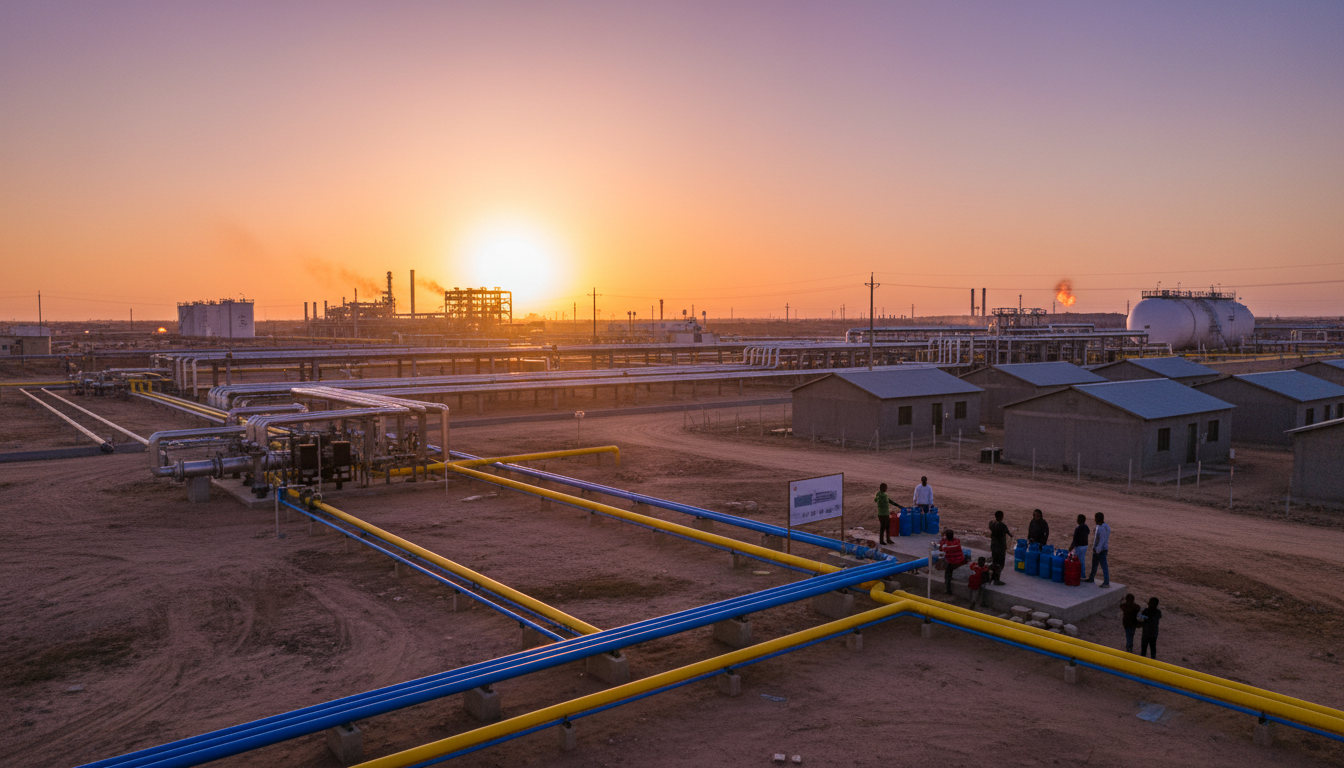
India’s Energy Sector Fortifies Domestic Supply Amidst Global Volatility
India’s dynamic energy landscape continues its rapid transformation, with the government making significant strides in expanding domestic natural gas infrastructure while simultaneously reinforcing fuel supply chains against evolving geopolitical challenges. Recent official disclosures highlight a concerted push towards cleaner energy and enhanced energy security, presenting a nuanced picture for investors eyeing the nation’s robust oil and gas sector.
Over a mere 25-day period, a remarkable 2.5 lakh new piped natural gas (PNG) connections have been successfully commissioned across the country. This aggressive expansion signals a clear policy direction towards increasing the penetration of cleaner, more convenient cooking fuel. Further underscoring this trend, approximately 2.2 lakh consumers have transitioned from traditional liquefied petroleum gas (LPG) to PNG, reflecting a strong preference shift. The demand pipeline remains robust, with an additional 2.5 lakh applications for PNG connections already registered, indicating sustained growth potential for city gas distribution (CGD) companies and associated infrastructure investments.
Piped Natural Gas Drives India’s Domestic Energy Transition
The accelerated rollout of PNG connections is a critical component of India’s broader energy strategy. Sujata Sharma, Joint Secretary – Marketing and Oil Refinery, Ministry of Petroleum and Natural Gas, underscored the momentum, stating these figures during a recent inter-ministerial briefing. For investors, this rapid deployment translates into a burgeoning market for natural gas infrastructure development, from pipeline networks to last-mile connectivity. The shift from LPG to PNG not only offers consumers a more economical and uninterrupted fuel source but also reduces the logistical complexities associated with cylinder-based distribution, thereby enhancing operational efficiencies for energy providers.
This initiative is poised to significantly impact the demand dynamics for various energy commodities. As more households embrace PNG, the sustained growth in natural gas consumption will attract further capital into upstream gas exploration, midstream transmission, and downstream distribution. Companies operating in the CGD space are particularly well-positioned to capitalize on this expansion, driven by both organic growth from new connections and the conversion of existing LPG users.
Strengthening LPG Distribution and Digital Adoption
While PNG expansion gains traction, the government remains vigilant in ensuring the stability and efficiency of LPG supplies. Officials firmly asserted that LPG availability remains uncompromised across all distributorships, alleviating any concerns about potential shortages. A significant development on the consumer front is the high rate of digital adoption, with 92% of LPG bookings now processed online. This digital pivot streamlines operations, enhances transparency, and improves the overall customer experience, demonstrating the sector’s embrace of technological advancements.
To uphold integrity and prevent irregularities within the distribution network, oil marketing companies (OMCs) are conducting surprise inspections. These proactive measures have led to the seizure of approximately 2,000 LPG cylinders in recent raids, underscoring the government’s commitment to fair and uninterrupted supply. Furthermore, the strategic allocation of 5-kg LPG cylinders is being prioritized for migrant workers, addressing the specific needs of this demographic and ensuring broad energy access. Despite a notable increase in demand, delivery mechanisms have maintained stability, providing further reassurance to both consumers and market participants.
Assuring Fuel Security Amidst Geopolitical Headwinds
Against a backdrop of heightened concerns emanating from West Asia, the government has provided robust assurances regarding the nation’s overall fuel security. Officials confirmed the presence of ample petrol and diesel stocks at dispensing stations nationwide, emphasizing that retail prices for these key fuels have remained stable without any recent increases. This stability is a critical factor for economic growth and consumer confidence.
Joint Secretary Sharma also affirmed the availability of sufficient crude oil reserves at all domestic refineries, ensuring that processing capabilities remain unhindered. This robust inventory management, coupled with stable supply chains, highlights India’s proactive approach to energy security, a vital consideration for investors assessing the sector’s resilience. The government’s unwavering focus on maintaining supply stability, optimizing logistics, and safeguarding trade flows is paramount, especially given the fluid geopolitical situation in West Asia.
Strategic Measures to Mitigate West Asia Disruptions
In a tangible demonstration of its commitment to supporting trade and mitigating external risks, the government announced a significant measure for exporters. A 15-day fee waiver has been implemented at Mundra port for export containers destined for West Asia. Special Secretary in the Ministry of Shipping, Rajesh Sinha, confirmed this initiative, explaining its purpose: to streamline logistics and alleviate cost pressures on exporters navigating regional disruptions. This proactive intervention not only supports India’s export economy but also reinforces the importance of robust port infrastructure and agile policy responses in managing international trade challenges.
Such measures are crucial for maintaining investor confidence in the broader economic ecosystem, demonstrating that India is prepared to insulate its trade from external shocks. The waiver at Mundra port provides direct financial relief to businesses, thereby preserving their competitiveness in international markets and minimizing the ripple effect of geopolitical tensions on domestic industries.
Investment Outlook: India’s Resilient Energy Sector
The latest updates from the Ministry of Petroleum and Natural Gas paint a compelling picture for investors. The accelerated rollout of PNG connections signals robust growth opportunities in the gas distribution segment. The sustained stability in LPG markets, coupled with impressive digital adoption rates, underscores the operational efficiency and modernization of India’s energy retail landscape. Furthermore, the government’s steadfast commitment to fuel security, evidenced by stable prices, adequate inventories, and strategic interventions like the port fee waiver, provides a strong foundation for long-term investment.
Companies involved in gas infrastructure, oil marketing, and logistics are well-positioned to benefit from these prevailing trends. India’s strategic foresight in bolstering domestic energy security, coupled with its adaptive policy responses to global volatility, reinforces the nation’s energy sector as a dynamic and resilient market for capital deployment. Investors should continue to monitor these developments closely, recognizing the significant potential within one of the world’s fastest-growing energy markets.


