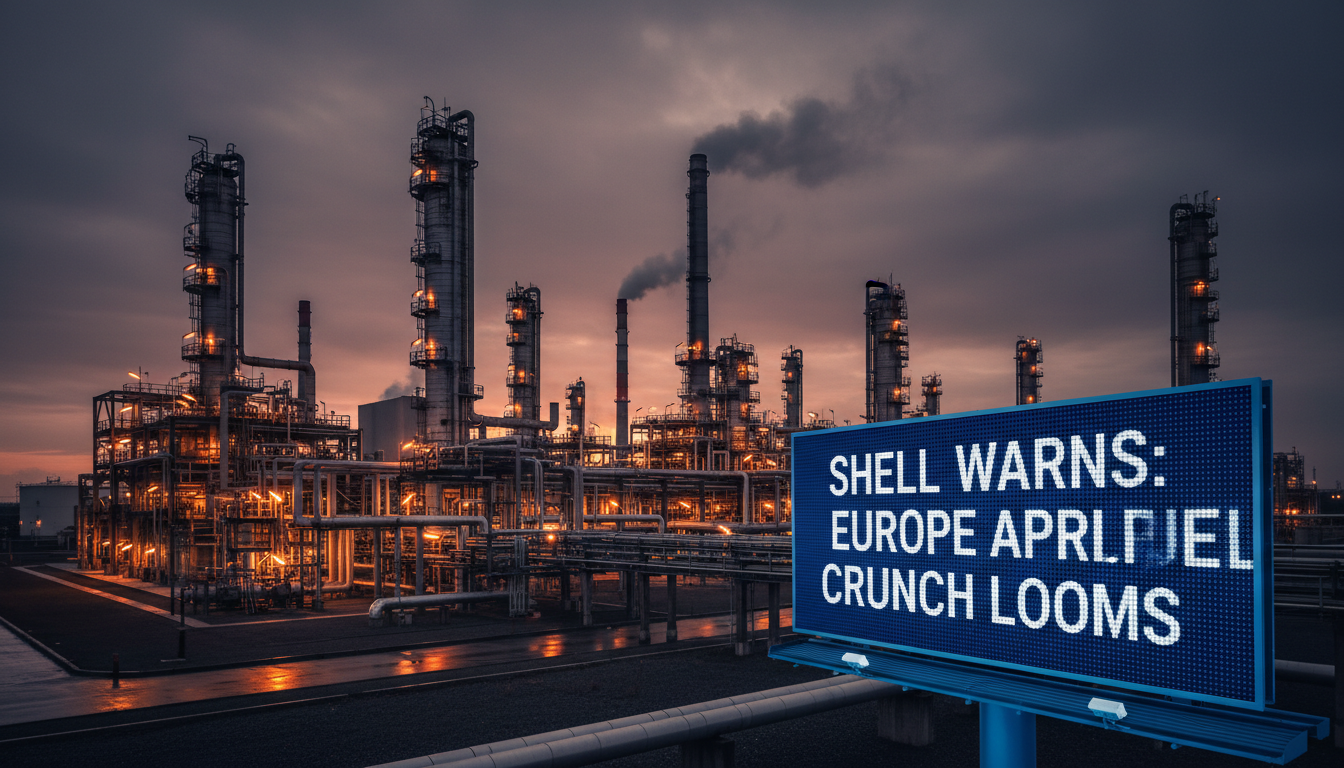
The European energy landscape is bracing for a significant challenge, as warnings from Shell’s Chief Executive, Wael Sawan, indicate potential fuel shortages by the close of April. This urgent alert, delivered amidst global supply chain pressures and geopolitical shifts, highlights a critical vulnerability in the continent’s energy strategy. For investors, understanding the multi-faceted nature of this impending crunch – from specific product shortfalls to broader implications for energy security – is paramount. Our proprietary data streams offer a unique lens through which to analyze this evolving situation, providing crucial context beyond headline figures.
The Gathering Storm: Europe’s Impending Fuel Shortage
Shell’s CEO has articulated a stark vision for Europe’s immediate energy future, signaling that the continent could face significant energy shortfalls within weeks. The tightening of jet fuel supplies is already a reality, with diesel and gasoline poised to follow suit as Europe approaches its peak summer demand season. Sawan emphasized a discernible geographical progression of this tightening, noting that the brunt of the supply pressure initially impacted South Asia, then moved into Southeast Asia and Northeast Asia, and is now firmly shifting towards Europe as April progresses. This global domino effect underscores the interconnectedness of energy markets and the rapid transmission of supply shocks. A core criticism leveled by Sawan is Europe’s reactive approach to energy security, stressing that effective strategies demand a proactive, five-to-ten-year outlook focused on building resilience rather than merely responding to crises. Shell is actively engaging with European governments to navigate this challenge, exploring avenues such as strategic storage enhancements, diversified energy commodity purchases, and demand-side management to mitigate the looming scarcity.
Market Disconnect: Prices vs. Supply Realities
Despite the grave warnings from Shell, a glance at the current market suggests a complex picture that could easily mislead investors. As of today, Brent crude trades at $92.46 per barrel, reflecting a -0.84% dip within a daily range of $91.39 to $94.21. Similarly, WTI crude stands at $88.72 per barrel, down -1.06% for the day, fluctuating between $87.64 and $90.71. Gasoline prices, directly relevant to the CEO’s concerns, are also slightly down at $3.1, marking a -0.96% decrease within a range of $3.08-$3.13. This recent softening in crude prices extends beyond today’s session; our 14-day trend data reveals Brent crude falling from $101.16 on April 1st to $94.09 by April 21st, representing a significant 7% decline. This divergence between easing crude prices and the stark warning of product shortages presents a critical analytical challenge. While headline crude prices may suggest stability, the underlying product market dynamics, particularly for refined fuels like diesel and jet fuel, indicate a brewing storm. This scenario poses a complex question for investors monitoring global energy, where the direction of WTI, as some of our readers are actively asking, might not fully capture the nuanced pressures building in specific product markets.
Navigating the Near-Term: Key Data & Upcoming Events
For discerning investors, the coming weeks will offer crucial data points to validate or refine the outlook on Europe’s fuel crunch. Our proprietary event calendar highlights several key releases that demand close attention. The EIA Weekly Petroleum Status Report, scheduled for today, April 22nd, and again on April 29th and May 6th, will provide critical insights into U.S. crude and product inventories, refining activity, and demand indicators. While U.S. data, these reports often act as a bellwether for global trends, particularly regarding refined product balances that could indirectly reflect or influence European supply dynamics. Furthermore, the EIA Short-Term Energy Outlook, due on May 2nd, will offer a comprehensive forecast for energy markets, including supply, demand, and price projections, potentially shedding more light on the global product balance and the efficacy of measures like the IEA’s strategic crude releases. Analysts have already noted that the unprecedented 400 million barrel IEA crude release might not be enough to avert the product squeeze. Monitoring these reports will be essential for gauging the actual severity of the impending shortages and for identifying early signs of demand destruction or supply alleviation strategies taking hold.
Strategic Implications for Energy Investors
The implications of a sustained European fuel crunch extend far beyond immediate price volatility, touching upon the long-term investment thesis for integrated oil and gas majors. Shell’s proactive engagement with European governments, focusing on storage and strategic purchasing, underscores the critical role these companies play in national energy security. For investors contemplating the performance of companies like Repsol, a question frequently posed by our readers, the ability of refiners to navigate tightening product margins and potential government-mandated demand curtailments will be key. While crude prices have softened recently, a severe product crunch could disproportionately impact refining margins if crude input costs remain elevated while refined product availability dwindles. Moreover, the broader discussion on energy security, highlighted by Sawan’s emphasis on long-term resilience, directly informs predictions for oil prices by the end of 2026. A world where major economies resort to curbing consumption, as some Asian governments have already done and European nations may soon follow, would fundamentally alter demand forecasts. Investors must consider how these national security-driven interventions could reshape market dynamics, potentially leading to increased government involvement in energy markets and impacting the profitability of energy companies well into the future.


