India, a colossal force in global energy consumption and the world’s second-largest liquefied petroleum gas (LPG) buyer, is currently navigating a severe energy crisis. This turbulence is not merely a domestic concern but signals profound market dislocations and supply vulnerabilities demanding immediate attention from global energy investors. As millions of Indian households are forced to abandon cleaner cooking fuels for traditional, polluting alternatives like wood and coal, the ripple effects are poised to reshape commodity demand profiles and challenge assumptions about the pace of global energy transition. This analysis delves into the crisis’s core drivers, its surprising boost to the coal market, and the critical implications for investors monitoring the intricate dance of international energy prices and geopolitical stability.
Geopolitical Pressures Strain India’s LPG Lifeline
India’s energy security is intricately linked to international supply chains, particularly its heavy reliance on Middle Eastern LPG imports. This dependency has rendered its domestic energy landscape exceptionally susceptible to global geopolitical events. The ongoing conflict in the Middle East has notably constricted supply channels, creating an immediate and tangible impact on consumer access and pricing within India. The situation on the ground, particularly in densely populated urban centers like New Delhi, reveals a stark reality: black market cooking gas prices have soared to unprecedented levels. In areas such as Madanpur Khadar, a low-income Delhi neighborhood, the price for essential 14-kilogram cooking gas cylinders has more than doubled, from an average of 1,900 rupees (approximately $20) to a staggering 5,000 rupees ($53). For families whose entire monthly income, like that of a 36-year-old domestic helper earning around 6,000 rupees, barely covers basic needs, this surge renders legitimate LPG access “unimaginable.” A single cylinder, typically lasting 15-20 days, now consumes nearly 83% of their income, compelling a rapid and widespread reversion to cheaper, traditional fuels like firewood, which costs a mere 30 rupees ($0.30) for a 10-kilogram bundle.
The Unintended Coal Revival and Broader Energy Market Signals
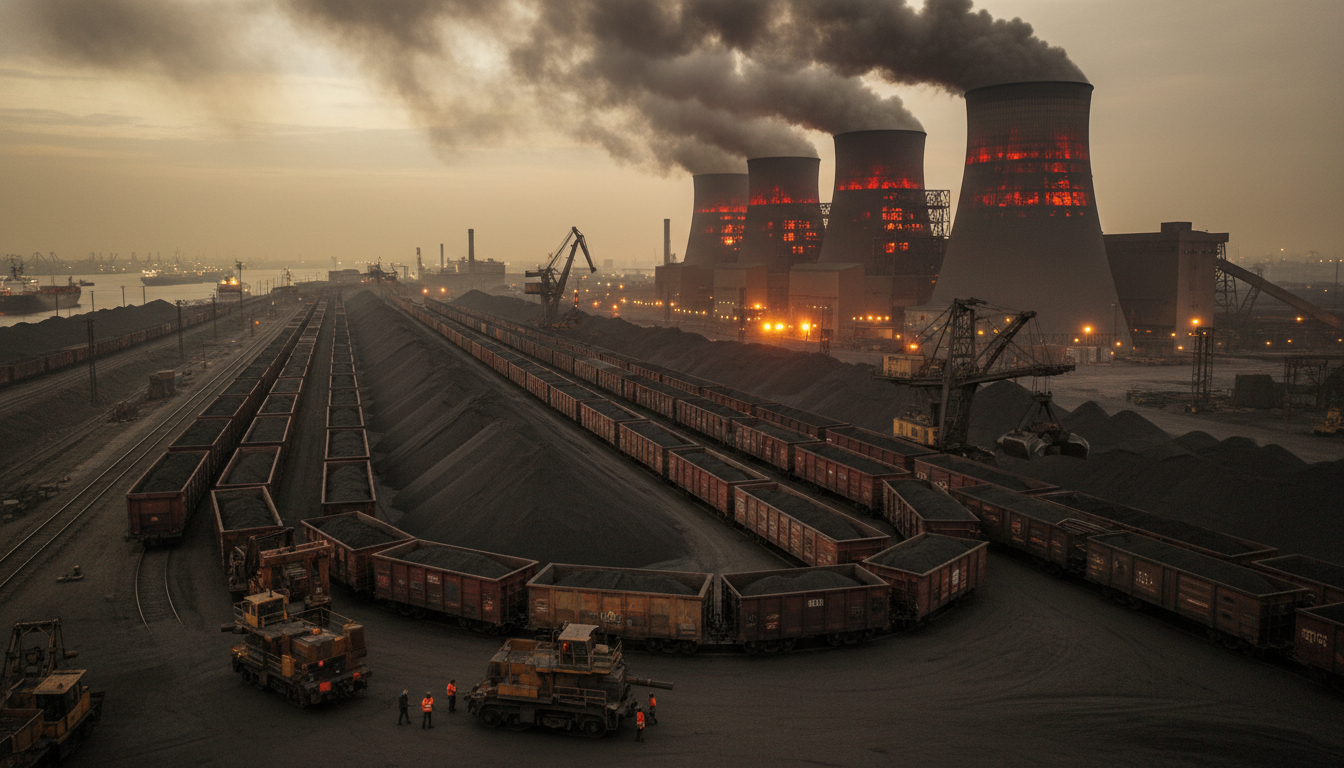
The forced shift away from LPG in India carries significant and immediate implications for global energy markets, most notably an unexpected boost for thermal coal demand. This direct displacement of LPG consumption by cheaper biomass alternatives represents a substantial threat to India’s energy transition objectives and signals a potential contraction in household LPG usage for the foreseeable future. The health and environmental repercussions are dire, exacerbating New Delhi’s already critical air quality issues for its 30 million residents. From an investment perspective, this localized demand shock in a major consumer nation creates a complex dynamic. While not directly impacting crude oil prices on a daily basis, a sustained surge in coal and biomass consumption in India underpins a greater global reliance on traditional, carbon-intensive fuels. As of today, April 22, 2026, Brent Crude trades at $92.46 per barrel, down 0.84% within a day range of $91.39-$94.21, while WTI Crude is at $88.72, down 1.06%. Over the past fortnight, Brent has seen a notable decline, dropping from $101.16 on April 1st to $94.09 on April 21st, a 7% decrease. This broader downtrend in crude prices, while influenced by macroeconomic factors and global supply dynamics, stands in stark contrast to the emerging demand floor for coal driven by crises in major developing economies. Investors must recognize that persistent energy insecurity in large markets like India will continue to provide structural support for all forms of readily available energy, including less clean options, complicating the global decarbonization narrative and potentially creating investment opportunities in coal-related assets.
Investor Outlook: Navigating Supply Volatility and Policy Responses
For investors actively engaged in the oil and gas sector, the Indian LPG crisis serves as a critical case study in market volatility and the fragility of energy transition pathways. Many investors are currently asking about the trajectory of crude prices, with questions ranging from the immediate “is WTI going up or down?” to the more strategic “what do you predict the price of oil per barrel will be by end of 2026?” This crisis underscores that while global crude benchmarks like Brent and WTI are subject to macroeconomic forces, geopolitical tensions, and OPEC+ decisions, localized energy shocks in major consuming nations can create significant demand shifts that indirectly influence the broader energy complex. For instance, sustained high LPG prices in India, driven by supply constraints, could lead to a ‘flight to alternatives’ that bolsters demand for other fossil fuels, indirectly maintaining a floor under global energy commodity prices. Companies with exposure to thermal coal production, logistics, or even traditional biomass fuel supply chains could see unexpected tailwinds from this development. Conversely, LPG suppliers heavily reliant on the Indian import market might face challenges as households pivot away from their products due to affordability issues. Prime Minister Narendra Modi’s public addressing of the crisis and urging state governments to curb black market activities highlights the political imperative to stabilize energy access. However, the sheer scale of the displacement suggests that policy responses may be insufficient to immediately reverse the trend, leaving investors to weigh the long-term implications for India’s energy mix and the global balance of energy demand.
Forward Implications and Key Data Points to Watch
Looking ahead, the resolution of India’s LPG crisis and its broader implications for the energy market will be heavily influenced by both geopolitical developments and key supply-side data. Investors should closely monitor several upcoming calendar events that will provide crucial context for global energy supply and demand dynamics, which in turn affect the availability and pricing of LPG and other fuels. The EIA Weekly Petroleum Status Report, scheduled for release on April 24th and April 29th, will offer insights into U.S. crude oil and product inventories, providing a snapshot of global supply health. Similarly, the Baker Hughes Rig Count on April 26th and May 3rd will indicate drilling activity, hinting at future production trends. The API Weekly Crude Inventory reports on April 28th and May 5th will offer an early look at U.S. stock changes. Perhaps most impactful for forward-looking analysis will be the EIA Short-Term Energy Outlook (STEO) on May 2nd, which provides official forecasts for energy markets and will likely incorporate updated assessments of global demand and supply-side risks. These data points, combined with continued vigilance over geopolitical stability in the Middle East and any shifts in India’s domestic energy policy, will be instrumental for investors seeking to position themselves in an increasingly volatile and interconnected global energy landscape. The interplay between global crude price movements, regional energy crises, and policy responses will define the investment environment for the remainder of 2026 and beyond.


