India’s Energy Security Scramble: Geopolitical Tensions and Market Realities
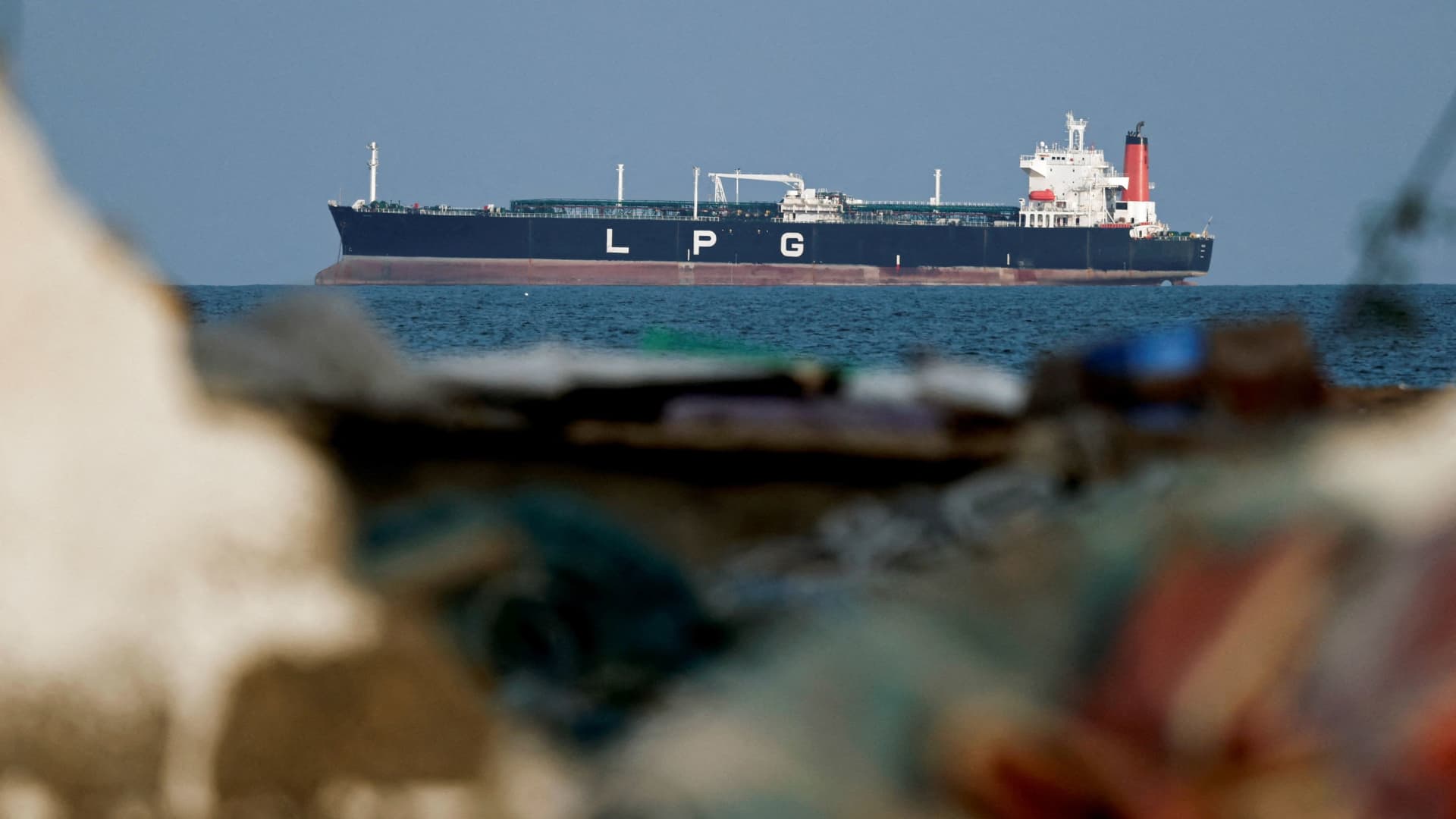
India, the world’s third-largest oil importer and second-largest consumer of liquefied petroleum gas (LPG), finds itself in a precarious position, grappling with acute energy supply risks. The recent threat by Iran’s new supreme leader to close the Strait of Hormuz has sent ripples through global energy markets, prompting an immediate and urgent response from New Delhi. Prime Minister Narendra Modi’s swift outreach to Iranian President Masoud Pezeshkian within hours of the declaration underscores the critical nature of this chokepoint for India’s energy lifeline. This is Modi’s first direct engagement with Iran since the regional conflict escalated, highlighting the depth of India’s concern regarding potential disruptions to the vital waterway, through which approximately 50% of its crude oil and the majority of its LPG imports traverse. The immediate implications for India’s economy and its vast population are significant, making this a pivotal moment for understanding energy market dynamics and investment opportunities.
India’s Precarious Energy Supply and Domestic Fallout
India’s reliance on the Strait of Hormuz is not merely a matter of import volume; it’s a fundamental aspect of its national energy security and domestic stability. With nearly 330 million households and over 3 million businesses dependent on LPG for cooking and commercial operations, any disruption rapidly escalates into a national crisis. The current geopolitical tensions have already triggered panic-buying of LPG, leading to severe supply constraints across the country. In response, government officials have confirmed adequate petrol stocks but are actively managing the LPG shortage by directing pollution control boards to allow the hospitality sector to utilize alternative fuels such as kerosene, biomass, and coal. This measure aims to prioritize LPG supply for households, yet it paints a clear picture of the immediate economic strain, with the National Restaurant Association of India reporting closures and curtailed menus due to commercial LPG unavailability.
The economic ramifications extend further, with analysts revising India’s inflation forecasts upwards. Citi estimates a 50 to 75 basis points “upward risk” to its 4% consumer inflation forecast for the financial year ending March 2027. This projection is tied directly to potential fuel price hikes, with an increase of 5 to 10 rupees per liter in oil prices — a scenario that could alone add up to 50 basis points to consumer inflation if crude prices remain in the $90-$100 per barrel range. Nomura has similarly raised its consumer inflation forecast for the same period from 3.8% to 4.5%, citing the crunch in commercial LPG as a key driver for rising restaurant prices. This acute vulnerability underscores India’s “much lower” inventory cushion compared to other major North Asian markets, as noted by industry experts, intensifying the urgency of its energy diversification efforts.
Geopolitical Volatility Meets Current Market Realities
Despite the high-stakes geopolitical drama unfolding in the Middle East, the immediate market reaction in crude prices has been somewhat subdued, suggesting a complex interplay of factors influencing trader sentiment. As of today, Brent crude trades at $92.76 per barrel, reflecting a marginal daily decline of 0.51% within a range of $92.57 to $94.21. WTI crude similarly sits at $89.24 per barrel, down 0.48% with a day range of $88.76 to $90.71. These figures indicate a degree of stability, or perhaps a cautious wait-and-see approach, in the face of significant supply threats.
Interestingly, our proprietary data reveals that Brent crude has actually trended downwards over the past 14 days, falling from $101.16 on April 1st to $94.09 on April 21st – a notable $7.07 decline. This suggests that while geopolitical risk premiums remain a component of current prices, other market forces, possibly related to demand outlooks or broader macroeconomic concerns, have exerted downward pressure. The current Brent price of $92.76 remains within the $90-$100 range that analysts project could significantly impact India’s inflation. Gasoline prices also reflect this stability, currently trading at $3.11 per gallon. The market’s measured response to the Strait of Hormuz threat may indicate a belief that direct closure is an extreme outcome, or that global inventories and alternative supply routes, however limited, could cushion the immediate blow. Nevertheless, the underlying tension keeps a significant risk premium baked into current valuations.
Investor Questions: Navigating Oil Price Trajectories in a Volatile World
The prevailing sentiment among investors, as reflected in our first-party intent data, clearly points to deep uncertainty regarding crude price trajectories. A prominent question this week from our readers asks, “What do you predict the price of oil per barrel will be by end of 2026?” This highlights a critical challenge for portfolio managers: how to position for energy exposure amidst escalating geopolitical risks and the fundamental supply/demand shifts driven by countries like India. India’s desperate search for secure energy supplies, exemplified by its engagement with Iran, signifies a potential re-routing of global energy flows and a re-evaluation of traditional alliances.
For investors, understanding the future price of oil involves a multi-faceted analysis. Factors such as the duration and intensity of the Middle East conflict, the effectiveness of any diplomatic resolutions, the pace of global economic growth (particularly in emerging markets like India), and the output policies of major producers like OPEC+ will all play crucial roles. Should the Strait of Hormuz situation escalate beyond rhetoric, the market could see a rapid and sharp price surge, reflecting the direct impact on approximately 20% of global oil supply. Conversely, a de-escalation, coupled with robust production from non-OPEC+ sources or a slowdown in global demand, could see prices retreat. India’s long-term strategy to diversify away from its reliance on this single chokepoint, potentially through increased imports from nations previously under sanctions, could also reshape the supply landscape over time, creating new investment avenues in shipping, refining, and alternative energy infrastructure.
Forward Catalysts and Their Market Implications
As investors look beyond the immediate geopolitical headlines, a series of scheduled energy events over the next two weeks will offer crucial insights into market fundamentals, potentially acting as significant price catalysts. These data releases will provide a clearer picture of global supply and demand dynamics, allowing for a more informed assessment of the market’s trajectory, especially in light of India’s urgent energy requirements.
Key among these are the **EIA Weekly Petroleum Status Reports**, scheduled for April 22nd, April 29th, and May 6th. These reports are invaluable for tracking U.S. crude oil, gasoline, and distillate inventories, refinery utilization rates, and overall product supplied, which serves as a proxy for demand. Unexpected builds or drawdowns in these inventories, particularly in the U.S., a major consumer and producer, can trigger significant market reactions. Preceding these, the **API Weekly Crude Inventory reports** on April 28th and May 5th will offer an early glimpse into U.S. stock levels. Additionally, the **Baker Hughes Rig Count** on April 24th and May 1st will provide an essential barometer of North American drilling activity, signaling potential future supply adjustments. A notable increase in active rigs could suggest an impending boost in production, potentially mitigating some of the supply fears emanating from geopolitical hot spots.
Perhaps the most forward-looking event will be the **EIA Short-Term Energy Outlook (STEO)** on May 2nd. The STEO provides comprehensive forecasts for global and U.S. energy markets, including projections for crude oil prices, production, and consumption. The EIA’s assessment will be critical in shaping market expectations for the coming months and could either confirm or challenge current market pricing strategies. For India, a global supply outlook that projects tightness will only exacerbate its energy security concerns and accelerate its diversification efforts, while a more sanguine view could offer some relief. The interplay between these fundamental data points and the evolving geopolitical landscape will dictate the next phase of volatility and opportunity in the energy sector.