The global energy landscape is undergoing a profound transformation, driven by an increasingly assertive U.S. foreign policy and the resulting geopolitical tensions. Recent U.S. military operations in Venezuela and the ongoing, days-old conflict involving U.S. and Israeli forces in Iran have sent ripples across international relations, most notably impacting the delicate balance of the U.S.-China trade dynamic. As Beijing, a top buyer of Iranian crude, navigates these new complexities, investors in oil and gas must recalibrate their outlook. The implications for global oil flows, China’s energy security, and ultimately, crude prices, are substantial, demanding close scrutiny as market participants assess the long-term strategic shifts underway.
Geopolitical Flexing and Its Impact on Oil Flows
The Trump administration’s willingness to eschew traditional diplomacy for high-risk military operations has been starkly demonstrated in recent months. The U.S. offensive in Iran, which commenced with air strikes on Saturday, March 4, 2026, and targeted key figures including China-friendly Ayatollah Ali Khamenei, follows closely on the heels of the capture of Venezuelan President Nicolas Maduro and his wife less than two months prior. These aggressive actions, particularly in regions where Beijing holds significant influence or relies for energy supplies, are not mere isolated incidents; they represent a significant shift in U.S. foreign policy with direct consequences for global oil flows and China’s energy strategy.
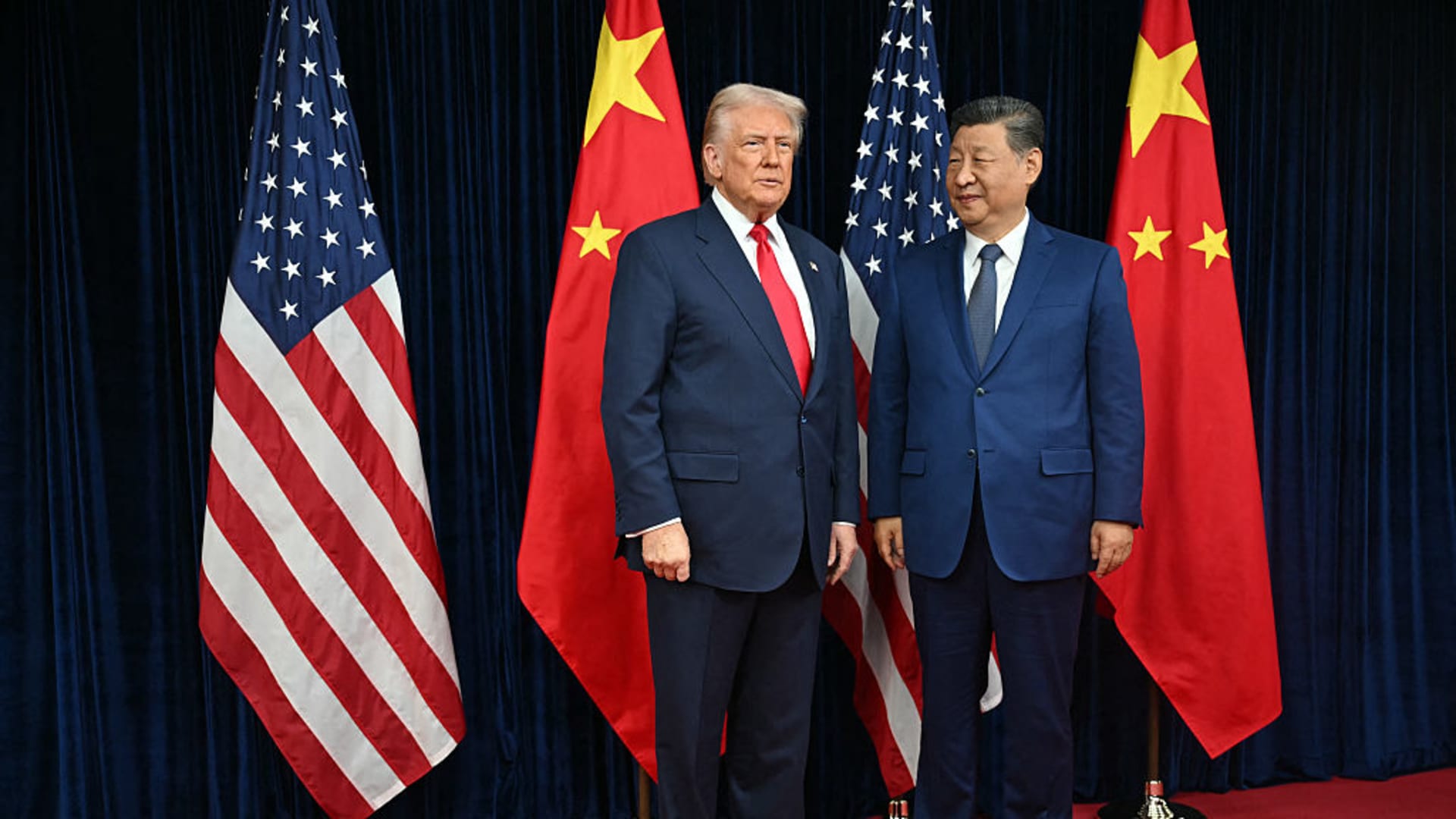
China’s strong opposition to the U.S. and Israeli actions in Iran places it in a precarious position. As the largest importer of Iranian crude, Beijing faces the immediate challenge of securing its energy needs amidst potential disruptions and expanded sanctions. The “stunning” speed and force displayed in the Maduro raid served as a potent reminder of U.S. military capabilities, a message undoubtedly received by Beijing ahead of the recent high-stakes summit between President Donald Trump and President Xi Jinping. This display of power created significant “mood music” for the discussions that took place from March 31 to April 2, 2026, influencing not only the tone of the talks but also the underpinnings of any potential agreements. For oil and gas investors, this signifies heightened supply risk from key producing nations and the potential for shifts in global trade routes as China seeks to de-risk its supply chains.
Market Volatility and Shifting Investor Sentiment
The escalating geopolitical tensions have injected a fresh wave of uncertainty into crude markets. As of today, Brent Crude trades at $93.31, reflecting a marginal daily gain of 0.08%, with an intraday range spanning $92.57 to $94.21. WTI Crude stands at $89.7, up 0.03%, having traded between $88.76 and $90.71. While daily movements appear contained, the broader trend reveals significant market apprehension. Our proprietary data indicates that Brent crude has seen a notable decline over the past two weeks, falling from $101.16 on April 1st to $94.09 by April 21st, representing a 7% drop of $7.07 per barrel. This recent dip underscores the market’s sensitivity to geopolitical developments, balancing supply concerns against potential demand impacts from a more volatile global economic outlook.
Investor questions reflect this uncertainty, with our first-party intent data showing a surge in inquiries about market direction. Readers are keenly asking about the future trajectory of crude prices, with questions like “is WTI going up or down?” dominating our AI assistant’s signals. There’s also significant interest in longer-term forecasts, such as “what do you predict the price of oil per barrel will be by end of 2026?” These questions highlight a market grappling with contradictory signals: on one hand, supply disruption risks from Venezuela and Iran suggest upward price pressure; on the other, the potential for economic fallout from global trade tensions and a more assertive U.S. stance could dampen demand. Investors are clearly seeking clarity on how these powerful forces will shape crude valuations in the coming months.
The Post-Summit China-US Dynamic and Energy Strategy
The recent summit between President Trump and President Xi Jinping, held from March 31 to April 2, 2026, occurred against a backdrop of intense geopolitical maneuvering. While initial reports prior to the meeting suggested discussions on trade deals for U.S. soybeans and Boeing aircraft, the aggressive U.S. actions in Iran and Venezuela undoubtedly influenced the broader strategic dialogue. China, as a major global power and an economy heavily reliant on imported energy, cannot ignore the implications of U.S. willingness to “rock the boat” in countries where Beijing exerts significant influence.
The U.S. sanctions regime, particularly against major oil producers, compels China to reassess its long-term energy security strategy. While China has historically been a significant buyer of Iranian oil, the ongoing conflict and potential for secondary sanctions against entities dealing with Tehran will likely push Beijing to diversify its sourcing further. This could lead to increased demand for crude from other OPEC+ nations, Russia, or even an accelerated push into alternative energy sources. For investors, this signifies potential shifts in global crude trade patterns, increased competition for non-sanctioned oil, and a strategic imperative for Chinese state-owned energy companies to secure long-term contracts, potentially at a premium, to insulate against future geopolitical shocks.
Forward Outlook: Key Data Points and Strategic Shifts
Navigating this complex environment requires vigilant monitoring of both geopolitical developments and fundamental market data. Over the next 14 days, several key events on the energy calendar will provide crucial insights into market balances and sentiment. Investors should pay close attention to the EIA Weekly Petroleum Status Reports scheduled for April 22nd, April 29th, and May 6th, as these will detail U.S. crude inventory levels, refinery activity, and demand indicators. Any unexpected builds or draws could signal shifts in supply-demand dynamics amidst the current geopolitical backdrop.
Furthermore, the Baker Hughes Rig Count on April 24th and May 1st will offer an indication of North American production trends, while the API Weekly Crude Inventory reports on April 28th and May 5th provide an early look at U.S. stock levels. Perhaps most critically, the EIA Short-Term Energy Outlook (STEO) on May 2nd will deliver updated forecasts for global oil supply, demand, and prices, incorporating the latest geopolitical developments and their anticipated impact. These data points, combined with ongoing monitoring of U.S.-China diplomatic engagements and the evolution of the Iran conflict, will be indispensable for investors seeking to position themselves strategically in an increasingly volatile and politically charged oil market.