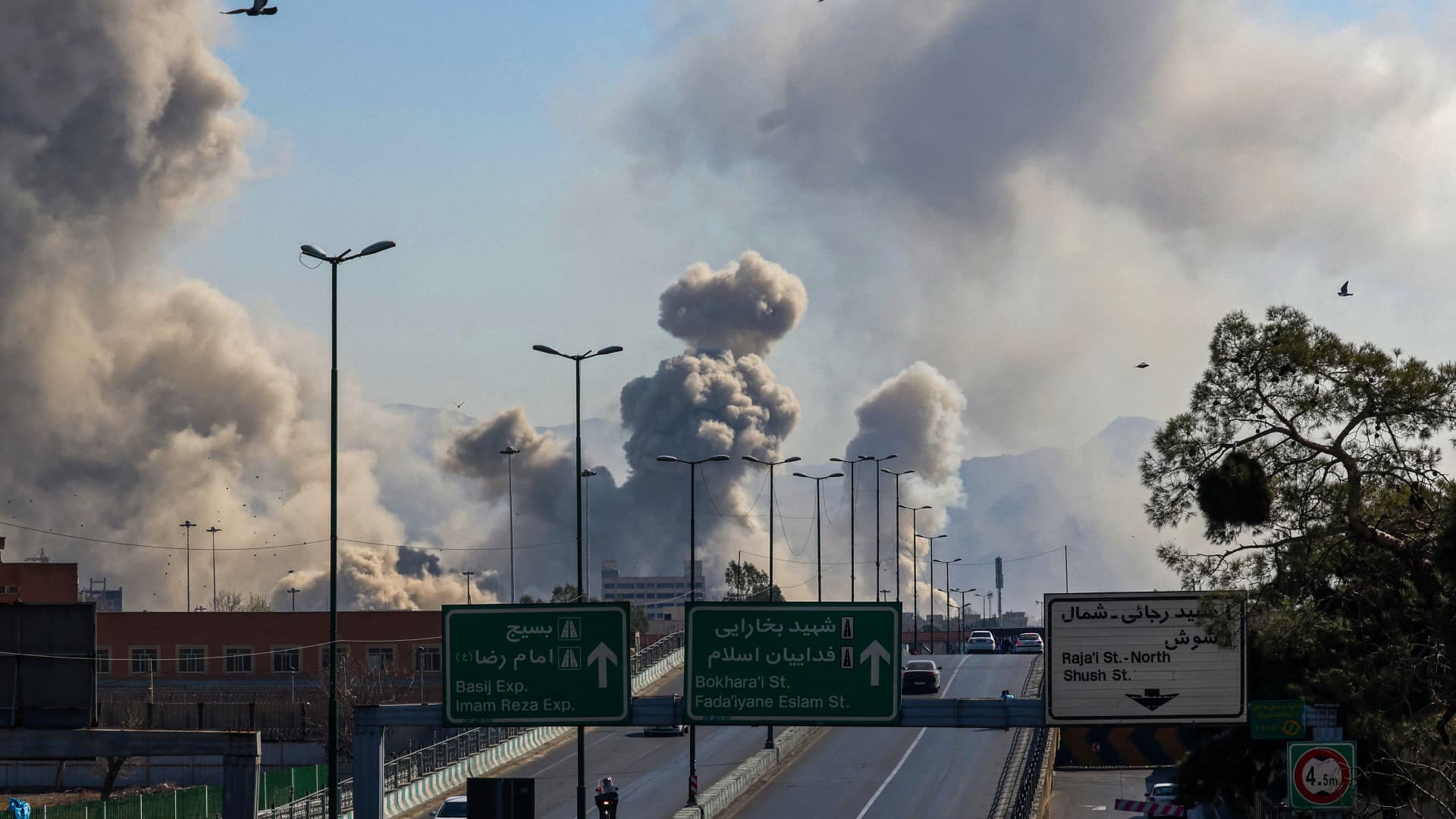
The Middle East stands at a critical juncture, with the U.S. and Israel-led conflict with Iran intensifying rapidly, now entering its sixth day. This escalating geopolitical confrontation carries profound implications for global oil supply, threatening to inject significant volatility into energy markets. As regional stability deteriorates, investors are keenly observing the spread of hostilities, from direct strikes on Tehran to retaliatory actions against Israel and U.S. allies, highlighting the tangible risks to crucial energy infrastructure and shipping lanes. Understanding the dynamic interplay between military actions and market sentiment is paramount for navigating the complex investment landscape ahead.
Geopolitical Flashpoints and Direct Threats to Supply Chains
The expansion of the conflict across the Middle East is no longer a theoretical risk but a stark reality, with direct consequences for oil-producing and transit nations. Images published on Thursday, March 5, 2026, depicted widespread destruction across Tehran following nearly a week of strikes on the Iranian capital. Iran’s retaliation has been multifaceted, launching missiles and drones at Israel, while also targeting U.S. allies. Explosions have been reported in Qatar and Bahrain, significant players in the global energy matrix. Further complicating the picture, oil-rich Azerbaijan reported an attack by two Iranian drones, and Tehran claimed naval fighters struck a U.S. tanker in the northern Persian Gulf.
The regional spread includes Hezbollah, an Iran-backed militant group in Lebanon, launching missiles at Israel in retaliation, as seen on March 5, 2026. Critical infrastructure has been hit, such as a solar farm in Lebanon’s southern coastal city of Tyre on March 4, 2026. Most concerning for oil markets, a fire swept through the Fujairah oil industry zone on March 3, 2026, following debris from an intercepted drone. This incident directly implicates a vital oil bunkering and storage hub. The U.S. embassy headquarters in Riyadh also sustained drone strikes on March 3, 2026, emphasizing the broad scope of Iranian retaliation. With U.S. President Donald Trump suggesting the war could last “four to five weeks” or even “go far longer than that,” the prospect of sustained disruption to the world’s most critical oil-producing region remains high, directly threatening supply routes like the Strait of Hormuz.
Market Response Amidst Escalation: A Deeper Look at Prices and Investor Questions
Despite the severe escalation of geopolitical tensions, the immediate market reaction has been nuanced, prompting many investors to ask: “Is WTI going up or down?” As of today, Brent Crude trades at $92.64, reflecting a -0.64% decrease on the day, with a range of $92.57-$94.21. Similarly, WTI Crude stands at $89.03, down -0.71%, fluctuating between $88.76-$90.71. Gasoline prices also saw a minor dip to $3.1, a -0.96% change within a $3.1-$3.13 range. This short-term bearishness, or at least a lack of significant upward momentum, might appear counter-intuitive given the unfolding conflict.
However, a broader look reveals that Brent Crude has trended downwards over the past 14 days, from $101.16 on April 1, 2026, to $94.09 on April 21, 2026, representing a $7.07 decline. This suggests that while current events are serious, the market may have already priced in a significant level of geopolitical risk from previous tensions, or that other demand-side concerns are currently outweighing immediate supply fears. Investors are grappling with the apparent disconnect between escalating conflict and falling prices, reflecting a complex calculus involving existing supply overhangs, global economic growth anxieties, and the perceived likelihood of *tangible*, widespread supply disruptions versus localized attacks. The question “what do you predict the price of oil per barrel will be by end of 2026?” becomes exceedingly difficult to answer definitively in such an environment, as market direction hinges heavily on the trajectory of this unpredictable conflict.
Forward Outlook: Key Events and Supply Chain Vulnerabilities
Looking ahead, the ongoing Middle East conflict will undoubtedly cast a long shadow over upcoming energy market data and forecasts. Investors should pay close attention to several key events that will provide crucial insights into the conflict’s potential impact on global supply and demand balances. The EIA Weekly Petroleum Status Reports, scheduled for April 22, April 29, and May 6, 2026, will be critically important. These reports will offer the most current data on U.S. crude oil, gasoline, and distillate inventories, providing an early indication of any initial supply disruptions or changes in demand patterns. Any unexpected draws or builds could signal how the market is beginning to absorb the geopolitical shock.
Further insights will come from the Baker Hughes Rig Count on April 24 and May 1, 2026, which tracks U.S. drilling activity, although direct impacts from the Middle East might take longer to manifest here. The API Weekly Crude Inventory reports on April 28 and May 5, 2026, will offer supplementary data. Perhaps the most significant forward-looking event will be the EIA Short-Term Energy Outlook (STEO) on May 2, 2026. This comprehensive report will likely incorporate updated assessments of global supply and demand in light of the escalating Iran conflict, potentially revising price forecasts and production outlooks. Any indication of supply chain vulnerabilities, particularly in transit choke points like the Strait of Hormuz, or direct impacts on major production facilities in the region, would trigger a significant shift in market sentiment and likely lead to higher price premiums. The market will be scrutinizing these reports for any signs that the conflict is translating into real-world supply constraints beyond current speculative trading.
Investment Strategy in a High-Risk Environment
The current geopolitical landscape demands a highly cautious yet agile investment strategy for oil and gas portfolios. The inherent unpredictability of military conflicts, especially one involving a major oil producer like Iran and its proxies, necessitates robust risk management. Investors should consider the potential for direct attacks on oil infrastructure, disruptions to shipping lanes, and broader regional destabilization that could impact production from neighboring countries. While current prices may not fully reflect the long-term risk premium, any materialization of supply outages could send prices significantly higher.
Diversification remains key. While direct exposure to crude oil via futures or ETFs may offer a hedge against supply shocks, investors should also evaluate companies with strong balance sheets and diversified geographical assets. Integrated oil majors might offer some stability, while specific refiners or logistics providers could face unique challenges or opportunities depending on the flow of crude. Furthermore, companies involved in energy security solutions or specific defense technologies could see increased demand. It is crucial to monitor not only the daily headlines but also the technical indicators from upcoming energy reports to gauge the true impact on global supply and demand dynamics. Maintaining vigilance and adapting quickly to new information will be paramount in this volatile investment climate, as the risks of a prolonged and expanding conflict continue to loom large over the energy sector.