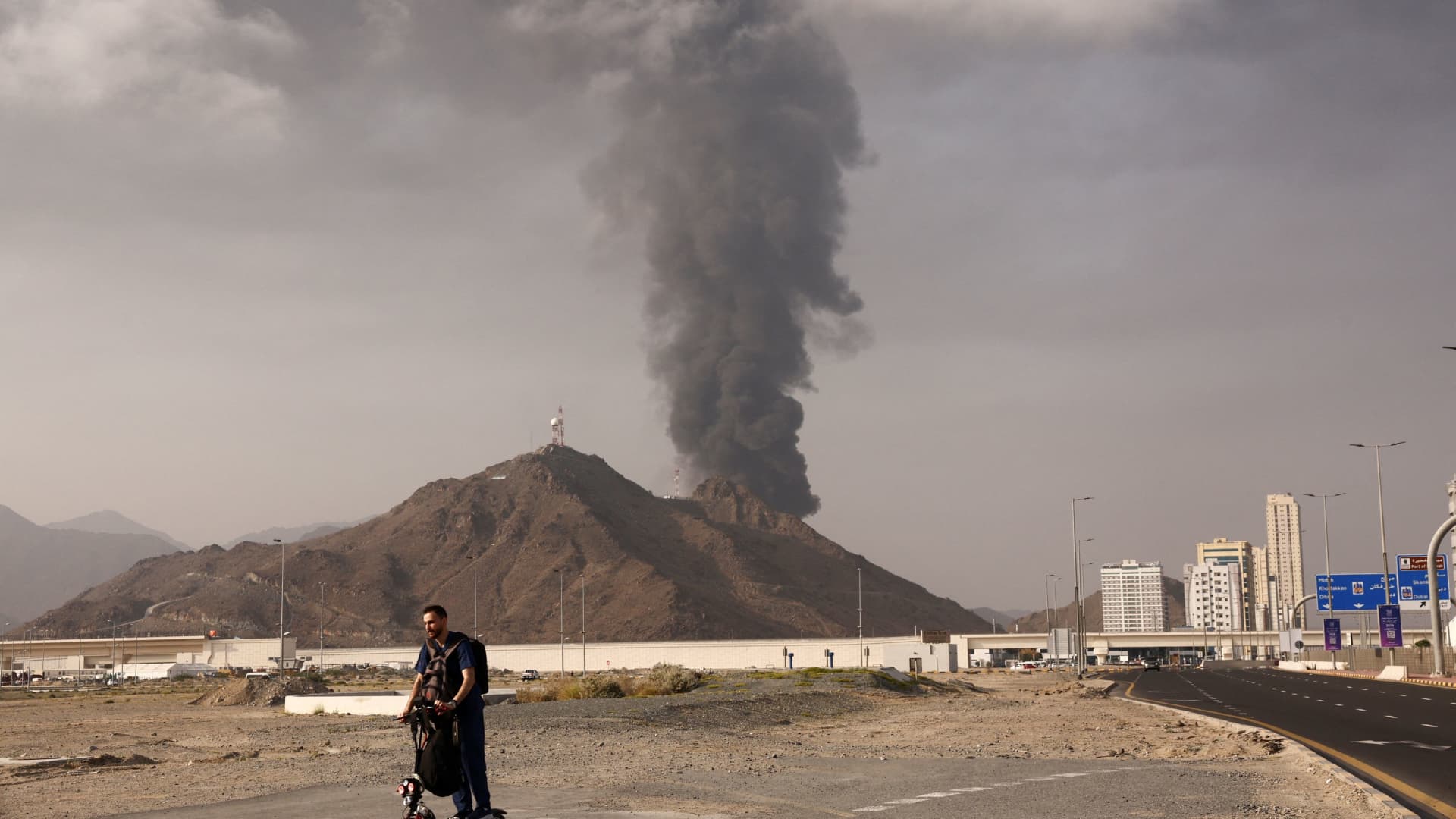
The global oil market has navigated a period of intense volatility, initially spiking on heightened geopolitical tensions in the Middle East before recalibrating as assurances on supply security emerged. While the immediate “war premium” has softened from its recent peak, crude prices remain elevated, reflecting ongoing regional instability alongside fundamental supply and demand dynamics. Investors are keenly watching for directional cues, with our proprietary data indicating a market seeking clarity amidst conflicting signals.
Geopolitical Jitters Recalibrate the Price Landscape
The initial shockwaves from the recent US and Israeli airstrikes against Iran, followed by Iran’s retaliatory actions targeting regional energy infrastructure, sent crude prices soaring. Brent Crude, for instance, climbed significantly, reaching as high as $112.78 on March 30th, as markets grappled with the potential for widespread supply disruptions. However, the subsequent pronouncements from US Treasury Secretary Scott Bessent, detailing plans for International Development Finance Corporation (DFC) insurance for crude and cargo carriers and potential naval escorts in the Persian Gulf, served to assuage immediate fears regarding the security of oil transit.
This market stabilization has led to a noticeable pullback from those extreme highs. As of today, Brent Crude trades at $90.38, holding steady within a daily range of $86.08-$98.97. WTI Crude, the US benchmark, is currently priced at $82.59, with its daily range spanning $78.97-$90.34. These levels, while still robust, represent a significant adjustment from the recent peaks. Our 14-day Brent trend data clearly illustrates this shift, showing a nearly 20% decline from the $112.78 high on March 30th to the current $90.38, underscoring that the acute “war premium” has indeed begun to dissipate. Gasoline prices, currently at $2.93, also reflect this broader market dynamic, settling after their own initial upward movement.
The Strait of Hormuz: A Chokepoint Under Scrutiny
The Strait of Hormuz, a critical maritime passage through which approximately 20% of the world’s daily oil consumption is exported, became an immediate focal point of market anxiety. Reports of tanker traffic grinding to a standstill due to ship owners’ fears of becoming targets amplified concerns over global supply. The US administration’s swift response, promising to provide insurance support and naval protection if necessary, directly addressed this vulnerability.
These proactive measures played a pivotal role in preventing a sustained upward spiral in oil prices. By directly mitigating the perceived risk to shipping in the Gulf, the US efforts helped to restore a degree of confidence in the continuity of supply. While the underlying geopolitical tensions remain palpable, the market has interpreted the US commitment as a significant deterrent to immediate, widespread disruptions to crude flows through this vital chokepoint. This proactive intervention has allowed the market to re-evaluate the immediate supply-side risk, contributing to the current, more tempered price environment.
Upcoming Catalysts and Investor Outlook
Our proprietary reader intent data reveals a clear focus from investors on forward price direction, with common queries like “is WTI going up or down” and predictions for “the price of oil per barrel by end of 2026.” These questions highlight the market’s hunger for clarity on future oil price trajectories. Several key events in the coming days are poised to provide crucial signals, potentially dictating the next significant moves in energy markets.
The immediate spotlight falls on the Organization of the Petroleum Exporting Countries and its allies (OPEC+). The **OPEC+ Joint Ministerial Monitoring Committee (JMMC) Meeting on April 20th** will set the stage for the more comprehensive **OPEC+ Ministerial Meeting on April 25th**. These gatherings are critical. Will the alliance maintain its current production quotas, signal further cuts in response to perceived demand weakness, or perhaps even hint at an increase if geopolitical stability improves? Any shift in policy here will have immediate and profound implications for global supply and, consequently, for Brent and WTI prices.
Beyond OPEC+, US inventory data will offer insights into domestic supply and demand dynamics. The **API Weekly Crude Inventory report on April 21st** and the **EIA Weekly Petroleum Status Report on April 22nd** (and their subsequent releases on April 28th/29th) will provide a snapshot of US crude stockpiles, refining activity, and product demand. Larger-than-expected builds could signal softening demand or robust production, exerting downward pressure, while significant draws would suggest tighter markets. Furthermore, the **Baker Hughes Rig Count on April 24th** (and May 1st) will offer a forward-looking indicator of US shale activity and future supply potential. The cumulative impact of these supply-side decisions and demand indicators will be crucial for projecting oil’s trajectory not just next week, but also towards the end of 2026.
Navigating the Path Ahead: Volatility as the New Constant
While the market has digested the initial shock of recent geopolitical events and the subsequent assurances regarding supply security, the underlying fragility of the Middle East situation ensures that volatility will remain a defining characteristic of energy markets. The “waning” of the war premium does not signify a return to pre-crisis tranquility, but rather a recalibration to an elevated baseline where geopolitical risk is a more deeply embedded factor in price discovery.
Beyond the immediate geopolitical concerns, fundamental drivers of demand, such as global economic growth, industrial activity, and consumer behavior, will continue to exert significant influence. The ongoing pace of China’s economic recovery, the resilience of major Western economies, and the trajectory of inflation all play critical roles in shaping future consumption patterns. For investors, this environment demands vigilance and a nuanced understanding of both the geopolitical landscape and the evolving supply-demand fundamentals. Agility in response to new information and a long-term perspective will be key to navigating the opportunities and risks inherent in today’s dynamic oil market.