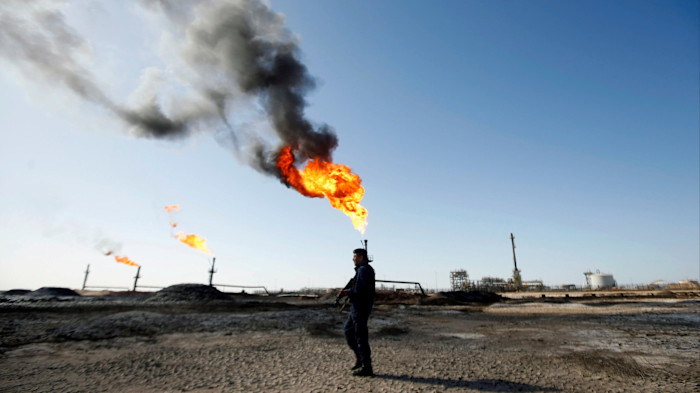
Chevron (CVX) is making a bold play for a significant stake in Iraq’s massive West Qurna 2 oilfield, a move that underscores the shifting geopolitical landscape and evolving energy investment strategies. This exclusive negotiation, following US sanctions that forced Russian major Lukoil into a divestment, represents a strategic coup for the American supermajor. With West Qurna 2 boasting production of nearly 500,000 barrels of crude per day, or a tenth of Iraq’s total output, this potential acquisition is far more than just an asset transfer; it’s a profound realignment of influence within a critical global energy hub. For investors, understanding the layers of market dynamics, geopolitical maneuvering, and future implications is crucial to assessing Chevron’s long-term value proposition.
Chevron’s Strategic Gambit in a Geopolitically Charged Arena
Chevron’s pursuit of West Qurna 2 is a calculated move that leverages a unique market opportunity created by international sanctions. Lukoil, previously holding three-quarters of the field, found itself in an untenable position after US sanctions imposed last October, leading to force majeure declarations and payment gridlock. This vacuum has been swiftly filled by Iraq’s state-owned Basra Oil Company, which is now facilitating negotiations for Chevron’s entry. This isn’t merely about acquiring production; it’s about cementing Western influence in a region traditionally viewed with caution by many US firms.
Baghdad has actively courted American oil companies to take over vital energy projects, seeking to diversify foreign participation and attract crucial Western investment. This initiative is widely perceived as an an attempt by Iraq to strengthen ties with the US administration, particularly as Washington presses for Baghdad to distance itself from Iranian influence. Chevron, with its demonstrated close ties to the US government, appears uniquely positioned to capitalize on this strategic imperative. This pattern of strategic alignment is not new; earlier this month, Chevron secured an offshore exploration agreement with Syria following talks brokered by US officials, signaling a broader strategy of expanding footprint in regions where US foreign policy creates advantageous entry points, much like its existing production foothold in Venezuela.
Market Headwinds and Acquisition Opportunities
Chevron’s move comes at a fascinating juncture for the global oil market. As of today, Brent Crude trades at $93.86 per barrel, up 3.79% on the day, with WTI Crude following suit at $90.22, marking a 3.2% increase. While today’s session shows upward momentum, the broader trend has been notably bearish. Proprietary data indicates that Brent has shed nearly 20% over the past two weeks, dropping from $118.35 on March 31st to $94.86 just yesterday. This significant pullback in prices, while challenging for producers in the short term, often creates prime conditions for strategic asset acquisitions.
The urgency for Lukoil to divest, coupled with Iraq’s desire for stable Western partners, likely presents Chevron with favorable terms. Investors frequently ask about the future direction of oil prices, with common queries ranging from “is WTI going up or down?” to “what do you predict the price of oil per barrel will be by end of 2026?” In such a volatile environment, securing access to a high-volume, low-cost production asset like West Qurna 2 acts as a powerful hedge. It provides a stable base of future production that can deliver substantial returns even in a more subdued price environment, while offering significant upside should prices rebound towards recent highs. This strategic positioning mitigates some of the risk inherent in a sector characterized by significant price swings.
Upcoming Events and Geopolitical Ripples
The implications of this potential acquisition extend beyond Chevron’s balance sheet, touching on regional stability and global supply dynamics. The immediate future holds several key events that will shape the market context for this deal. Tomorrow, April 21st, the OPEC+ Joint Ministerial Monitoring Committee (JMMC) meeting will convene. Any decisions or signals from this gathering regarding production quotas could significantly impact global supply expectations and, consequently, crude prices. A decision to maintain or even increase cuts could provide a tailwind for prices, enhancing the value of Chevron’s potential Iraqi stake.
Further out, the EIA Short-Term Energy Outlook (STEO) due on May 2nd will offer critical insights into supply, demand, and price forecasts for the remainder of 2026. This outlook will be particularly relevant for investors grappling with questions about oil’s long-term trajectory. Chevron’s aggressive pursuit of West Qurna 2 suggests a conviction that these large, established fields will remain cornerstones of global energy supply for decades to come, irrespective of shorter-term market fluctuations or energy transition narratives. This move reinforces the strategic importance of secure, high-capacity production in a world still heavily reliant on hydrocarbons.
Investment Outlook: A Growth Catalyst for Chevron?
Chevron’s shares have already demonstrated robust performance, climbing nearly 21% since the start of the year, putting it on par with rival ExxonMobil. This strong showing reflects investor confidence in its disciplined capital allocation and strategic growth initiatives. The West Qurna 2 deal, if finalized, could serve as a significant catalyst, bolstering Chevron’s upstream portfolio with a world-class asset. The sheer scale of the field, producing nearly half a million barrels per day, offers immediate production upside and long-term reserve accretion.
While the immediate financial terms remain undisclosed, the context of a “fire sale” by Lukoil and Iraq’s eagerness for Western partnership suggests a potentially attractive valuation. For shareholders, this means enhanced exposure to stable, high-volume production in a strategically important region. However, investors must also weigh the inherent geopolitical risks associated with operating in Iraq, despite Baghdad’s current efforts to foster closer ties with US firms. Ultimately, this acquisition underscores Chevron’s proactive strategy to capitalize on geopolitical shifts and secure foundational assets that can drive sustainable growth and shareholder returns in a dynamic global energy landscape.