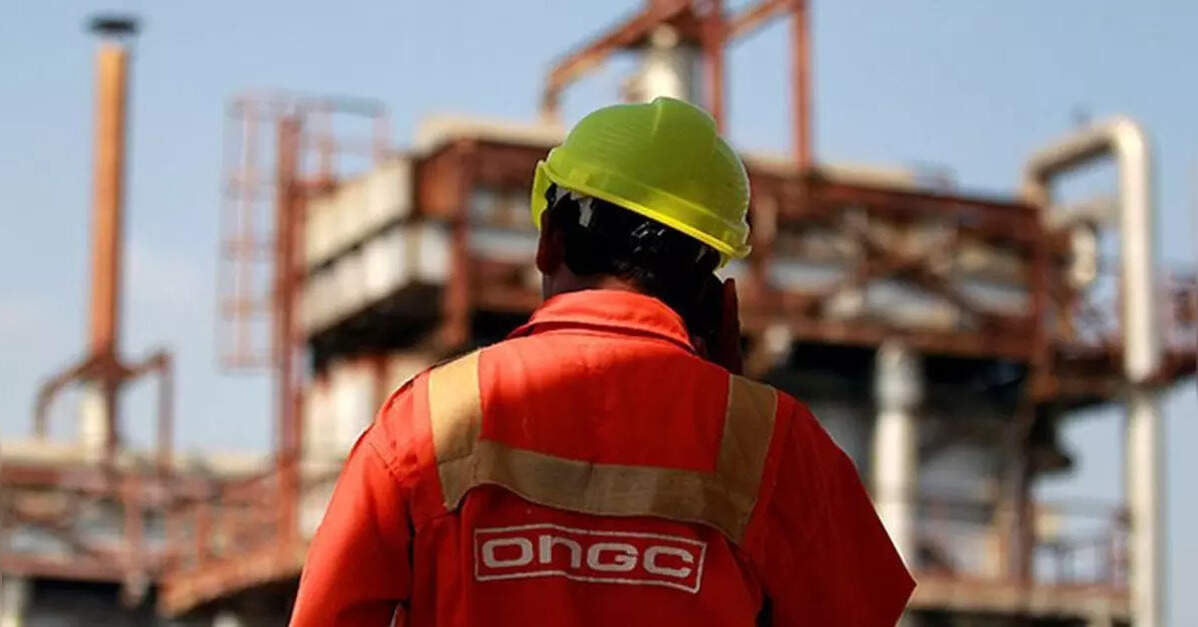
Emphasising exploration as a national imperative rather than a purely commercial choice, A K Singh, Chairman and CEO of ONGC, said that India’s largest upstream company is intensifying its focus on deepwater exploration as part of a broader upstream transformation aimed at strengthening the country’s long-term energy security.
Speaking at a panel discussion on “Upstream Transformation: Driving Strategic Re-engagement with Exploration Portfolios”, Singh said exploration — particularly in deepwater basins — remains ONGC’s foremost responsibility as a national oil company, even amid global volatility and capital constraints.
“For us at ONGC, whether it is oil in the Himalayas or even near Mt. Everest, if it comes to us through some means, we would welcome it,” Singh said, underlining the company’s exploration-first mindset. From an energy security point of view, we cannot afford the current state to continue,” he added.
Singh added that globally, national oil companies (NOCs) are increasingly leading exploration efforts, while international oil companies (IOCs) focus more on developing existing reserves. In India’s case, the rationale is even stronger given the country’s vast and underexplored sedimentary basins.
India has a sedimentary area of about 3.3 million sq km, of which nearly 1.7 million sq km lies offshore, with deepwater accounting for a dominant share.
Singh said that ONGC has built significant expertise in deepwater exploration over the years, beginning with the Sagar Samriddhi campaign (2003–07) and now aligning with the government’s renewed push under Samudra Manthan.
“So far, ONGC has drilled about 150 deepwater exploratory wells and 41 development wells — about 200 wells in total,” Singh said.
He added that nearly 90 deepwater wells have been drilled in the KG Basin alone. “What matters most for us today is to explore deepwater as much as we can. Onshore, after 65 years of exploration, the scope is naturally limited,” he said.
He stressed that as a government-owned company, ONGC’s first priority is domestic exploration, even though deep-water projects are capital intensive and high risk. “Our primary responsibility towards the nation is to explore deepwater and arrive at a conclusion one way or the other. That responsibility rests with us,” Singh said.
At the same time, Singh said ONGC remains open to selectively acquiring producing or near-producing assets, but only where payback periods are commercially viable. “We cannot afford assets that pay back after 30 years. If something can return value in one or two years, we will look at it, but exploration in India remains our first priority,” he said.
On natural gas, Singh struck a cautious but pragmatic note. While domestic gas production is improving, he acknowledged that Indian gas remains costlier than Middle East supplies. However, he pointed out that global gas markets are likely to remain oversupplied for the next 10 to 15 years, potentially reshaping India’s fuel mix.
“If gas prices tumble, gas can substitute coal very quickly,” said Singh, noting that power generation economics will play a decisive role. “At a certain gas price threshold, new coal-based thermal plants will struggle to justify themselves,” he added.
He added that India’s rapidly rising power demand, driven largely by air-conditioning load and data centres, will test the resilience of the energy system. “If gas prices remain high, coal will remain unavoidable unless there is policy intervention. But if gas becomes cheaper, gas demand will rise and coal demand could come down,” Singh said.
Singh said ONGC’s upstream strategy is rooted in deepwater exploration at home, complemented by selective, value-accretive assets abroad, with energy security, not short-term returns, guiding investment decisions.
ENDS