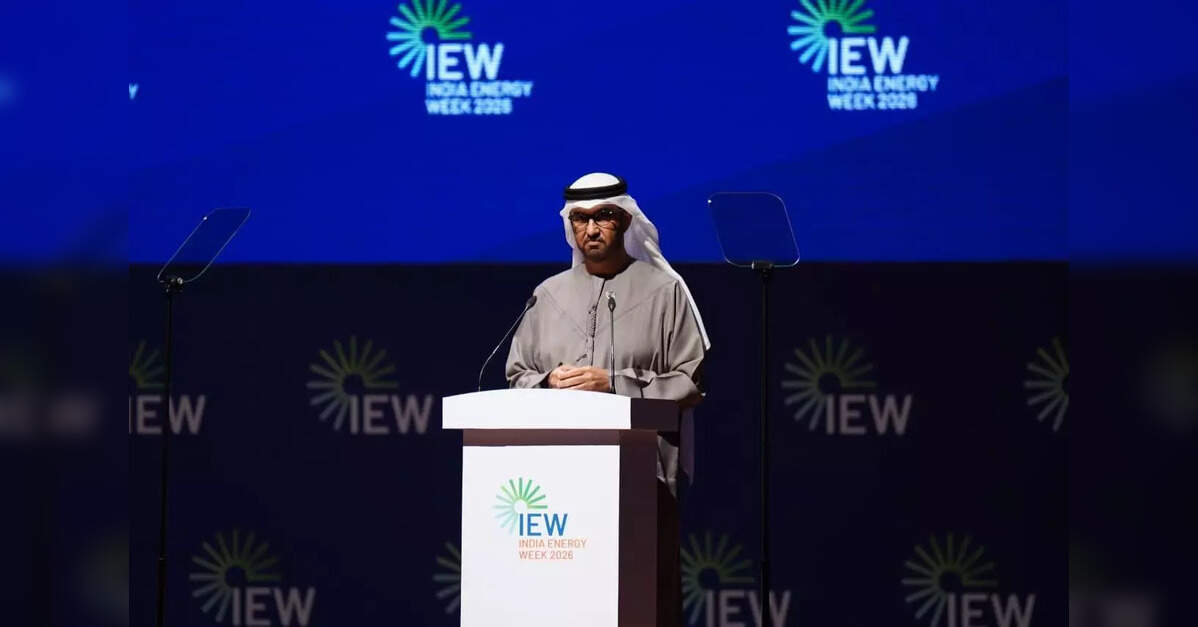
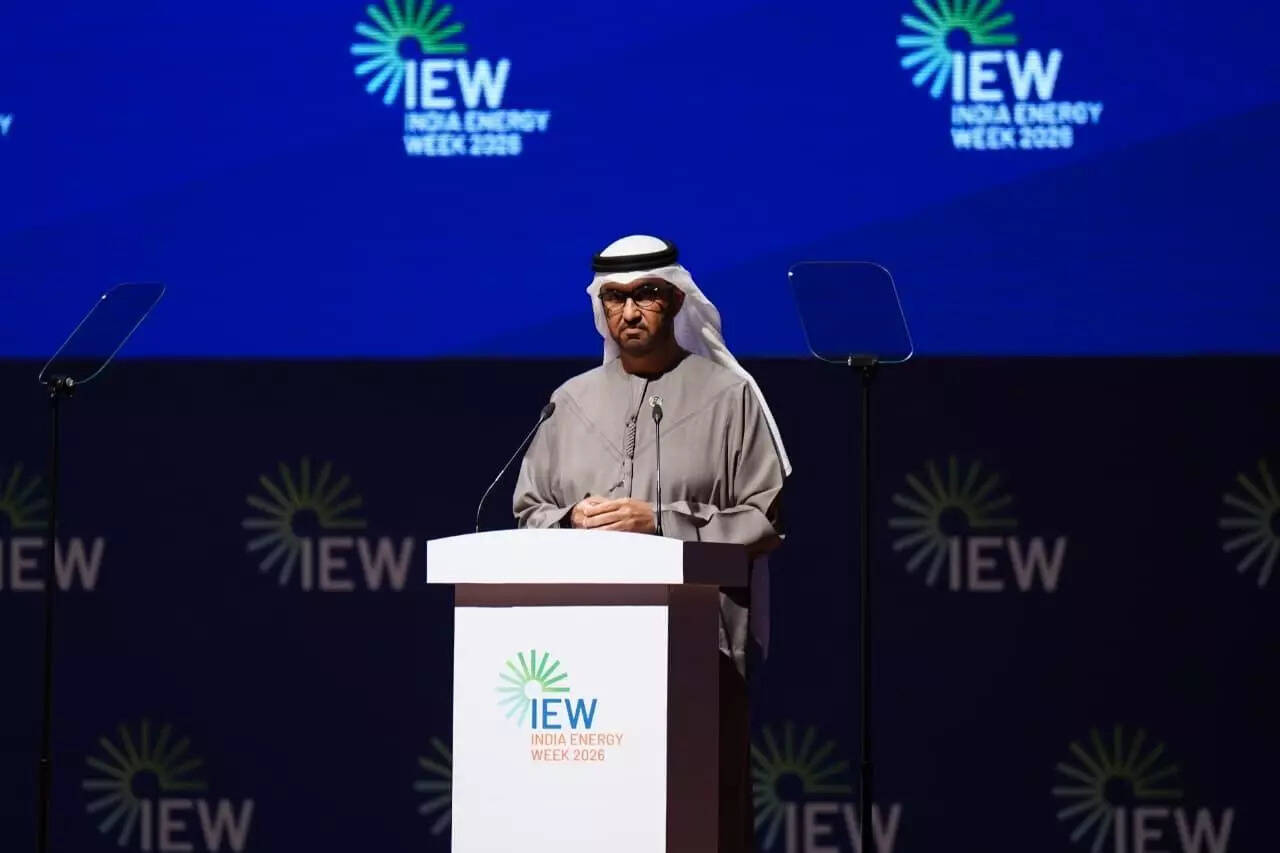
India is emerging as the central driver of the next phase of global energy demand, even as the world undergoes a large-scale transformation across fuels, technologies and systems, Sultan Ahmed Al Jaber, UAE Minister of Industry and Advanced Technology and Managing Director and Group CEO of ADNOC, said at India Energy Week 2026 in Goa on Tuesday.
Speaking at the inaugural session, Al Jaber said the global energy landscape is being reshaped not by volatility alone but by three powerful megatrends — the rise of emerging markets led by India, the rapid expansion of artificial intelligence and digital infrastructure, and the transformation of energy systems toward a more integrated mix of fuels.
“Behind today’s turbulence is a much bigger picture of transformation at scale,” he said, adding that energy demand growth — rather than transition alone — will define the coming decades.
Between now and 2040, global oil demand will remain above 100 million barrels per day, while LNG demand is expected to rise by more than 50 per cent and electricity demand by around 50 per cent, Al Jaber said.
Highlighting the often-overlooked drivers of electricity consumption, Al Jaber pointed to the rapid spread of air conditioning. By 2050, the world is expected to have 5.6 billion air conditioners, up from 1.6 billion today — equivalent to 10 new units being sold every second for the next 30 years. The scale of demand growth, he warned, makes underinvestment a bigger risk than oversupply.
At the centre of these shifts sits India, he said, describing the country as a decisive force in global energy markets. India is already the world’s third-largest energy consumer, with air travel expected to grow 150 per cent over the next 15 years, urban populations approaching one billion, and data centre capacity projected to expand 10-fold.
“India does not make progress in increments. It goes for quantum leaps,” Al Jaber said, quoting Prime Minister Narendra Modi.
He underlined the depth of the India–UAE energy partnership, calling it strategic, long-term and trust-based. Bilateral trade crossed $100 billion last year and is now targeted to double to $200 billion by 2032.
As India increases crude consumption and aims to double the share of natural gas in its energy mix, ADNOC has made India its largest LNG market and remains the country’s biggest supplier of LPG for household cooking fuel, Al Jaber said. ADNOC is also investing alongside India in renewable energy, with around 11 GW of solar, wind and storage assets through its climate investment platform, Alterra.
He also outlined how artificial intelligence is being embedded across ADNOC’s operations, with more than 200 AI tools and 65 robotic applications deployed to monitor wells in real time, predict failures and optimise production. These systems have helped halve unplanned shutdowns and improve operational efficiency, he added.
In a broader geopolitical context marked by trade barriers and fragmentation, Al Jaber pitched the UAE as an open, reliable partner.
“In an age of walls, our message is simple: Build doors, and the world will walk through them,” he said, inviting Indian and global partners to deepen collaboration across energy, infrastructure and technology.