Offshore Drilling Sector Gains Momentum with Key Contract Wins
The global offshore drilling sector continues to demonstrate robust demand for high-specification assets, a trend underscored by Transocean’s recent securing of significant contracts in both Brazil and Norway. These new fixtures represent a substantial addition of approximately $168 million to the company’s firm backlog, signaling sustained investment appetite from energy majors for long-duration, complex drilling campaigns. For investors monitoring the oil and gas services segment, these developments offer a compelling view into the resilience and strategic importance of advanced offshore capabilities, even amidst broader market fluctuations. This analysis delves into the specifics of these contracts, their implications for the drilling market, and how they align with current energy market dynamics and investor sentiment.
Deepwater Demand Sustains Offshore Rig Market Momentum
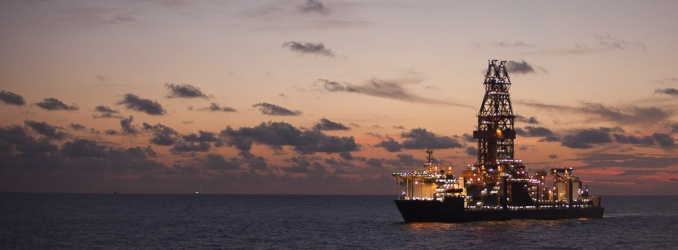
A cornerstone of the recent contract activity is the award for the ultra-deepwater drillship Deepwater Mykonos in Brazil. Secured by bp, this campaign is slated for a substantial 302 days, with operations projected to commence in the third quarter of 2026. This single contract alone is expected to contribute approximately $120 million to the backlog, a figure that excludes potential additional services and mobilization fees. This long-term commitment from a major integrated energy company like bp highlights several critical investment themes. Firstly, it reaffirms the strategic importance of Brazil’s pre-salt basins, which remain a key area for high-impact deepwater exploration and production. Secondly, it underscores the persistent global need for new hydrocarbon supply, driving supermajors to sanction projects with multi-year lead times. For investors, this signals confidence in the long-term oil price trajectory and the necessity of specialized assets capable of operating in challenging deepwater environments, commanding premium dayrates and providing stable revenue streams well into the future.
Harsh Environment Rigs Extend Run Amidst Tight Supply
Concurrently, the harsh-environment semisubmersible Transocean Enabler has secured an extension in Norway, with three one-well options exercised. This incremental work adds 105 days to the rig’s existing program, committing the unit through September 2027 and contributing an estimated $48 million to the company’s backlog. The extension of work for a harsh-environment rig is particularly telling for the supply-demand balance in this niche but critical segment. Harsh-environment rigs are specifically designed to operate in extreme weather conditions, making them essential for regions like the North Sea. The exercise of options demonstrates not just ongoing demand but also potentially a tightening market for these highly specialized assets. As operators look to maximize production from mature fields and explore new frontiers in challenging environments, the availability of such high-specification rigs becomes a key bottleneck. This trend suggests that companies with modern, capable harsh-environment fleets are well-positioned for sustained utilization and potentially escalating dayrates, offering a compelling investment thesis for those focusing on specialized drilling capabilities.
Navigating Volatility: Market Prices and Upcoming Catalysts
While long-term contract visibility provides a degree of stability for drilling contractors, the broader energy market remains a dynamic landscape. As of today, Brent crude trades at $90.18 per barrel, reflecting a slight dip of 0.28% within a day range of $93.87 to $95.69. Similarly, WTI crude is at $86.93, down 0.56% on the day. Looking at the recent past, Brent has experienced a notable shift, retreating from $118.35 on March 31st to $94.86 just yesterday, representing a significant 19.8% decline over the past two weeks. This volatility often prompts investor questions, with many of our readers asking about the future direction of WTI and what to predict for the price of oil per barrel by the end of 2026. These price movements, while influencing broader sentiment, often diverge from the fundamental demand for specialized drilling assets, which are driven by longer-term project economics.
Forward-looking analysis requires close attention to upcoming events that could introduce further market catalysts. Tomorrow, April 21st, the OPEC+ Joint Ministerial Monitoring Committee (JMMC) meeting could provide insights into future production policies, potentially impacting supply expectations and crude prices. Later this week, the EIA Weekly Petroleum Status Report and the Baker Hughes Rig Count will offer crucial data on U.S. inventory levels and drilling activity, respectively. These reports provide a pulse on the immediate supply-demand picture and can influence short-term price movements. For investors, understanding these data points and their potential impact is crucial for navigating the market, even as the offshore sector demonstrates its own distinct, long-cycle demand patterns.
Investor Focus: Long-Term Outlook vs. Short-Term Swings
Our proprietary reader intent data reveals a keen investor interest in the trajectory of crude prices, particularly regarding the performance of WTI and predictions for end-of-2026 oil prices. While the recent 19.8% drop in Brent crude over the last 14 days might trigger caution, the substantial contract awards discussed here provide a counter-narrative of long-term upstream commitment. The nearly $170 million in new backlog for Transocean, spread across ultra-deepwater and harsh-environment segments, demonstrates that major operators are making investment decisions based on long-term supply requirements, rather than solely on short-term price fluctuations. These long-duration contracts provide revenue visibility and a degree of insulation from the day-to-day commodity price volatility, making offshore drilling companies with high-specification fleets attractive to investors seeking exposure to the upstream cycle. As the global energy transition progresses, the role of reliable, convention-sourced oil and gas remains critical, ensuring that highly efficient, technologically advanced offshore drilling assets will continue to be in high demand for years to come.