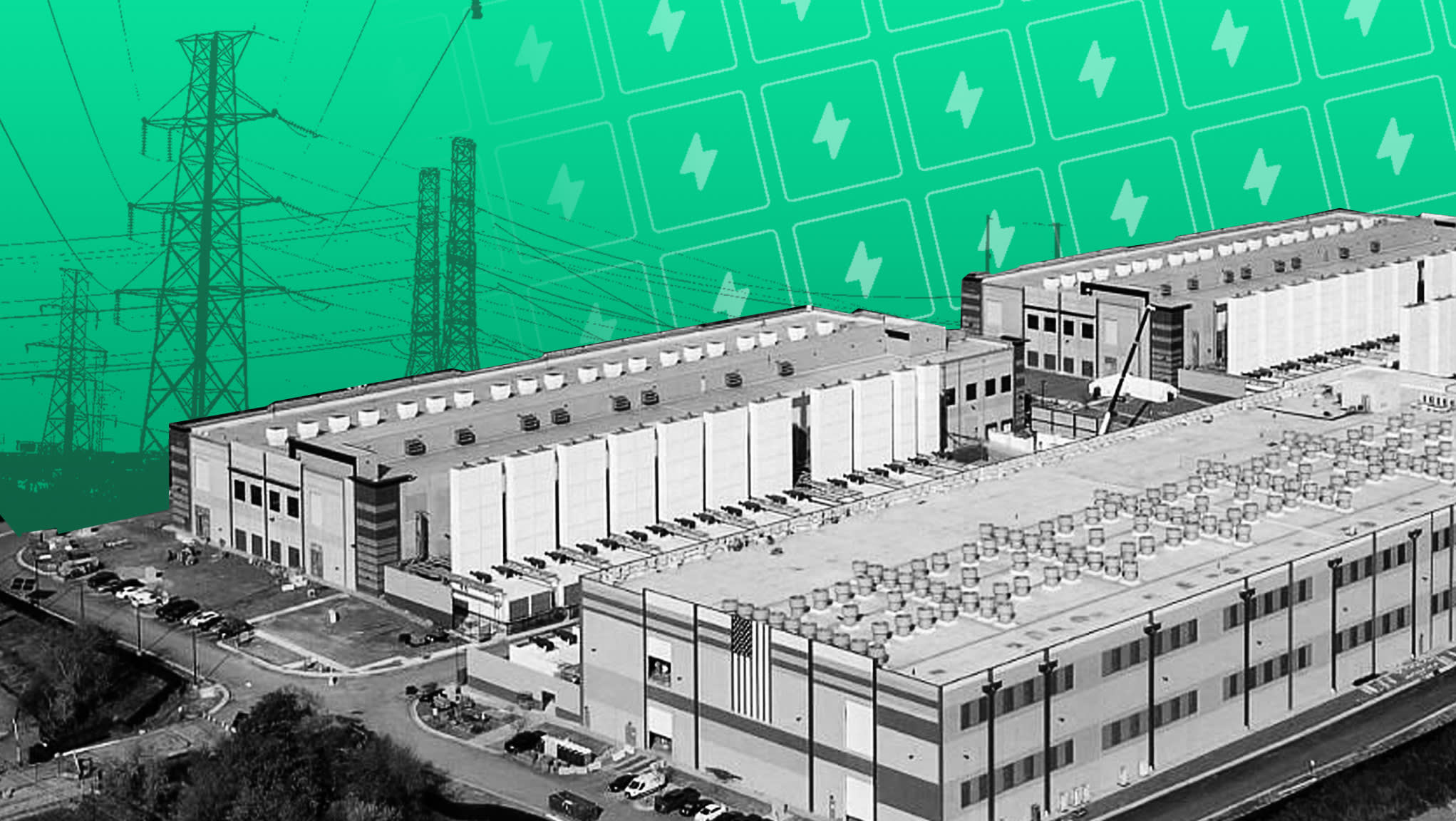
The global race for artificial intelligence supremacy is creating an unprecedented surge in electricity demand, unexpectedly positioning traditional energy sources, particularly natural gas and oil, at the forefront of the future energy mix. As hyperscale data centers proliferate and AI models grow in complexity, the existing electrical grid infrastructure is facing immense pressure, leading to a critical need for reliable, dispatchable power. This structural shift in demand presents a compelling, long-term investment thesis for the oil and gas sector, extending far beyond the typical cyclical drivers.
The AI Energy Black Hole and Grid Strain
The insatiable energy appetite of AI model training is rapidly becoming a defining challenge for utility companies and tech giants alike. Data centers, especially during intensive training runs for large language models, operate at full capacity, leading to spikes in consumption that often clash with peak residential and commercial usage. This dynamic significantly increases the risk of grid instability and potential blackouts. While solutions like “demand response” are being explored, requiring companies to temporarily curtail activity, their efficacy as a long-term strategy is limited. For instance, researchers at Duke University have suggested that if data center operators could restrict their consumption just 0.25% of the time, the grid could accommodate approximately 76 gigawatts of additional demand. However, even this significant flexibility is not a substitute for building substantial new generation capacity. The imperative to power these digital behemoths is forcing a hard look at the reliability of energy supply, making gas-fired power generation an increasingly attractive and necessary component.
Navigating Market Volatility Amidst Structural Shifts
While the long-term demand narrative for oil and gas is strengthening due to AI, investors must remain vigilant regarding immediate market movements. As of today, Brent crude trades at $91.87 per barrel, marking a 7.57% decline, with an intraday range spanning $86.08 to $98.97. Similarly, WTI crude is priced at $84 per barrel, down 7.86%, moving between $78.97 and $90.34. Gasoline prices have also dipped to $2.95, a 4.85% decrease. These daily fluctuations are set against a backdrop of broader softness, as Brent has shed $14 over the past two weeks, falling from $112.57 on March 27th to $98.57 on April 16th. This recent downturn, approximately 12.4% in just a fortnight, underscores the complex interplay of immediate geopolitical factors and inventory data impacting short-term prices. However, astute investors understand that these daily and weekly swings represent noise against the signal of burgeoning AI-driven energy demand. The underlying structural need for baseload power will likely provide a robust floor and upward pressure on prices over the medium to long term, making current dips potentially attractive entry points for strategic plays.
Key Catalysts and Investor Concerns on the Horizon
The investment community is keenly focused on the factors shaping future crude prices, with a common question among our readers revolving around the predicted price of oil per barrel by the end of 2026. Another frequently asked question pertains to current OPEC+ production quotas, highlighting the market’s sensitivity to supply-side management. In light of these concerns, the upcoming OPEC+ Joint Ministerial Monitoring Committee (JMMC) meeting on April 17th, followed by the Full Ministerial meeting on April 18th, are critical dates for investors. Any decisions or even strong statements regarding production levels will directly influence supply expectations and, consequently, global oil prices. Beyond OPEC+, weekly data releases, such as the API Crude Inventory on April 21st and 28th, the EIA Weekly Petroleum Status Report on April 22nd and 29th, and the Baker Hughes Rig Count on April 24th and May 1st, will offer vital insights into ongoing supply-demand dynamics. These events provide actionable intelligence for investors seeking to position themselves in a market increasingly influenced by the long-term energy demands of the AI revolution.
Natural Gas: The Indispensable Bridge Fuel for AI
The “white-knuckle ride” faced by hyperscalers in securing sufficient power is not merely a hypothetical scenario; it is an immediate impediment to project viability. Data center projects are being delayed or even rendered non-viable due to the inability to meet contractual power commitments, necessitating extensive upgrades to the existing electricity grid and the construction of new generation capacity. In this environment, natural gas emerges as an indispensable bridging fuel. Its cleaner burning profile compared to coal, coupled with its dispatchability and reliability, makes it the primary choice for powering new and expanded data centers. The urgency from tech companies to bring new capacity online translates directly into sustained demand for natural gas. This creates a multi-decade investment opportunity across the natural gas value chain, from exploration and production to midstream infrastructure and gas-fired power generation utilities. Companies positioned to capitalize on this secular demand shift stand to benefit significantly.
Beyond Curtailment: The Imperative for New Capacity
While discussions around demand response and optimizing existing grid capacity are important, they do not alleviate the fundamental need for new power generation. The consensus among energy experts is unequivocal: the scale of AI’s energy requirements demands substantial new build capacity. This includes not only new power plants but also the modernization and expansion of transmission and distribution infrastructure. For oil and gas investors, this translates into a robust and sustained demand for fossil fuels that can provide consistent, baseload power. Natural gas, in particular, is poised to capture a significant share of this new capacity. The long-term trajectory of energy demand, supercharged by the AI sector, underpins a strong investment case for companies involved in the exploration, production, and delivery of fuels critical to the digital future. Investors should focus on companies with strong asset bases and strategic positioning to supply this burgeoning demand, recognizing that the AI revolution is fundamentally reshaping the energy landscape.