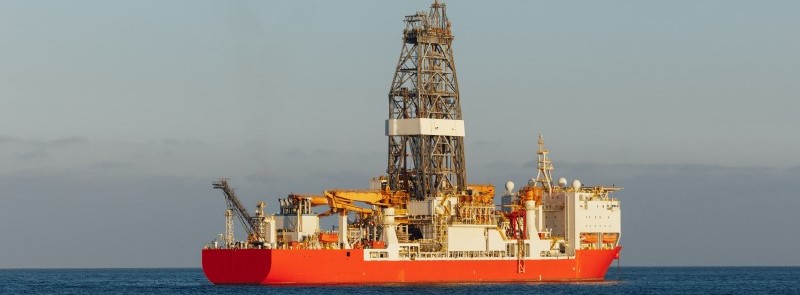
Historic US Offshore Leases Meet Rising Demand
The Department of the Interior’s recent unveiling of a draft five-year federal leasing program marks a monumental shift in U.S. offshore oil and gas policy, promising the most expansive Outer Continental Shelf (OCS) acreage offered in over a decade. This proposal, spanning 2026 through 2031, outlines up to 34 potential lease sales across 21 planning areas, from Alaska to the Pacific and the prolific Gulf of America. For energy investors, this represents a pivotal moment, signaling a renewed commitment to domestic resource development and offering a fresh lens through which to evaluate long-term investment strategies in a market currently navigating significant volatility.
Revitalizing US Offshore: A Decadal Shift in Policy
This draft program represents a decisive pivot from previous administrations’ more restrictive leasing schedules, immediately garnering robust support from key U.S. oil and gas trade groups. Industry leaders have lauded the expanded plan as crucial for restoring investment certainty, bolstering national energy security, and accelerating long-term offshore development. The scope is unprecedented, identifying 21 potential lease areas off Alaska, six along the Pacific coast, and seven in the Gulf, including a new administrative planning area, the South-Central Gulf of America. This commitment to a predictable leasing process, after years of delays, is seen as a historic step toward unlocking the nation’s vast offshore resources. The first offshore sale since 2023 is already slated for December, underscoring the immediate momentum behind this renewed focus.
The Gulf’s Enduring Allure Amidst Market Volatility
Central to this expanded offshore strategy is the Gulf of America, formally designated “GOA Program Area A.” Industry experts consistently highlight this region as the “gold standard” for offshore energy, currently responsible for nearly 2 million barrels per day (MMbpd) of U.S. crude supply, representing 14% of the national total. Furthermore, the Gulf is recognized for producing some of the lowest carbon-intensity barrels globally, a critical factor in a decarbonizing world. Evaluating new offshore areas alongside this core Gulf acreage is projected to enhance U.S. competitiveness as global demand for energy continues its upward trajectory. This long-term policy signal arrives at a time when the immediate market is experiencing considerable flux. As of today, Brent crude trades at $91.1 per barrel, marking an 8.34% drop, with a daily range between $86.08 and $98.97. Similarly, WTI crude sits at $83.32, down 8.61% for the day. This recent downturn follows a significant 14-day trend where Brent crude shed $14, declining 12.4% from $112.57 on March 27th to $98.57 just yesterday. While short-term price movements can be sharp, the foundational certainty provided by an expansive, predictable offshore leasing program offers a compelling long-term counter-narrative for investors looking beyond daily fluctuations.
Decoding Investor Sentiment: Supply, Security, and 2026 Price Targets
Our proprietary reader intent data reveals that investors are keenly focused on the future, with a significant number asking about the predicted price of oil per barrel by the end of 2026. This expansive leasing program, designed to run through 2031, directly addresses the supply side of that complex equation. Independent producers have echoed the sentiment that a robust five-year schedule is “essential to national security needs,” emphasizing that including all OCS regions in early drafts fosters competitive bidding and maximizes returns to the U.S. Treasury. This long-term clarity on domestic supply, potentially generating over $8 billion in government revenue by 2040 and supporting crucial domestic supply chains, creates a more stable outlook for future investment. Coupled with inquiries about OPEC+ current production quotas, these questions underscore the market’s search for clarity amidst a complex interplay of policy, geopolitics, and fundamental supply and demand. The timeline for these new leases to translate into production is, of course, multi-year, but the policy framework itself provides a critical input for modeling future supply scenarios and, by extension, future price expectations.
Forward Momentum: Upcoming Catalysts and the Path to Production
As the market digests the implications of this long-term U.S. offshore expansion, immediate attention shifts to a series of critical upcoming events that will shape short-term market dynamics. The OPEC+ Joint Ministerial Monitoring Committee (JMMC) meeting today, April 17th, followed by the full Ministerial meeting tomorrow, April 18th, will provide crucial insights into global supply management strategies. Any decisions regarding production quotas will directly influence the immediate price environment and the perceived urgency of new U.S. offshore supply. Furthermore, investors will be closely monitoring weekly inventory reports from the American Petroleum Institute (API) and the U.S. Energy Information Administration (EIA), scheduled for release on April 21st and 22nd, respectively, with subsequent reports on April 28th and 29th. These will offer vital short-term demand signals. The Baker Hughes Rig Count, due on April 24th and again on May 1st, will provide real-time insights into current drilling activity, serving as a leading indicator for future production trends. While the OCS program itself will undergo multi-stage revisions and public comment before finalization, this draft marks a significant first step. The broader push by the administration to accelerate domestic energy development also includes a commitment to modernizing offshore safety standards and emissions performance, areas where industry groups have highlighted ongoing progress. Investors should carefully track these near-term catalysts in conjunction with the long-term policy signals to position effectively for the evolving energy landscape.