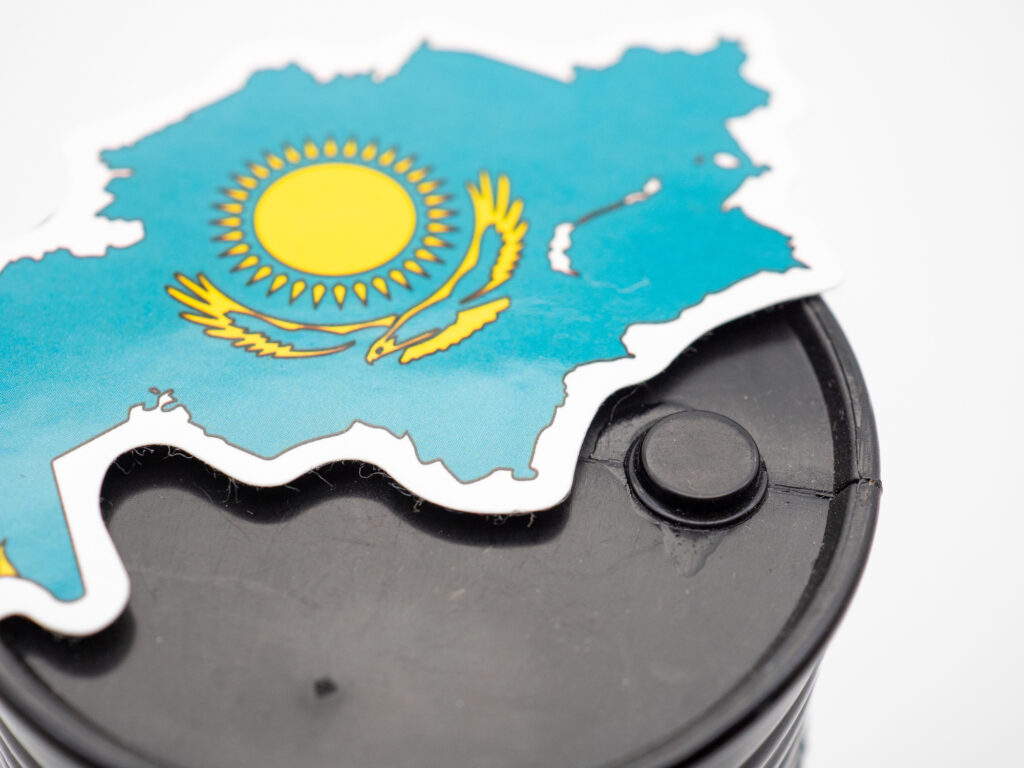
Big Oil Grapples With $166B Kazakh Court Battle
A colossal legal battle is brewing in the heart of the Caspian, as Kazakhstan launches an arbitration claim in a Swiss court seeking a staggering $166 billion from a consortium of global energy giants. This move targets major players including ExxonMobil, Chevron, Shell, Eni, and TotalEnergies, challenging their operational conduct and financial integrity. The claims, primarily focused on alleged lost revenues stemming from significant delays at the Kashagan oilfield and separate accusations of bribery, introduce a substantial layer of uncertainty for investors in these companies, particularly amidst a volatile global energy market. For shareholders and potential investors, understanding the nuances of this multifaceted legal challenge is paramount to assessing future risk and return in the oil and gas sector.
The Kashagan Conundrum: $166 Billion in Dispute
At the core of Kazakhstan’s arbitration claim lies the Kashagan oilfield, a project developed by the North Caspian Project consortium, which includes Kazakhstan’s state oil firm KazMunayGas (16.88% stake), along with Eni, Shell, ExxonMobil, and TotalEnergies (each holding 16.81%), China’s CNPC (8.33%), and Japan’s INPEX Ltd (7.56%). The bulk of the $166 billion demand is attributed to lost revenues resulting from extensive delays in the field’s development and production. Kashagan, one of the world’s largest oil discoveries in recent decades, has been plagued by technical challenges and cost overruns since its inception, making it a poster child for the complexities of mega-projects in challenging environments. For investors, this claim highlights the inherent political and operational risks associated with long-term, capital-intensive upstream ventures, where sovereign entities can leverage contractual disputes for significant financial claims. The sheer scale of this figure, even if only a fraction is ultimately awarded, could materially impact the financial performance and investment appeal of the implicated majors, prompting a reevaluation of their exposure in similar jurisdictions.
Bribery Allegations and Contentious Legal Precedent
Beyond the Kashagan delays, Kazakhstan has initiated a second arbitration case, seeking $15 million plus interest from Eni and other companies, alleging their involvement in bribery related to oilfield development contracts. This claim aims to leverage evidence from depositions and proceedings held in Houston and Italian courts. However, Eni has vehemently denied these allegations, citing a previous exoneration by Italian authorities over a decade ago and a significant dismissal of similar claims by a Houston court, save for a request for generic compliance procedures. This aspect of the legal battle underscores the intricate and often protracted nature of international legal disputes, particularly when historical allegations and cross-jurisdictional evidence are involved. Investors must weigh the potential for reputational damage and the costs of prolonged litigation, even if the financial claim itself is smaller compared to the Kashagan dispute. Adding to the complex legal landscape, it’s worth noting that earlier this year, a Kazakh appellate court sided with the international oil majors operating Kashagan, overturning a $4.4 billion fine levied against them for sulfur pollution related to storage practices. This prior outcome demonstrates that legal battles in Kazakhstan are not a one-sided affair, offering a degree of precedent for the current dispute.
Market Volatility and Investor Outlook Amidst Legal Headwinds
This high-stakes legal confrontation unfolds against a backdrop of significant market volatility, adding another layer of complexity for oil and gas investors. As of today, Brent crude trades at $90.61 per barrel, marking an 8.83% decline from yesterday’s close, while WTI sits at $82.68, down 9.31%. This sharp daily dip follows a broader downtrend, with Brent having shed over $20 per barrel since late March, moving from $112.57 on March 27th to today’s levels. Such a dynamic pricing environment directly impacts the revenue streams of major oil companies, making any substantial legal claims even more financially impactful. Our proprietary data reveals that investors are keenly monitoring the market, with a significant portion of our readership actively asking about the future price of oil by year-end 2026 and the projected performance of major players. This Kazakh legal challenge directly influences these risk assessments. Even if the full $166 billion is not awarded, the costs associated with legal defense, potential settlements, and the opportunity cost of management attention diverted from core operations represent a tangible drag on shareholder value. In an environment where every dollar counts, a multi-billion-dollar legal cloud is a material factor for investment decisions.
Upcoming Events and Strategic Implications for Global Energy
The timing of this legal battle is particularly pertinent given the upcoming schedule of critical energy events. The broader market context, particularly surrounding supply-side dynamics, will be heavily influenced by the upcoming OPEC+ Joint Ministerial Monitoring Committee (JMMC) meeting tomorrow, April 17th, followed by the Full Ministerial meeting on April 18th. These meetings could lead to adjustments in production quotas, directly impacting crude prices and, consequently, the revenue outlook for the very majors facing Kazakhstan’s claims. Many of our readers are keenly focused on OPEC+ production quotas, and any shifts could either exacerbate or mitigate the financial pressure these companies face from the Kazakh dispute. Further ahead, weekly API and EIA inventory reports on April 21st/22nd and April 28th/29th, alongside the Baker Hughes Rig Count reports on April 24th and May 1st, will continue to shape market sentiment. For the implicated oil giants, a period of sustained lower oil prices, influenced by OPEC+ decisions or demand shifts, would make any potential payout or settlement in the Kazakh arbitration significantly more burdensome. This convergence of legal and market forces demands meticulous due diligence from investors evaluating their positions in these global energy leaders, as the outcomes of both the courtroom and the commodity markets will dictate their financial trajectory.