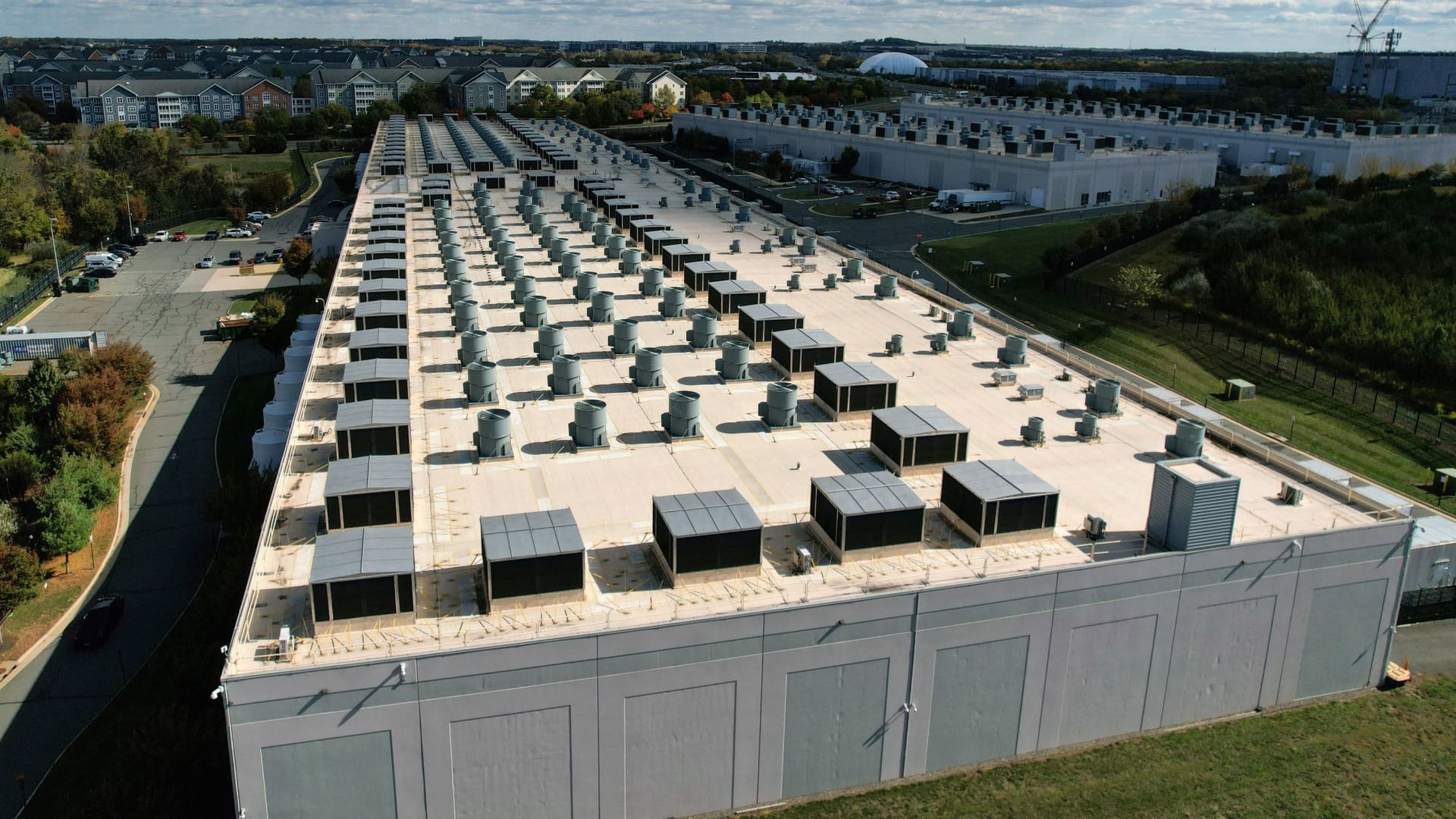
The energy landscape is undergoing a significant transformation, with artificial intelligence (AI) data centers emerging as a potent new driver of electricity demand and, consequently, power price inflation. For oil and gas investors, this dynamic presents both challenges and opportunities, reshaping the outlook for utilities, power generators, and the broader crude and natural gas markets. Our proprietary data pipelines at OilMarketCap reveal a complex interplay of surging electricity costs, growing political scrutiny, and a volatile global energy market, demanding a nuanced investment strategy to navigate these shifts.
The AI Power Surge: Data Centers Redefining Demand
The insatiable energy appetite of AI data centers is rapidly becoming a focal point in the U.S. power market. These facilities, often consuming a gigawatt or more of electricity – equivalent to powering over 800,000 homes or a small city – are exerting immense pressure on regional grids. While the national average residential utility bill saw a 6% increase in August compared to the prior year, states with high concentrations of data centers experienced far more dramatic hikes. Virginia, home to the world’s highest density of data centers, witnessed a 13% surge in electricity prices. Illinois saw an even steeper 16% rise, with Ohio close behind at 12%. These figures, significantly outpacing the national trend, underscore the direct impact of the data center buildout on consumer costs and, by extension, on the operating expenses of energy-intensive industries.
Much of this intensified demand is concentrated within the PJM Interconnection grid, which serves over 65 million people across 13 states, including Virginia, Illinois, and Ohio. Our analysis indicates that PJM, the largest grid in the U.S., is grappling with a severe imbalance between rapidly escalating demand and constrained supply capacity. This structural deficit is not merely a regional issue; it signals a broader challenge for grid operators nationwide as the AI industry continues its aggressive expansion, potentially driving up the need for both natural gas-fired and renewable generation capacity to meet future demand.
Political Headwinds and Regulatory Risk for Energy Infrastructure
The escalating electricity prices, exacerbated by data center consumption, are not going unnoticed in the political arena, creating a new layer of regulatory and reputational risk for energy investors. With U.S. mid-term elections approaching, affordability has become a central campaign theme. In Virginia, Democrat Abigail Spanberger successfully campaigned on cost-of-living issues, directly attributing rising electricity prices to data centers and vowing to ensure tech companies “pay their own way.” This sentiment, signaling a growing “techlash,” is gaining traction beyond state lines.
Federal lawmakers, including Senators Richard Blumenthal of Connecticut and Bernie Sanders of Vermont, have also voiced strong criticism, accusing the administration of facilitating “sweetheart deals with Big Tech companies” and failing to protect consumers from subsidizing data center costs. This bipartisan concern suggests that the political environment is becoming increasingly hostile to unchecked data center expansion, potentially leading to new regulations, taxes, or siting restrictions. Investors in utilities, power generation, and even real estate associated with data center development must factor these evolving political and regulatory risks into their long-term forecasts. As Abraham Silverman, former general counsel for New Jersey’s public utility board from 2019 to 2023, aptly notes, data centers are not always “great neighbors,” leading to community pushback that could further complicate development.
Current Market Snapshot: Volatility Amidst Shifting Demand
The broader energy market is currently navigating significant volatility, adding another layer of complexity for investors assessing the impact of data center demand. As of today, Brent Crude trades at $90.38 per barrel, marking a sharp -9.07% decline within a day range of $86.08 to $98.97. Similarly, WTI Crude stands at $82.59 per barrel, down -9.41%, having traded between $78.97 and $90.34. Gasoline prices have also seen a notable drop to $2.93, a -5.18% decrease, within a day range of $2.82 to $3.1. This recent downturn reflects a broader bearish sentiment that has seen Brent crude fall from $112.78 on March 30th to today’s $90.38, representing a substantial -19.9% decline over the past two weeks.
This market movement, captured by our real-time data pipelines, underscores the sensitivity of energy prices to global supply-demand dynamics, geopolitical events, and economic indicators. While crude prices are experiencing a downturn, the localized surge in electricity demand from data centers could paradoxically create upward pressure on natural gas prices in specific regions, especially where gas-fired power plants are the marginal suppliers. Investors must therefore consider this divergence: a global crude market facing headwinds, while regional power markets are being stretched by new, energy-intensive demand sectors.
Forward Outlook: Investor Strategy and Upcoming Catalysts
OilMarketCap’s reader intent data reveals that investors are keenly focused on the direction of crude prices, with questions like whether WTI is “going up or down” and predictions for “the price of oil per barrel by end of 2026” dominating sentiment. This highlights the critical need for forward-looking analysis, particularly given the new demand drivers from AI. While the current crude price decline is notable, several upcoming events could introduce fresh volatility and reshape investor expectations for the broader energy complex, influencing everything from upstream exploration to power generation fuel costs.
In the immediate term, the OPEC+ Joint Ministerial Monitoring Committee (JMMC) Meeting on April 19th, followed by the full OPEC+ Ministerial Meeting on April 20th, will be crucial. Any decisions regarding production quotas could significantly impact global crude supply and, by extension, the economic viability of various energy projects. Furthermore, the API Weekly Crude Inventory reports on April 21st and 28th, alongside the EIA Weekly Petroleum Status Reports on April 22nd and 29th, will provide vital insights into U.S. crude and product stockpiles, influencing short-term price movements. The Baker Hughes Rig Count on April 24th and May 1st will offer a gauge of North American drilling activity, signaling future supply trends. For investors evaluating specific energy companies’ exposure to these evolving power market dynamics, understanding these macro crude dynamics, alongside the micro-trends of localized power demand, is essential for constructing robust investment theses. The accelerating demand from data centers adds a unique, structural component to an otherwise volatile energy market, requiring a dual-lens approach to investment analysis.