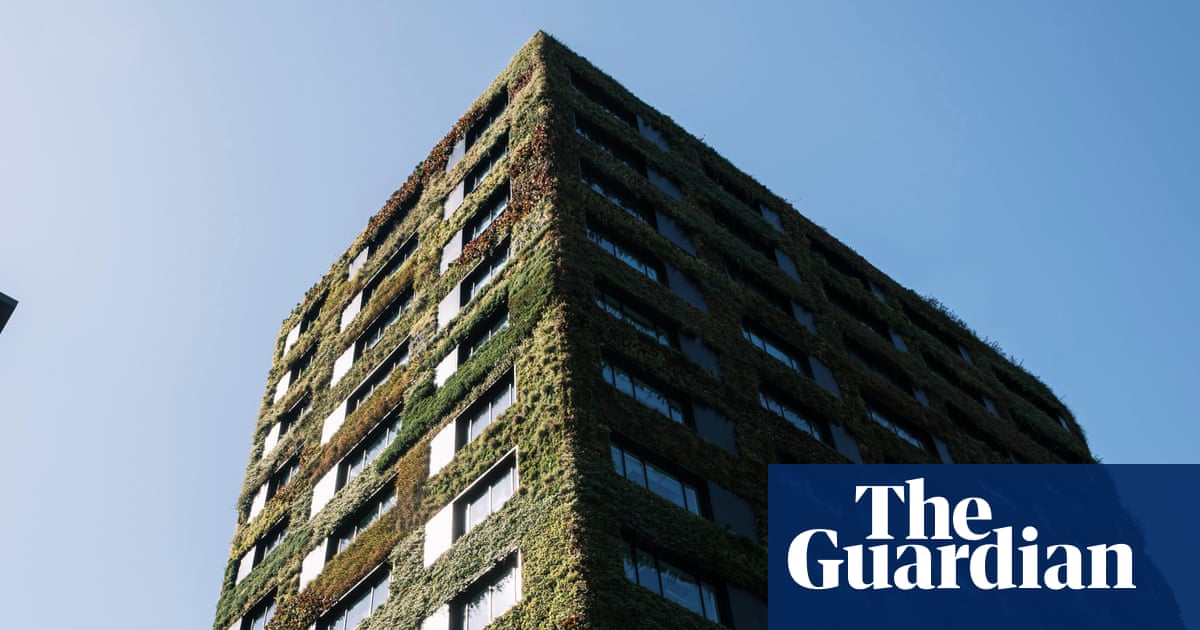
The global energy landscape is a complex tapestry woven from policy shifts, technological advancements, and fundamental demand drivers. In recent weeks, an intriguing signal has emerged from the building sector: a reported slowdown in the growth of demand for “green” commercial buildings, particularly across North and South America. While the long-term trajectory towards sustainability remains undeniable, this apparent deceleration, influenced by policy changes, presents a unique inflection point for investors in traditional oil and gas. For those tracking the pulse of global energy consumption, this trend raises critical questions about near-term demand resilience and the potential benefits for conventional energy producers as the transition narrative faces real-world friction.
Green Building Momentum Falters, What it Means for Energy Demand
An industry survey of construction professionals indicates a notable dip in the growth of demand for sustainable commercial buildings. Specifically, North and South America experienced a significant decline in the balance of professionals reporting higher demand, falling sharply from 25% to just 11%. This shift is largely attributed to changes in policy focus. While demand growth outside these continents also softened, from 48% to 40%, the American market’s deceleration is particularly pronounced. Buildings are not minor players in the energy equation; residential and commercial structures collectively accounted for 34% of global carbon emissions in 2023, with the vast majority stemming from heating, cooling, and powering these facilities. A slower adoption rate for green building techniques—which typically aim to cut energy consumption through improved insulation, efficient systems, and renewable integration—suggests that the energy demands of the built environment may remain more conventional for longer than previously anticipated. This structural inertia could translate into sustained demand for traditional energy sources, as existing and newly built conventional structures continue to rely on fossil fuels for their operational needs.
Navigating Volatility: Market Signals and Investor Sentiment
The broader energy market is currently reflecting a period of heightened volatility, adding another layer of complexity for investors. As of today, Brent crude trades at $90.38, marking a significant daily decline of 9.07%. West Texas Intermediate (WTI) crude shows a similar trend, priced at $82.59, down 9.41% within the same trading session. This sharp downturn contrasts with recent stability, with Brent having shed $22.4, or nearly 20%, since March 30th when it was trading at $112.78. Such price movements naturally prompt investor queries, with many asking about the trajectory of oil prices for the remainder of 2026. The green building slowdown, while seemingly distant from daily crude fluctuations, adds a subtle yet important undercurrent to this sentiment. If the expected acceleration in energy efficiency gains from the built environment slows, it could provide a floor for demand assumptions, potentially moderating the bearish pressure from other market factors. Investors are weighing whether the current price dip represents a buying opportunity, especially if underlying traditional energy demand proves more robust than some green transition forecasts suggest.
Policy Headwinds and Persistent Energy Needs
The industry survey explicitly links the slowdown in green building demand to shifts in policy focus, particularly in the United States. While some industry leaders view this as a potential “blip,” arguing that occupants and large corporate tenants inherently desire sustainable spaces and that green buildings command higher rents, the immediate impact of policy changes is undeniable. The energy sector has long understood the profound influence of government regulations and incentives on investment decisions. When policy signals become less supportive of green initiatives, the economic calculus for developers and investors in sustainable projects can shift. This doesn’t negate the long-term drive towards decarbonization, but it does highlight the uneven and sometimes cyclical nature of the energy transition. The reality is that existing infrastructure, which consumes the vast majority of energy in the building sector, is not easily or quickly retrofitted. Even with a push for more efficient systems, the sheer volume of conventionally built structures ensures a persistent, substantial demand for traditional energy for heating, cooling, and power generation, independent of new green construction trends.
Upcoming Catalysts: OPEC+ and Inventory Data in Focus
In the immediate term, investors in traditional energy will be closely monitoring a series of critical events that could significantly impact market direction. The upcoming OPEC+ Joint Ministerial Monitoring Committee (JMMC) meeting on April 19th, followed by the full Ministerial Meeting on April 20th, are paramount. Given the recent substantial decline in crude prices, a prevalent question among our readers is, “What are OPEC+ current production quotas?” The market will be keenly watching for any indications of adjustments to supply. Should OPEC+ signal a tightening of production, it could provide a much-needed boost to prices, underpinning the value proposition for traditional energy. Complementing these policy decisions are the weekly inventory reports from the American Petroleum Institute (API) on April 21st and 28th, and the official EIA Weekly Petroleum Status Reports on April 22nd and 29th. These reports offer real-time insights into crude and product stockpiles, reflecting the true balance of supply and demand. If inventory draws continue, it could signal resilient demand that is less affected by the green building slowdown. Conversely, significant builds could exacerbate price pressures. Furthermore, the Baker Hughes Rig Count on April 24th and May 1st will provide an indicator of future drilling activity and potential supply growth from North America. The confluence of these supply-side decisions and demand indicators will be crucial for understanding the near-term implications of the green building slowdown on traditional energy investments.


