Energean’s Strategic Pipeline Play and Export Ambitions
Energean has significantly strengthened its position as a pivotal player in the Eastern Mediterranean gas market by securing a crucial transmission agreement with Israel Natural Gas Lines Ltd. This deal grants Energean capacity in the new Nitzana pipeline, a strategic onshore route designed to transport Israeli gas to Egypt. The agreement covers the supply of up to 1 billion cubic meters (bcm) per year over a 15-year period, with built-in provisions for extensions and early termination. This development marks a critical step for Energean, whose producing assets are primarily located in the Eastern Mediterranean and the UK North Sea, as it pivots towards expanding its export capabilities beyond its established domestic contracts.
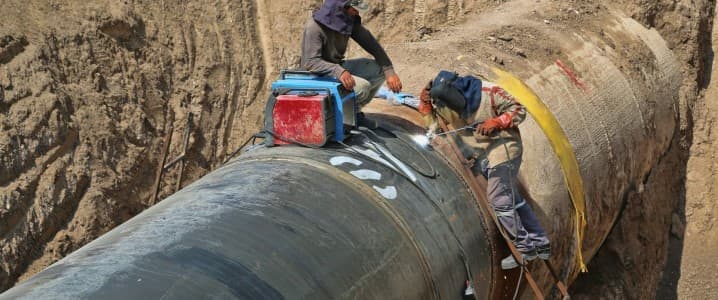
The Nitzana pipeline project, first announced last month, involves the construction of a new line from Ramat Hovav in Israel to the border with Egypt near Nitzana, covering approximately 65 kilometers (40 miles). It also includes a new compressor station at Ramat Hovav. Energean’s financial commitment to this infrastructure is substantial yet strategic, with its 16.4% share of the construction costs for the pipeline and compression station estimated at approximately $100 million. This investment underscores the company’s long-term vision for regional gas exports. The pipeline is projected to become operational no later than 36 months after all three primary parties – Energean, Leviathan, and Tamar – finalize their respective transmission agreements, covering the project’s full capacity. Additionally, the terms provide Energean with rights to access available capacity in the Jordan-North pipeline during the construction phase, ensuring flexibility.
Eastern Mediterranean Gas: A Growing Hub Amidst Global Volatility
The Eastern Mediterranean continues to emerge as a critical gas supply region, offering a diversified source of energy amidst an increasingly complex global landscape. Energean’s move to secure pipeline capacity to Egypt highlights the growing importance of intra-regional energy trade and the strategic role Egypt plays as a potential liquefaction and re-export hub for European markets. This long-term agreement provides a measure of stability for Energean’s future revenue streams, contrasting sharply with the price volatility often observed in crude oil markets. Investors frequently inquire about the broader energy market outlook, with questions like “what do you predict the price of oil per barrel will be by end of 2026?” reflecting a desire for foresight in a turbulent environment. While this pipeline deal focuses on gas, the stability offered by such long-term contracts can be particularly appealing when crude prices are experiencing significant fluctuations, providing a more predictable cash flow profile.
The strategic value of the Nitzana pipeline extends beyond just Energean, as it provides a new export artery for the wider Israeli gas industry. The participation of other major players like Chevron and NewMed Energy, representing the Leviathan field, signifies a concerted regional effort to monetize vast offshore gas resources. This regional cooperation is vital for enhancing energy security and establishing the Eastern Mediterranean as a reliable energy corridor. For investors evaluating exposure to the region, understanding these long-term infrastructure plays is crucial, as they underpin the future growth and profitability of gas producers. The commitment to building out such infrastructure reflects a confident outlook on sustained demand for natural gas, both regionally and internationally.
Current Market Headwinds and Forward-Looking Catalysts
The current macro environment presents a complex backdrop for energy investments. As of today, Brent crude trades at $90.38, reflecting a significant 9.07% decline within the day, with a broad day range from $86.08 to $98.97. This sharp downturn is part of a larger trend, with Brent falling from $112.78 just 14 days ago, representing a nearly 20% drop. Such volatility naturally prompts investor concerns about the overall health of the energy sector, echoing questions like “How well do you think Repsol will end in April 2026?” These market movements can impact investor sentiment across the board, even for companies primarily focused on natural gas.
Looking ahead, the next two weeks are packed with events that could further shape the energy market. The upcoming OPEC+ JMMC Meeting on April 19th and the full OPEC+ Ministerial Meeting on April 20th will be closely watched for any signals regarding production quotas. Investors are keenly interested in “What are OPEC+ current production quotas?” as any adjustment could significantly influence crude prices and, by extension, the broader energy market. Following these, the API and EIA Weekly Crude Inventory reports on April 21st/22nd and April 28th/29th will provide fresh data on supply and demand dynamics in the United States. While these events directly impact crude oil, their outcomes cascade into overall energy sector confidence. For a gas-focused company like Energean, while its long-term contracts offer some insulation, a generally bearish or bullish sentiment in the wider energy market can still influence share performance and future capital raising efforts.
Investment Implications and Shareholder Value
Energean’s securing of the Nitzana pipeline capacity is a clear strategic win for shareholders, significantly enhancing the company’s long-term growth prospects. CEO Mathios Rigas emphasized that while domestic contracts form the “bedrock of our cashflows,” this agreement marks an “important milestone to drive growth in our annual gas sales.” This signifies a deliberate move to diversify revenue streams and unlock the full export potential of its Israeli assets. The 15-year term for 1 bcm per year provides a robust, predictable revenue stream that complements existing domestic sales, de-risking the company’s profile in an industry often subject to commodity price swings.
For investors, this deal solidifies Energean’s position as a growth-oriented, regionally integrated energy producer. The $100 million investment for its share of the pipeline infrastructure is a manageable capital expenditure that promises substantial returns over the life of the agreement. The operational timeline of within 36 months ensures that this export capacity will come online relatively soon, contributing to increased annual gas sales and, consequently, strengthening cash flow generation. In a market where predictable, long-term revenue visibility is highly valued, particularly with crude prices exhibiting such volatility, Energean’s strategic expansion into regional gas exports offers a compelling investment thesis, positioning it favorably for sustained value creation in the evolving global energy landscape.


