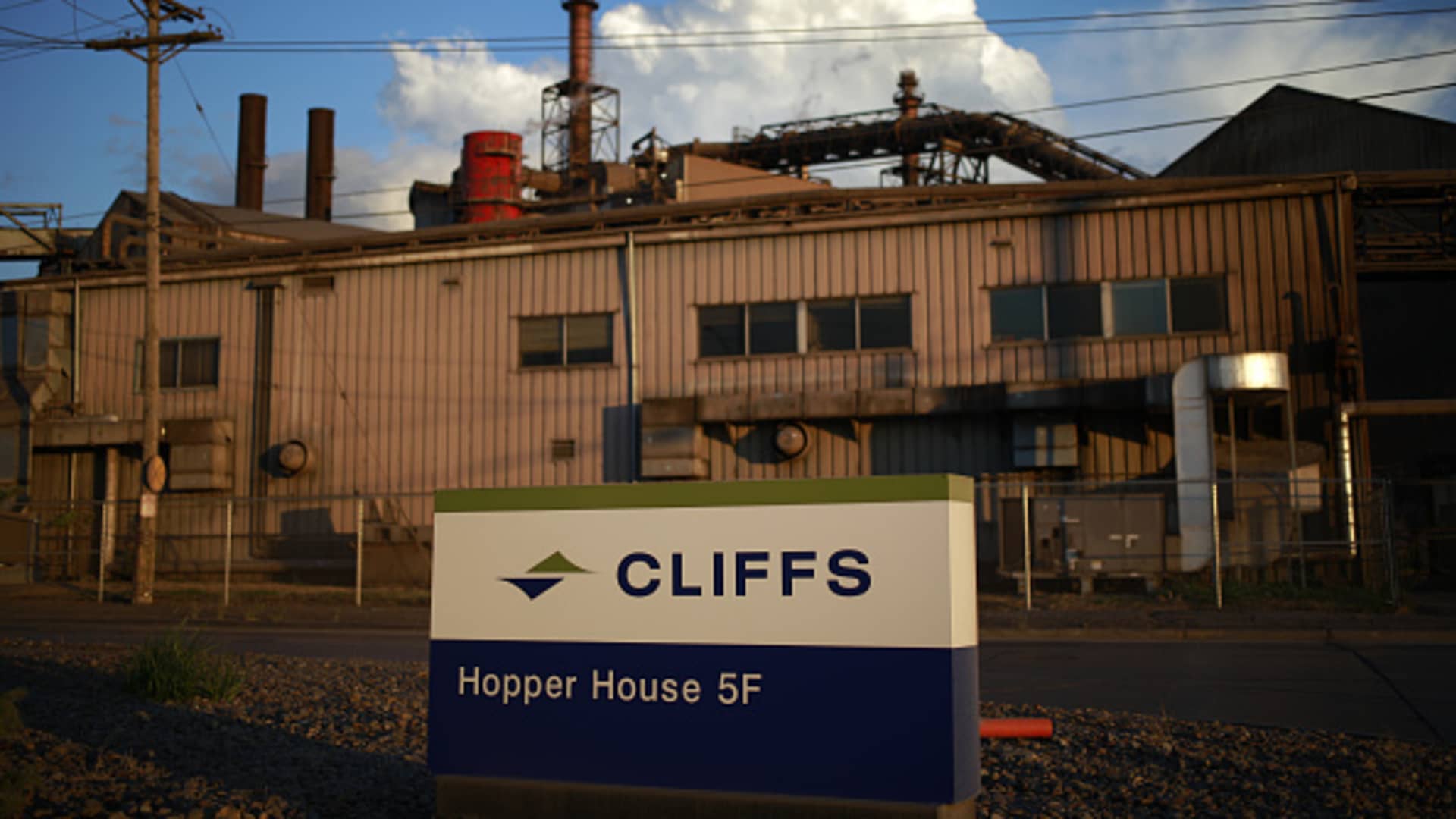
The recent announcement from Cleveland-Cliffs regarding its foray into rare earth mining has sent ripples through the market, with the company’s shares surging by 17% following the news. While primarily known as a steelmaker, Cliffs’ strategic pivot into critical minerals is far more than a simple diversification; it represents a significant move aligned with burgeoning national security imperatives and the accelerating energy transition. For astute oil and gas investors, this development signals a broadening landscape of energy-related opportunities and risks, highlighting the strategic importance of securing domestic supply chains for the essential components of a future driven by electric vehicles, advanced defense systems, and renewable energy infrastructure.
The Strategic Imperative: Securing Critical Mineral Supply Chains
Cleveland-Cliffs CEO Lourenco Goncalves revealed that geological surveys at two company sites in Michigan and Minnesota have indicated rare earth deposits. This exploration into commercially viable rare earth mining positions Cliffs directly at the forefront of a critical national strategy. Rare earths are indispensable components for high-strength magnets used in everything from U.S. weapons platforms and electric vehicles to semiconductor fabrication and robotics. The geopolitical backdrop for this move is stark: China currently dominates the global rare earth supply chain, rendering the U.S. significantly dependent on foreign imports. Recent export controls imposed by Beijing underscore the vulnerability of this reliance, prompting calls for domestic self-sufficiency.
The U.S. government has already demonstrated a commitment to bolstering domestic supply, exemplified by the Defense Department’s deal with MP Materials, the owner of the nation’s only commercial rare earth mine. This agreement included an equity stake, a price floor, and an offtake agreement, illustrating the government’s willingness to support strategic mineral independence. Cliffs’ potential rare earth ventures in Michigan and Minnesota align perfectly with this broader national agenda, as Goncalves himself stated, emphasizing that “American manufacturing shouldn’t rely on China or any foreign nation for essential minerals.” This strategic alignment suggests potential for similar government backing, transforming a mining exploration into a significant national infrastructure project with long-term implications for industrial independence.
Market Dynamics and Investor Sentiment: Diversification Amidst Volatility
The market’s enthusiastic response to Cliffs’ rare earth announcement, evidenced by the 17% share jump, speaks volumes about investor appetite for diversification and exposure to future-facing industries. This sentiment is particularly relevant given the current volatility observed in traditional energy markets. As of today, Brent Crude trades at $90.38, reflecting a notable -9.07% decline within a day range of $86.08-$98.97. Similarly, WTI Crude stands at $82.59, down -9.41% within a range of $78.97-$90.34. The gasoline market has also seen downward pressure, with prices at $2.93, a -5.18% drop for the day. This recent snapshot continues a broader trend for crude; Brent has fallen significantly from $112.78 on March 30th to its current $90.38, marking a nearly 20% decline in just over two weeks.
Such pronounced swings in the conventional oil and gas sector naturally lead investors to seek stability and growth opportunities elsewhere. Our proprietary reader intent data reveals that investors are actively grappling with long-term predictions, with a frequent question being “what do you predict the price of oil per barrel will be by end of 2026?” This uncertainty about future oil prices, coupled with ongoing queries about “OPEC+ current production quotas” which drive short-term supply dynamics, underscores a growing desire for portfolio resilience. Cliffs’ move into rare earths offers precisely this type of strategic diversification, providing exposure to a sector critical for the energy transition and national security, less directly tied to the immediate supply-demand whims of the crude market. It’s a play on future industrial demand rather than current fuel consumption, appealing to those looking beyond today’s price fluctuations.
Upcoming Energy Events and Long-Term Strategic Plays
While the immediate focus on critical mineral supply chains is a long-term strategic play, it exists within the broader context of ongoing energy market developments. Over the next two weeks, several key events will shape the traditional oil and gas landscape. The OPEC+ Joint Ministerial Monitoring Committee (JMMC) Meeting on April 19th, followed by the full OPEC+ Ministerial Meeting on April 20th, will be closely watched for any shifts in production policy that could impact global crude prices. Further insights into U.S. supply and demand will come from the API Weekly Crude Inventory reports on April 21st and 28th, and the EIA Weekly Petroleum Status Reports on April 22nd and 29th. The Baker Hughes Rig Count, scheduled for April 24th and May 1st, will offer a granular view of drilling activity.
These upcoming events primarily address the short to medium-term outlook for conventional energy. However, their outcomes can indirectly influence the attractiveness of strategic plays like Cliffs’ rare earth initiative. Sustained volatility or a downward trend in crude prices, for instance, might further accelerate investor interest in sectors vital for the energy transition and national security, which are often less susceptible to immediate geopolitical and production quota shifts. The absence of specific rare earth policy events in the immediate future highlights that Cliffs’ announcement is not a reaction to an imminent regulatory change, but rather a proactive, forward-looking investment in a foundational industry for the future, likely with strong governmental support irrespective of short-term energy market gyrations.


