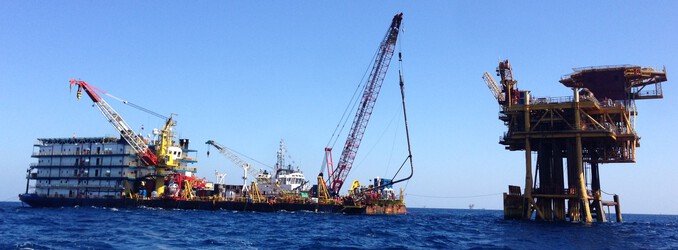
The recent contract secured by global energy and marine consultancy ABL with India’s Oil and Natural Gas Corporation Limited (ONGC) through United India Insurance (UIIC) marks a significant development for the Indian offshore sector and the specialized oilfield services market. Spanning from September 2025 to May 2026, this agreement positions ABL to oversee an estimated 95 rig moving operations, including approximately 25 for ONGC directly and 70 for third-party jack-ups within ONGC’s extensive offshore fields on India’s west coast. This substantial commitment, particularly the 34 rig relocations scheduled ahead of the critical 2026 monsoon season, underscores ONGC’s strategic imperative to maintain operational readiness and optimize its mobile offshore drilling unit (MODU) fleet. For investors, this provides a clear signal of sustained activity in a key growth region, offering insights into the resilience of long-term upstream development plans amidst prevailing market dynamics.
India’s Offshore Momentum and ONGC’s Strategic Imperative
India’s energy demand continues its robust upward trajectory, driving ONGC’s persistent focus on maximizing domestic hydrocarbon production. The scale of this new contract, encompassing close to a hundred rig moves over an eight-month period, highlights the ongoing operational intensity within ONGC’s offshore portfolio. The specific mention of ensuring fleet readiness ahead of the 2026 monsoon season is crucial; it speaks to the logistical complexities and critical planning required to operate safely and efficiently in challenging marine environments. Rig moves are not merely logistical exercises; they are integral to the drilling campaign lifecycle, enabling exploration, development, and workover activities across multiple wells and fields. ABL’s role as Marine Warranty Surveyor (MWS) and Tow Master is critical in de-risking these complex operations, a testament to the specialized expertise required to execute such projects. This sustained activity signals ONGC’s unwavering commitment to its offshore assets, reinforcing the long-term investment thesis for India’s indigenous oil and gas sector and the essential services that underpin it.
Navigating Market Headwinds: Price Dynamics and Investor Focus
While the ONGC contract provides a long-term positive signal, it is important for investors to consider the broader market context. As of today, Brent Crude trades at $96.48 per barrel, representing a 2.93% decline, with its intraday range fluctuating between $95.59 and $98.97. Similarly, WTI Crude is priced at $87.98, down 3.5%, moving between $87.02 and $90.34. This immediate downturn follows a more significant trend; Brent has seen a notable drop of $14 per barrel, or 12.4%, over the past 14 days, falling from $112.57 on March 27th to $98.57 on April 16th. Our reader intent data indicates that investors are keenly focused on these price movements, frequently inquiring about the current Brent crude price and the underlying models that power such responses, as well as the impact of OPEC+ production quotas. This ongoing volatility underscores the cautious approach many are taking. However, the securing of a multi-year, multi-rig contract by ONGC, a national oil company, suggests a strategic long-term view that transcends short-term price fluctuations, indicating confidence in the sustained profitability of offshore production even with a less elevated price deck. This creates a dichotomy: while spot prices are dynamic, large-scale national energy projects move forward with a longer investment horizon.
Forward Momentum: Upcoming Events Shaping the Outlook for Offshore Services
For investors tracking the broader energy landscape, the near-term calendar holds several pivotal events that could influence market sentiment and, by extension, the outlook for future offshore investments beyond the already-secured ABL contract. This week is particularly significant with the OPEC+ Joint Ministerial Monitoring Committee (JMMC) meeting on Friday, April 17th, followed by the Full Ministerial OPEC+ Meeting on Saturday, April 18th. These gatherings are critical as they often dictate global supply strategies and, consequently, influence crude oil price trajectories. Our readers are actively asking about OPEC+’s current production quotas, highlighting the market’s sensitivity to these decisions. Following these, the weekly API and EIA crude inventory reports, scheduled for April 21st, 22nd, 28th, and 29th, will provide crucial insights into demand patterns and storage levels in the United States, a key indicator for global oil consumption. Furthermore, the Baker Hughes Rig Count, due on April 24th and May 1st, offers a real-time gauge of drilling activity in North America. While the ONGC contract is already in place for 2025-2026, the cumulative impact of these upcoming events will shape the investment climate for new projects and future rig contracting cycles, directly influencing the demand for specialized marine assurance and rig move management services.
ABL’s Strategic Positioning and the Service Sector Play
ABL’s long-standing relationship with ONGC, now reinforced by this significant new contract, solidifies its position as a dominant marine assurance and rig move management provider in the Indian offshore market. The company’s expertise, leveraging a multi-disciplined team, decades of hands-on experience, and in-house geoscience and engineering support from its sister company Longitude, provides a competitive edge. In 2024 alone, ABL supported over 1,500 rig moves globally, demonstrating its extensive operational capacity and technical proficiency. This contract is not just about ABL’s success; it serves as a strong indicator for the health and specialization within the broader oilfield services sector. As offshore projects become increasingly complex, particularly in dynamic environments like the Indian continental shelf, the demand for highly specialized services that can mitigate operational risks and ensure compliance becomes paramount. Investors looking at the upstream value chain should recognize that while E&P companies bear the primary capital risk, the service providers like ABL, with their critical technical expertise and proven track record, offer a more stable investment profile, driven by recurring operational needs rather than direct commodity price exposure. This contract underscores the continued necessity of such specialized services to unlock and maintain offshore hydrocarbon production globally.