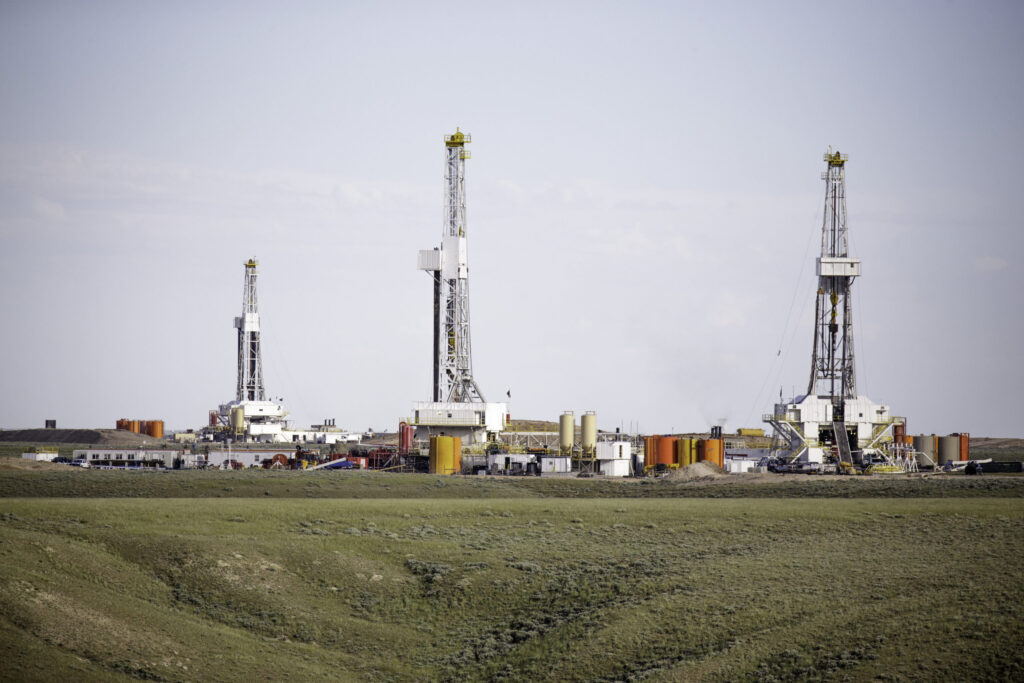
The UK’s Definitive Fracking Ban: A Localized Policy, Global Market Implications
The United Kingdom has finally taken a decisive step, moving from a protracted moratorium to a definitive ban on hydraulic fracturing, or fracking, for good. While discussions and policy reversals have characterized the UK’s stance on shale gas extraction for years, the Labour government’s accelerated plan to introduce a “total ban” this autumn marks a conclusive end to any domestic aspirations of emulating the North American shale revolution. For global energy investors, this development, while significant for British energy policy, largely reinforces existing market realities rather than introducing new volatility. Our analysis, leveraging OilMarketCap’s proprietary data pipelines, suggests that the UK’s geological limitations and the broader global energy landscape mean this ban will have minimal impact on international crude prices, directing investor focus instead towards more impactful supply-side dynamics and demand signals.
Britain’s Fracking Foray: A Geological and Political Dead End
The journey to this outright ban has been long and fraught with political and environmental contention. For years, successive UK governments wavered, with figures like former Prime Minister Liz Truss briefly attempting to revive fracking in pursuit of greater domestic fossil fuel production, only for her successor Rishi Sunak to reinstate the moratorium. However, the underlying issue was never solely political or environmental; it was fundamentally geological. As Chris Cornelius, founder of the UK’s first fracking company, Cuadrilla Resources, explicitly stated, the UK’s geology is simply not conducive to widespread, economically viable fracking operations. Unlike the vast, flat, and thick shale formations found in North America, which allow for relatively straightforward drilling and high yields, the UK’s shale deposits are characterized by thinner, more geologically complex, heavily faulted, and folded structures. These conditions not only make drilling significantly more challenging and expensive but also exacerbate the risk of earth tremors, a major public concern. Cornelius’s assessment that government support was largely a “political gesture” without genuine commercial prospects highlights why, despite the political back-and-forth, no sensible investor was likely to fund such challenging operations in the first place. The ban, therefore, formalizes a reality that geological and economic factors had already largely dictated.
Market Dynamics Beyond British Shores: Oil Prices Under Pressure
While the UK’s fracking ban secures a domestic policy direction, its direct influence on global oil and gas prices is negligible. The UK’s potential for shale production was always marginal on a global scale, making this ban more of a local energy security consideration than a global supply shock. Instead, global crude markets are responding to much larger forces. As of today, Brent crude trades at $90.38 per barrel, registering a significant 9.07% decline within the day, with its range fluctuating between $86.08 and $98.97. WTI crude mirrors this trend, standing at $82.59, marking a 9.41% drop for the day, having traded between $78.97 and $90.34. Gasoline prices have also dipped, now at $2.93, down 5.18% from a daily high of $3.1. This recent downturn extends a notable 14-day trend where Brent crude has shed $22.4, or nearly 20%, from its March 30th high of $112.78. These substantial price movements are far more indicative of shifting global demand outlooks, inventory builds, or macroeconomic concerns than any policy decision regarding a geographically constrained, uneconomical shale resource in the UK. Investors must look beyond localized policy decisions to truly understand and anticipate market volatility.
Investor Focus: Peering Through the Fog of Uncertainty
Our proprietary reader intent data reveals that investors are keenly focused on forward-looking price trajectories and the underlying fundamentals driving them. Many investors are asking about the predicted price of oil per barrel by the end of 2026, a clear signal of the market’s desire for long-term clarity amidst current volatility. This forward-looking sentiment underscores the limited impact of the UK’s fracking ban; while a definitive policy, it does not alter the fundamental supply-demand equation on a global scale. Furthermore, there is significant interest in OPEC+’s current production quotas, highlighting how closely market participants monitor supply-side management. Questions also arise regarding the data sources and APIs powering our market intelligence, demonstrating a sophisticated approach by investors seeking robust, real-time insights to navigate an increasingly complex energy landscape. These inquiries collectively indicate that investors are prioritizing global supply actions, macroeconomic indicators, and reliable data over peripheral policy announcements that lack significant production capacity implications.
Upcoming Catalysts: Navigating the Near-Term Energy Calendar
For investors seeking actionable insights, the immediate future holds several critical events that will undoubtedly exert more influence on crude prices than the UK’s fracking ban. The upcoming OPEC+ Joint Ministerial Monitoring Committee (JMMC) meeting on April 19th, followed by the full OPEC+ Ministerial Meeting on April 20th, are paramount. These gatherings will provide crucial signals regarding the cartel’s production strategy, directly impacting global supply. Following closely, the API Weekly Crude Inventory report on April 21st and the EIA Weekly Petroleum Status Report on April 22nd will offer vital snapshots of U.S. crude stock levels, often driving short-term price reactions. These reports will repeat on April 28th and April 29th, respectively, underscoring their continuous importance. Additionally, the Baker Hughes Rig Count, scheduled for April 24th and May 1st, provides a key indicator of North American drilling activity and potential future supply. These regularly scheduled events, with their direct implications for global supply and demand balances, are the true market movers that energy investors should monitor closely, far outweighing the localized policy shift in the UK.