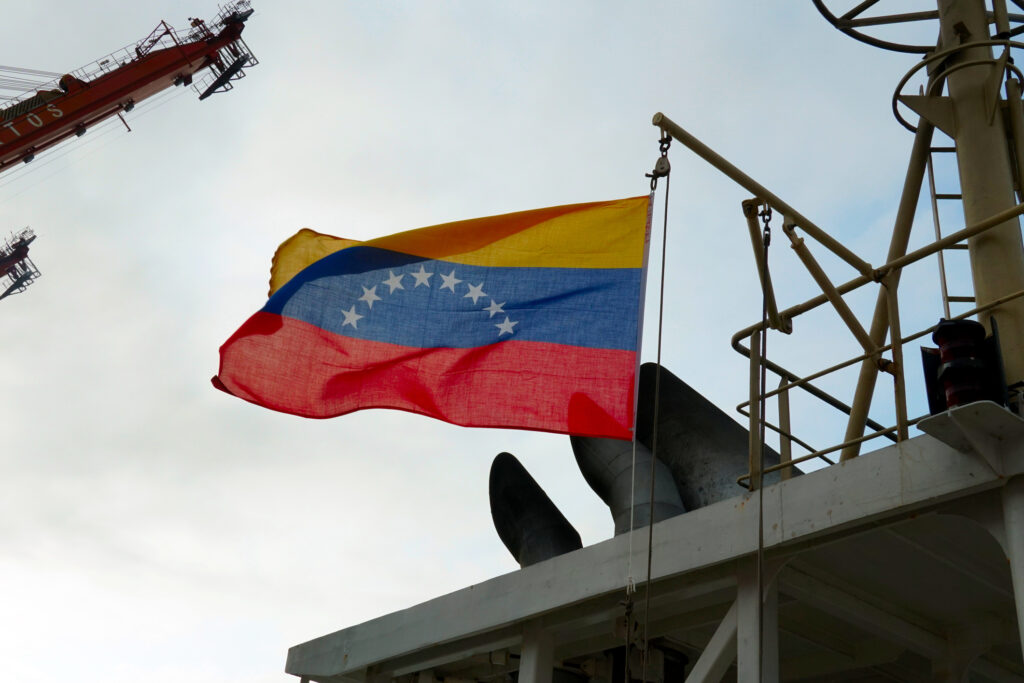
The Geopolitical Chess Match and Market Volatility
The recent diplomatic maneuvering around Venezuela’s vast oil and gas reserves has added another layer of complexity to an already volatile global energy market. While Caracas has reportedly extended significant offers to U.S. companies, Washington’s response has been mixed, creating a landscape of uncertainty that investors must navigate. As of today, Brent crude trades at $90.38, reflecting a significant 9.07% drop from yesterday’s close, while WTI sits at $82.59, down 9.41% – a sharp reversal following a period where Brent shed nearly 20% over the past two weeks, plummeting from $112.78 on March 30 to its current level. This backdrop of price turbulence underscores the market’s sensitivity to any potential shifts in global supply, even theoretical ones.
Venezuelan leader Nicolás Maduro’s administration has reportedly made a sweeping offer to the U.S.: open all Venezuelan oil and gold projects to American companies, grant preferential contracts, redirect crude exports from China to the U.S., and scale back energy and mining deals with Iran and Russia. This aggressive bid was clearly aimed at appeasing the Trump Administration and potentially defusing escalating tensions, which have included U.S. warships in the Caribbean and actions against alleged drug-transporting vessels. However, these broader diplomatic overtures were reportedly rebuffed, with the U.S. Administration instructing officials to cut off such efforts, effectively stalling a potential deal, at least for now. The dramatic swings in crude prices, with Brent falling from its recent highs, highlight the market’s acute sensitivity to geopolitical shifts and supply narratives. While the Venezuelan offer was reportedly rejected, the mere discussion of bringing a significant, albeit currently constrained, producer back into the fold can create ripples, contributing to the current price discovery process.
Strategic Gas Play Amidst Oil Stalemate
Interestingly, while general diplomatic overtures for oil were reportedly shut down, the U.S. Treasury has authorized Shell and the government of Trinidad and Tobago to advance a specific offshore gas field development with Venezuela. This targeted authorization, structured in three distinct stages, signals a nuanced U.S. strategy. The first stage permits negotiations with Venezuela and its state oil and gas firm PDVSA, with a critical caveat: the mandatory inclusion of U.S. firms in the project’s development. Trinidad’s attorney general, John Jeremie, confirmed that “commercial targets for U.S. companies” must be met, though he considers them “reasonable.”
This move suggests a strategic carve-out, potentially prioritizing regional energy security or seeking to establish a foothold for U.S. companies in Venezuela’s resource sector through a less contentious commodity than crude oil. For investors, this creates a specific, albeit limited, opportunity in the Venezuelan energy landscape, demonstrating that not all doors are closed, particularly for natural gas projects that can bolster regional supply. It underscores a U.S. approach that can be both rigid on overarching diplomatic fronts and pragmatic on specific energy projects that align with its strategic interests or those of its allies.
What Investors Are Asking: Venezuela’s Role in Global Supply
Our proprietary reader intent data reveals a keen interest in fundamental supply dynamics, with many investors asking about OPEC+ current production quotas and predictions for the price of oil per barrel by the end of 2026. These questions are particularly pertinent when considering Venezuela’s latent production capacity. If U.S. sanctions were to ease significantly, potentially allowing Venezuelan crude back into global markets, it could materially impact the supply-demand balance. Historically, Venezuela was a major crude exporter, and while its infrastructure has deteriorated under years of underinvestment and sanctions, a renewed influx of investment and expertise could unlock substantial volumes.
Such a scenario would undoubtedly force OPEC+ to reassess its current production strategy. While Venezuela is not an OPEC+ member and thus not bound by their quotas, the potential for new supply from a non-participating producer is a major consideration for the group, especially as they deliberate their future output levels. The prospect of Venezuelan crude re-entering the market is a wild card in the long-term oil price outlook, directly influencing the long-term price forecasts investors are seeking. While current political hurdles remain high, the very discussion of opening up projects introduces a long-term supply vector that cannot be ignored when modeling future market scenarios for the global energy complex.
Forward Outlook: Monitoring Key Catalysts
Looking ahead, several key events on the energy calendar will provide critical context for any future developments regarding Venezuelan supply. The immediate focus is on the OPEC+ JMMC Meeting scheduled for April 19th, followed by the crucial OPEC+ Ministerial Meeting on April 20th. While Venezuela is not an OPEC+ member subject to quotas, the group’s decisions on production levels will set the stage for how any future supply additions, including from non-members like Venezuela, might be absorbed or exacerbate market oversupply. These meetings are pivotal for understanding the global supply trajectory.
Following these high-level discussions, the API Weekly Crude Inventory report on April 21st and the EIA Weekly Petroleum Status Report on April 22nd will offer crucial insights into immediate supply-demand balances in the U.S., a significant consumer market. These reports, alongside the Baker Hughes Rig Count on April 24th, provide real-time indicators of market health and producer sentiment. Further inventory data from API and EIA on April 28th and 29th, respectively, along with the Baker Hughes Rig Count on May 1st, will continue to shape the market narrative. For investors, monitoring these scheduled data releases is essential for understanding the broader market context in which any future Venezuelan supply developments would unfold, influencing both short-term trading strategies and long-term portfolio adjustments. The interplay between geopolitical actions, OPEC+ policy, and fundamental market data will dictate the path forward for crude prices.