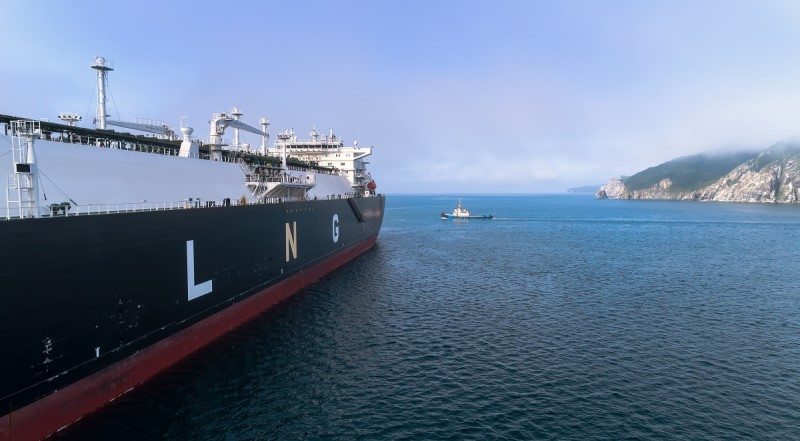
The global energy landscape is undergoing a profound transformation, with liquefied natural gas (LNG) positioned at the forefront of long-term demand growth, even as significant supply expansions loom. This perspective is strongly articulated by ADNOC Gas, which foresees an impending surge in LNG supply through the end of the decade not as a threat, but as a catalyst for sustained demand. The thesis is compelling: lower prices, driven by new projects coming online, will unlock new, price-sensitive markets that, once invested in LNG infrastructure, will not revert to alternative fuels. For investors, understanding this interplay between future supply, price elasticity, and emergent market adoption is critical, especially against a backdrop of current crude market volatility and evolving geopolitical dynamics.
The Looming LNG Supply Wave and Its Demand Creation Potential
ADNOC Gas, a key player in the global energy market, is making a substantial bet on the future of LNG. Their strategy centers on the belief that a forthcoming glut of super-chilled fuel, driven by massive investments in new export terminals including ADNOC’s own Ruwais plant which will more than double its export capacity, will naturally lead to a sustained increase in demand. The logic is straightforward: when prices for a commodity drop significantly, new consumers, particularly in price-sensitive emerging economies, are drawn in. Once these markets commit to the necessary receiving terminals and associated infrastructure, their demand becomes “sticky” and long-term. This view aligns with the International Energy Agency’s projections for record gas demand next year, particularly in critical Asian markets, as well as burgeoning regions in Africa and the Middle East. However, this optimistic outlook is not without its challenges; the example of Pakistan, which has shifted its energy strategy away from LNG due to past uncompetitive pricing and a pivot towards solar, serves as a crucial reminder that price sensitivity is a double-edged sword and market dynamics can evolve.
Navigating Today’s Volatile Crude Market: Implications for Gas Investments
While the long-term outlook for LNG appears robust, investors must contend with immediate market realities. As of today, Brent crude trades at $90.38, marking a significant 9.07% decline, with its day range stretching from $86.08 to $98.97. Similarly, WTI crude stands at $82.59, down 9.41% within a daily range of $78.97 to $90.34. This pronounced volatility is not a one-off event; Brent has seen a substantial depreciation of nearly 20% over the last 14 days, plummeting from $112.78 to its current level. This softness in the crude market creates a complex environment for capital allocation across the energy sector. For some, sustained lower crude prices might make gas, often seen as a cleaner transition fuel, a more attractive long-term investment due to its relative stability and environmental profile. For others, a general downturn in commodity prices might lead to broader investment caution. The competitiveness of LNG in emerging markets, while fundamentally driven by its own price, is also indirectly influenced by the price of crude, which impacts overall energy budgets and investment appetite in these developing economies.
Key Investor Questions: Price Outlook and OPEC+ Strategy at the Forefront
Our proprietary reader intent data reveals that investors are keenly focused on the broader market trajectory, with questions like “what do you predict the price of oil per barrel will be by end of 2026?” and “What are OPEC+ current production quotas?” consistently topping queries. These questions underscore the critical role of OPEC+ decisions in shaping the global energy investment landscape. The upcoming OPEC+ Joint Ministerial Monitoring Committee (JMMC) Meeting on April 19th, followed by the full Ministerial Meeting on April 20th, are pivotal events. Any pronouncements regarding production quotas will directly impact crude supply, influencing prices and, by extension, the economic attractiveness of alternative energy sources like LNG. If OPEC+ maintains or deepens production cuts, it could provide a floor for crude prices, potentially slowing the transition to gas in some regions. Conversely, a decision to increase supply could further pressure crude, making LNG a more cost-competitive option in the energy mix for many nations. Investors are clearly looking for signals on how these decisions will influence the overall investment environment for the remainder of 2026 and beyond.
Forward-Looking Catalysts: Inventory, Rig Counts, and Demand Evolution
Beyond OPEC+ decisions, several other forward-looking catalysts will shape investor sentiment in the coming weeks. The API Weekly Crude Inventory report on April 21st and the EIA Weekly Petroleum Status Report on April 22nd, followed by their subsequent releases on April 28th and 29th, will provide crucial insights into short-term supply and demand dynamics in the U.S. market. Similarly, the Baker Hughes Rig Count on April 24th and May 1st will offer an indication of future production trends. Sustained inventory builds or a consistent decline in active rigs could signal broader market weakness or supply adjustments, directly impacting investor appetite for both crude and gas-focused projects. While these events primarily reflect immediate market conditions, their cumulative impact can influence long-term investment strategies. For ADNOC’s LNG thesis, these data points offer a barometer of the global energy investment climate. Even with short-term fluctuations, the underlying trend of emerging market growth and the “stickiness” of demand once LNG infrastructure is established remain compelling. The challenge for investors is to discern the signal from the noise, focusing on the long-term structural shifts in energy consumption while navigating the inevitable short-term volatility.