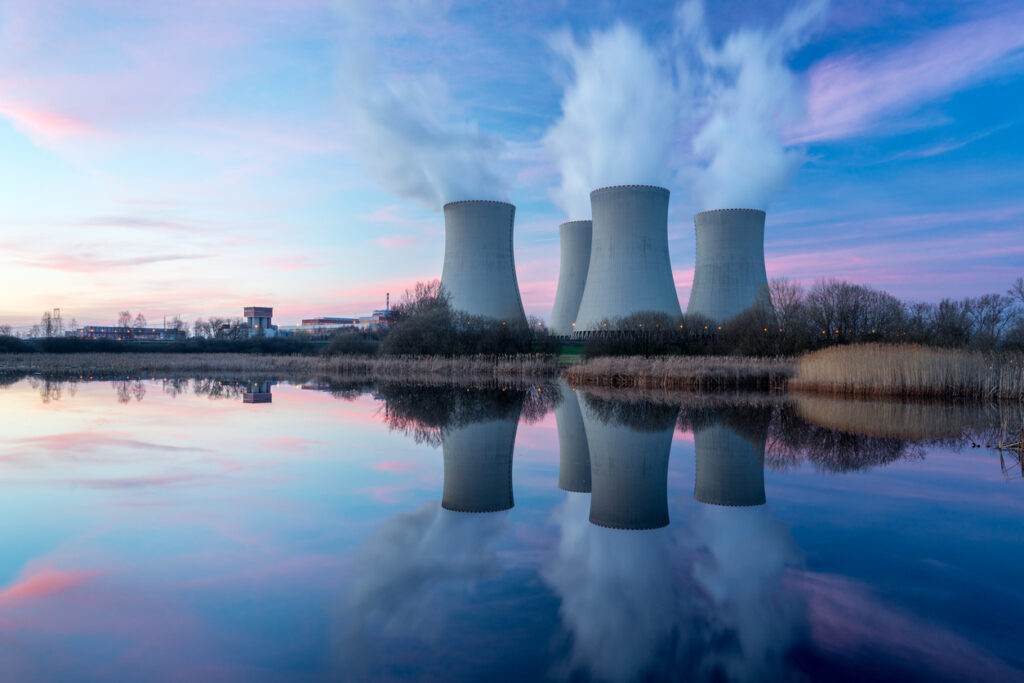
The relentless expansion of artificial intelligence, once a futuristic concept, has rapidly become a tangible force reshaping global energy demand. Far from a gradual shift, the proliferation of data centers required to power AI applications has created an unprecedented surge in electricity consumption, catching many industry observers off guard. While the long-term vision for a decarbonized grid often centers on renewables and advanced nuclear technology, the immediate, unyielding need for reliable baseload power is ushering in a critical and perhaps extended role for natural gas. For astute energy investors, understanding this evolving dynamic is paramount, as it presents both significant opportunities and complex challenges across the energy landscape.
The AI Power Imperative and Nuclear’s Measured Return
The energy footprint of generative AI is staggering, with studies estimating its consumption to be orders of magnitude greater than traditional software. This insatiable demand isn’t just for electricity; it’s for *reliable* electricity, twenty-four hours a day, seven days a week. Downtime for a hyperscale data center is simply not an option. This fundamental requirement exposes a critical vulnerability in a grid heavily reliant on intermittent renewable sources like wind and solar, despite the environmental commitments of Big Tech giants. Consequently, the conversation has pivoted sharply towards baseload alternatives, and nuclear power is experiencing a well-deserved renaissance. Major technology players like Meta and Microsoft have already inked significant power supply agreements with nuclear operators, recognizing the unique combination of high capacity factor and low-emission generation that nuclear provides. These moves underscore a pragmatic shift: while green goals remain, operational continuity for AI infrastructure demands robust, always-on power, a role nuclear is uniquely positioned to fill.
SMRs: The Promise, The Potholes, and the Pacing Challenge
Much of the excitement surrounding nuclear’s resurgence has centered on Small Modular Reactors (SMRs), touted as a more affordable, faster-to-deploy, and inherently safer alternative to conventional gigawatt-scale plants. Media enthusiasm for SMRs has been high, with proposals for new facilities, such as Holtec Corporation’s plans for two SMRs in Michigan, generating local economic optimism. However, the path from concept to commercial operation for SMRs has proven considerably more challenging than anticipated. We’ve seen projects, like NuScale’s initial endeavor, falter due to escalating costs, with projected expenditures surging from $58 per MWh to $89 per MWh, causing investors to retreat. While NuScale has since secured a significant vote of confidence from the Tennessee Valley Authority for a 6 GW deployment across seven states, the reality is that widespread SMR deployment remains years, if not decades, away. The critical gap between immediate AI demand and future nuclear capacity means that another energy source must step in to bridge the interim, and for investors, this interim period represents a prime focus.
Natural Gas: The Indispensable Bridge in a Volatile Market
In the face of immediate, escalating power needs from AI data centers and the protracted timelines for large-scale nuclear and SMR deployment, natural gas emerges as the indispensable bridge fuel. Its ability to provide flexible, dispatchable baseload power, complementing intermittent renewables and offering a lower carbon footprint than coal, makes it the pragmatic solution for the foreseeable future. This dynamic plays out against a backdrop of broader energy market volatility. As of today, Brent Crude trades at $90.38 per barrel, marking a substantial 9.07% decline within the day, with WTI Crude similarly affected at $82.59, down 9.41%. This steep decline is part of a larger trend, with Brent having shed $22.4, or nearly 20%, from $112.78 just two weeks ago on March 30th. Such significant swings in crude prices highlight the inherent uncertainties in global energy markets, driven by geopolitical factors and supply-demand imbalances. For investors, this volatility underscores the value of stable, reliable power generation assets. While crude markets react to global supply cues and geopolitical shifts, the demand for natural gas is increasingly anchored by the concrete, growing requirements of AI infrastructure, offering a more predictable demand-side narrative. Our proprietary data indicates that readers are keenly asking about the future trajectory of oil prices by year-end 2026, reflecting this market uncertainty. In this environment, natural gas, despite its own price fluctuations, offers a compelling investment thesis due to its immediate utility in meeting critical power generation needs that other sources cannot yet reliably fulfill at scale.
Navigating the Future: Investment Opportunities and Risks
The energy landscape is clearly bifurcating: a long-term vision for decarbonization and an immediate, pragmatic need for dispatchable power. For investors, this creates a complex but fertile ground for opportunity. Companies involved in natural gas exploration, production, and particularly midstream infrastructure (pipelines, LNG terminals) stand to benefit from the sustained demand for baseload power. Furthermore, utilities and independent power producers investing in modern, efficient natural gas-fired power plants will likely see increased utilization and revenue streams driven by AI data center buildouts. However, the investment thesis is not without its risks. The upcoming OPEC+ Joint Ministerial Monitoring Committee (JMMC) meeting on April 19th, followed by the full Ministerial Meeting on April 20th, will be critical in shaping global crude supply policies. Any surprise adjustments to production quotas could ripple through the entire energy complex, influencing natural gas pricing and overall investor sentiment. Domestically, the regular API and EIA Weekly Petroleum Status Reports on April 21st and 22nd, and again on April 28th and 29th, along with the Baker Hughes Rig Count on April 24th and May 1st, will provide vital indicators on U.S. production and inventory levels, directly impacting natural gas supply dynamics. Investors are also seeking insights into specific company performances, reflecting a desire to pinpoint resilient players amidst market shifts. The challenge for energy companies will be to balance immediate profitability from natural gas with strategic investments in lower-carbon solutions, including advanced nuclear, to ensure long-term viability in an evolving energy mix. The “nuclear age” for data centers is indeed arriving, but natural gas is undeniably paving the way.