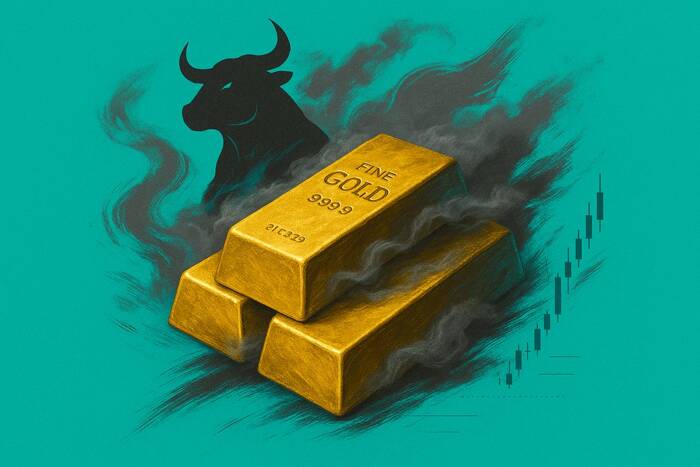
The remarkable ascent of gold, often considered a bellwether for broader commodity strength, has captivated investors. With gold prices surging an impressive 120% since January 2023 and an astonishing 50% in 2025 alone, its performance has significantly outpaced major equity indices even during a strong bull market. This unprecedented rally, defying traditional safe-haven dynamics, suggests a powerful underlying force at play across hard assets. For oil and gas investors, this isn’t just a shiny anomaly; it’s a critical signal indicating that the macro environment is ripe for a potential commodity supercycle, one that could profoundly impact energy markets. Understanding the drivers behind gold’s breakout is key to strategically positioning within the oil and gas sector.
Macro Drivers Point to Enduring Commodity Strength
The factors fueling gold’s historic run are deeply rooted in global macroeconomic shifts, which inherently support a broader commodity rally. We are witnessing a confluence of conditions: escalating sovereign deficits, persistent inflationary pressures, and a weakening U.S. dollar, alongside expectations of continued monetary easing. Historically, such an environment erodes the purchasing power of fiat currencies, pushing capital into tangible assets. Gold, as the ultimate store of value, benefits immensely, but the implications extend directly to essential industrial commodities like crude oil and natural gas. As central banks worldwide continue to navigate complex economic landscapes, the fundamental appeal of real assets as a hedge against currency debasement and inflation becomes increasingly pronounced. This macro backdrop suggests that the underlying demand for commodities, driven by both speculative and fundamental forces, may only intensify.
Navigating Oil’s Short-Term Volatility Amidst Long-Term Potential
Despite the powerful signals from the gold market, crude oil has experienced significant near-term volatility, prompting questions from our investor community about the outlook for prices. As of today, Brent Crude trades at $90.38 per barrel, marking a substantial daily decline of 9.07%, with its intraday range spanning $86.08 to $98.97. Similarly, WTI Crude stands at $82.59, down 9.41% for the day, having traded between $78.97 and $90.34. This recent downturn is particularly stark when observing the 14-day trend for Brent, which has fallen from $112.78 on March 30th to its current level, representing a significant 19.9% depreciation. This sharp correction, however, should be evaluated within the broader context of a potential commodity supercycle. While short-term profit-taking, shifts in demand sentiment, or even geopolitical developments can trigger such price movements, the macro conditions that support gold’s rally – inflation, dollar weakness, and expansive fiscal policies – remain largely intact and continue to underpin the long-term investment thesis for energy assets. Investors are keenly asking about the price of oil per barrel by the end of 2026, and while daily fluctuations are expected, the overarching supercycle narrative suggests a constructive long-term outlook.
OPEC+ Decisions and Upcoming Catalysts
The path forward for oil prices, particularly in the coming weeks, will be heavily influenced by critical supply-side decisions and inventory data. Our proprietary calendar highlights the upcoming OPEC+ Ministerial Meeting on April 19th. This event is paramount for investors, who are actively inquiring about OPEC+’s current production quotas and their future strategy. Given the recent price softness, there’s heightened anticipation regarding whether the alliance will reaffirm existing production cuts or implement further reductions to stabilize the market. Any decision from this meeting will have immediate and lasting impacts on global supply-demand balances, directly influencing price trajectories into the latter half of 2026. Beyond OPEC+, a series of regular data releases will offer crucial insights into market fundamentals. The API Weekly Crude Inventory reports on April 21st and 28th, followed by the EIA Weekly Petroleum Status Reports on April 22nd and 29th, will provide vital snapshots of U.S. crude stockpiles, refinery activity, and demand indicators. These reports are often short-term catalysts, capable of moving prices based on unexpected builds or draws, and are essential for investors monitoring the immediate market health.
Positioning for the Energy Supercycle
The gold rally, coupled with the persistent macro backdrop of inflation and currency devaluation, strongly suggests that we are in the early to mid-stages of a broader commodity supercycle. For oil and gas investors, this environment demands strategic positioning. While short-term volatility, as seen in crude prices today, is inherent to commodity markets, the long-term drivers favor increased investment in the energy sector. Companies with strong balance sheets, efficient operations, and diversified asset portfolios are best positioned to capitalize. This includes integrated majors with upstream, midstream, and downstream operations, as well as focused exploration and production (E&P) firms poised to benefit from higher realized prices. Furthermore, the natural gas sector, often correlated with crude oil but driven by its own distinct supply-demand dynamics (including LNG export growth), also merits attention. Investors should consider the defensive qualities of energy assets during periods of inflation and dollar weakness, viewing dips as potential entry points rather than signals of fundamental weakness. The confluence of macro tailwinds and potential supply discipline from producers like OPEC+ paints a compelling picture for energy investments over the medium to long term, aligning with the broader commodity strength indicated by gold’s historic performance.


