Introduction
The recent announcement of EnerMech securing a significant contract for a major offshore gas development in Australia’s East Browse basin underscores the enduring strategic importance of natural gas in the global energy mix and the resilience of the upstream service sector. This award, focused on crucial subsea pre-commissioning and specialist services for the project’s second installation phase between October 2025 and April 2026, signals continued investment in long-life gas assets. For investors, this isn’t just a headline about a service provider; it’s a testament to the ongoing commitment to gas as a transitional fuel, offering a glimpse into future capital deployment in a market grappling with both volatility and the imperatives of energy security.
Australia’s Strategic Gas Expansion: A Long-Term View
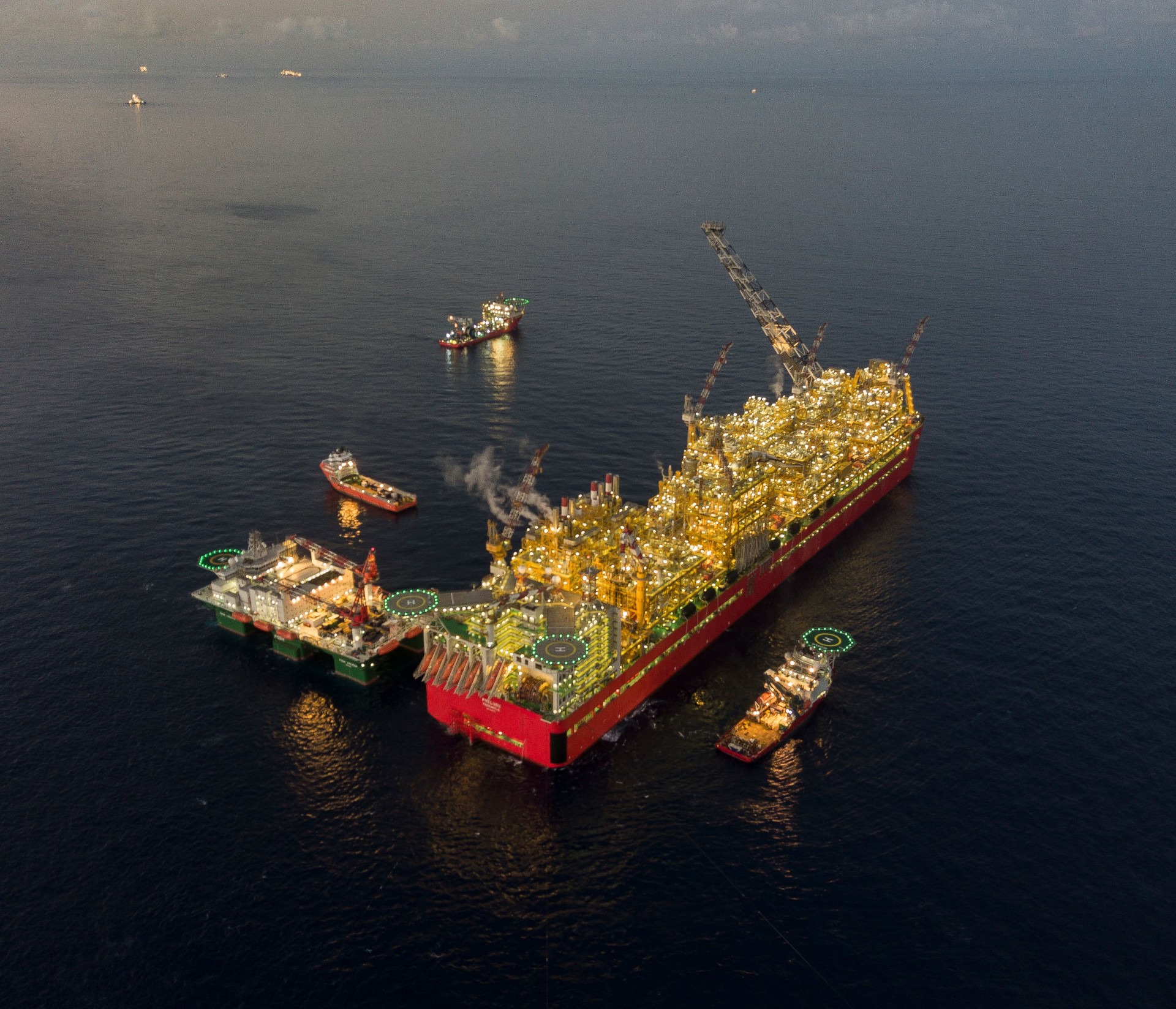
EnerMech’s involvement in the East Browse basin project, supporting a floating liquefied natural gas (FLNG) facility with integrated work across Malaysia and Australia, highlights the complex and large-scale nature of modern offshore developments. The contract scope, encompassing riser and umbilical services such as flooding, top-up, and leak testing of flexible risers, alongside post-loadout and post-installation testing of dynamic umbilicals, demonstrates the highly specialized expertise required for such endeavors. This isn’t EnerMech’s first rodeo; their track record on other Australian LNG giants like Wheatstone, Gorgon, and Pluto LNG 2 provides a strong foundation for investor confidence in their capability to execute. These projects are not short-term plays but multi-decade investments, positioning Australia as a critical global LNG supplier, particularly to energy-hungry Asian markets. The commitment from operators to move forward with such significant capital projects, even amidst evolving energy policies, points to a robust long-term demand outlook for natural gas.
Navigating Market Headwinds: Crude Volatility vs. Gas Investment Stability
The backdrop to this long-term investment in gas infrastructure is a crude market experiencing considerable turbulence. As of today, Brent crude trades at $90.38 per barrel, marking a sharp decline of 9.07% from its opening, with its daily range spanning from $86.08 to $98.97. WTI crude mirrors this weakness, settling at $82.59, down 9.41% within a day range of $78.97 to $90.34. This intraday volatility is part of a more significant trend; Brent has shed nearly 20% over the past two weeks, dropping from $112.78 on March 30th to today’s levels. Gasoline prices also reflect this bearish sentiment, currently at $2.93, a 5.18% decrease. For investors, this stark divergence between crude market instability and sustained investment in gas projects presents a compelling strategic choice. While crude prices are often swayed by immediate geopolitical events and speculative trading, large-scale gas developments like East Browse are underpinned by multi-year demand forecasts, long-term supply agreements, and the critical role of LNG in energy transition and security. Companies like EnerMech, providing essential services, offer exposure to this long-term demand curve without direct commodity price exposure, instead benefiting from project execution and operational expenditure.
Upcoming Catalysts and Investor Sentiment: What Lies Ahead
Our proprietary reader intent data shows a clear preoccupation among investors with forward-looking projections, notably “what do you predict the price of oil per barrel will be by end of 2026?” This highlights the pervasive uncertainty influencing investment decisions in the energy sector. While the EnerMech contract points to a long-term conviction in gas, the immediate horizon holds several key events that could either stabilize or further disrupt market sentiment. Today, April 19th, marks the OPEC+ Full Ministerial Meeting, a pivotal event where production quotas and supply strategies will be debated. Any significant announcement from this gathering could trigger substantial shifts in crude prices, indirectly affecting the broader energy investment landscape. Looking ahead, the API Weekly Crude Inventory reports on April 21st and 28th, followed by the EIA Weekly Petroleum Status Reports on April 22nd and 29th, will offer crucial insights into current demand and supply balances in the U.S. market. Furthermore, the Baker Hughes Rig Count reports on April 24th and May 1st will serve as a bellwether for drilling activity and future production trends. These events, while primarily focused on crude, collectively shape the narrative around global energy supply, demand, and pricing, which are fundamental considerations for financing and executing multi-billion-dollar gas projects like the one EnerMech is now supporting.
Investing in the Energy Transition’s Foundation: The Service Sector Angle
EnerMech Chief Executive Charles ‘Chuck’ Davison Jr.’s statement about “lower-carbon fuels increasingly contributing to the overall energy mix” resonates with the investment thesis for natural gas. Gas is widely recognized as a crucial bridge fuel, offering a cleaner alternative to coal and providing flexible power generation to complement intermittent renewables. For investors, this makes strategic gas developments, particularly those involving advanced FLNG technology, highly attractive. The East Browse project’s reliance on a company with “proven capability” and a “track record of bringing agile project management to meet dynamic mobilization schedules,” as noted by EnerMech VP Jason Jeow, underscores the importance of operational excellence in de-risking these complex endeavors. Investing in the energy service sector, particularly in companies supporting these foundational gas projects, provides a robust pathway to participate in the energy transition without the direct volatility of commodity prices. These firms benefit from the long-term capital expenditure cycles of major energy players, offering a more predictable revenue stream tied to project execution and maintenance. As global energy demand continues to grow and the transition progresses, specialized service providers in key basins like Australia will remain indispensable, cementing their role as vital components of any diversified energy portfolio.