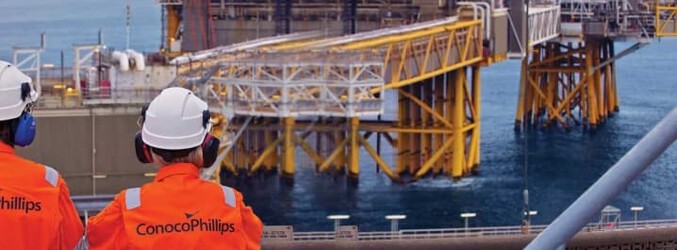
ConocoPhillips’ recently announced Heads of Agreement (HOA) with Equatorial Guinea to develop offshore Blocks B/4 and EG-27 marks a significant stride in the global gas market and a pivotal moment for both the U.S. major and the Central African nation. This deal, poised to unlock up to $9 billion in capital investment, underscores a strategic push by Equatorial Guinea to cement its status as a regional gas processing and LNG export hub, while offering ConocoPhillips a substantial long-term production asset. For investors, this development signals a clear commitment to monetizing vast natural gas resources, presenting both opportunities and considerations in a dynamic energy landscape.
Equatorial Guinea’s Strategic Gas Mega Hub Expansion
The core of this agreement lies in its potential to significantly bolster Equatorial Guinea’s Gas Mega Hub (GMH) initiative. By channeling new gas volumes from Blocks B/4 and EG-27 to the existing Punta Europa complex, the nation aims to maximize the value of its stranded and associated gas. Block EG-27 alone is estimated to hold a substantial 2.8 trillion cubic feet (Tcf) of gas, complemented by Block B/4’s 0.7 Tcf. These combined resources are projected to fuel over two decades of production, a crucial factor for long-term revenue generation and energy security for the country. Minister of Hydrocarbons Antonio Oburu Ondo emphasized that efficient development could restore national output to levels not seen since before 2014, a powerful statement on the economic impact this partnership is expected to deliver. For ConocoPhillips, this represents a strategic expansion of its footprint in African gas plays, securing a significant feedstock source that will generate hundreds of millions of cubic feet of gas per day for both domestic consumption and lucrative LNG exports, following the first LNG cargo from Punta Europa in June 2025.
Navigating Current Market Volatility and Future Prospects
The investment landscape for large-scale energy projects is always influenced by prevailing market conditions, and this ConocoPhillips deal is no exception. As of today, Brent Crude trades at $90.38 per barrel, reflecting a sharp 9.07% decline within the day, with its range fluctuating between $86.08 and $98.97. This daily dip is part of a broader trend, with Brent having fallen by nearly 20% from $112.78 on March 30th to its current level on April 17th. Similarly, WTI Crude stands at $82.59, down 9.41% today, while gasoline prices have also seen a 5.18% drop to $2.93. While this volatility primarily impacts crude oil, it inevitably shapes the broader investor sentiment across the energy sector. Long-term gas projects, though less susceptible to daily price swings than crude, still rely on a stable and predictable investment environment. The estimated $9 billion capital investment for these blocks underscores a significant long-term commitment, suggesting confidence in the sustained demand for natural gas and LNG despite current market fluctuations.
Upcoming Events and Investor Outlook
Looking ahead, the next two weeks hold several key events that could further shape the market sentiment surrounding investments in projects like the ConocoPhillips-Equatorial Guinea partnership. The most immediate is the OPEC+ Full Ministerial Meeting scheduled for April 19th. Investor attention will be keenly focused on any decisions regarding production quotas, which could significantly influence crude oil prices and, by extension, the overall energy market outlook. Decisions from this meeting could either stabilize or further rattle oil prices, impacting the perceived risk and reward of large-scale upstream investments. Furthermore, weekly data releases such as the API Crude Inventory on April 21st and 28th, and the EIA Weekly Petroleum Status Report on April 22nd and 29th, will provide critical insights into supply-demand dynamics in the U.S., a major consumer market. These reports, alongside the Baker Hughes Rig Count on April 24th and May 1st, help investors gauge activity levels and future supply trajectories. For a project targeting over two decades of production, understanding these macro trends is crucial, as they inform long-term price forecasts and strategic capital allocation decisions. Equatorial Guinea’s planned 2026 licensing round, coupled with ongoing reviews of hydrocarbons, tax, and labor laws, also points to a forward-looking policy environment designed to attract sustained investment.
Addressing Investor Concerns and Long-Term Value
Our proprietary reader intent data reveals a common thread among investors this week: a keen interest in long-term oil price predictions and the stability of supply. Questions like “What do you predict the price of oil per barrel will be by end of 2026?” and “What are OPEC+ current production quotas?” highlight a desire for clarity amidst market uncertainty. The ConocoPhillips deal directly addresses aspects of this investor appetite by focusing on natural gas, a fuel with a different demand profile and often seen as a transitional energy source. While crude oil prices are a significant concern, a major gas development like this signals a strategic pivot and diversification for energy majors. The $9 billion investment into Blocks B/4 and EG-27, with a projected 20-year production lifespan, indicates a belief in the enduring demand for natural gas, particularly in LNG form, as global energy transitions unfold. For investors seeking stability and long-term growth in the energy sector, such a robust commitment to gas monetization in an established LNG hub like Punta Europa offers a compelling narrative, balancing the immediate volatility of crude markets with a strategic play in the global gas supply chain.