US Intensifies Sanctions Enforcement on Iranian Oil, Elevating Global Market Tensions
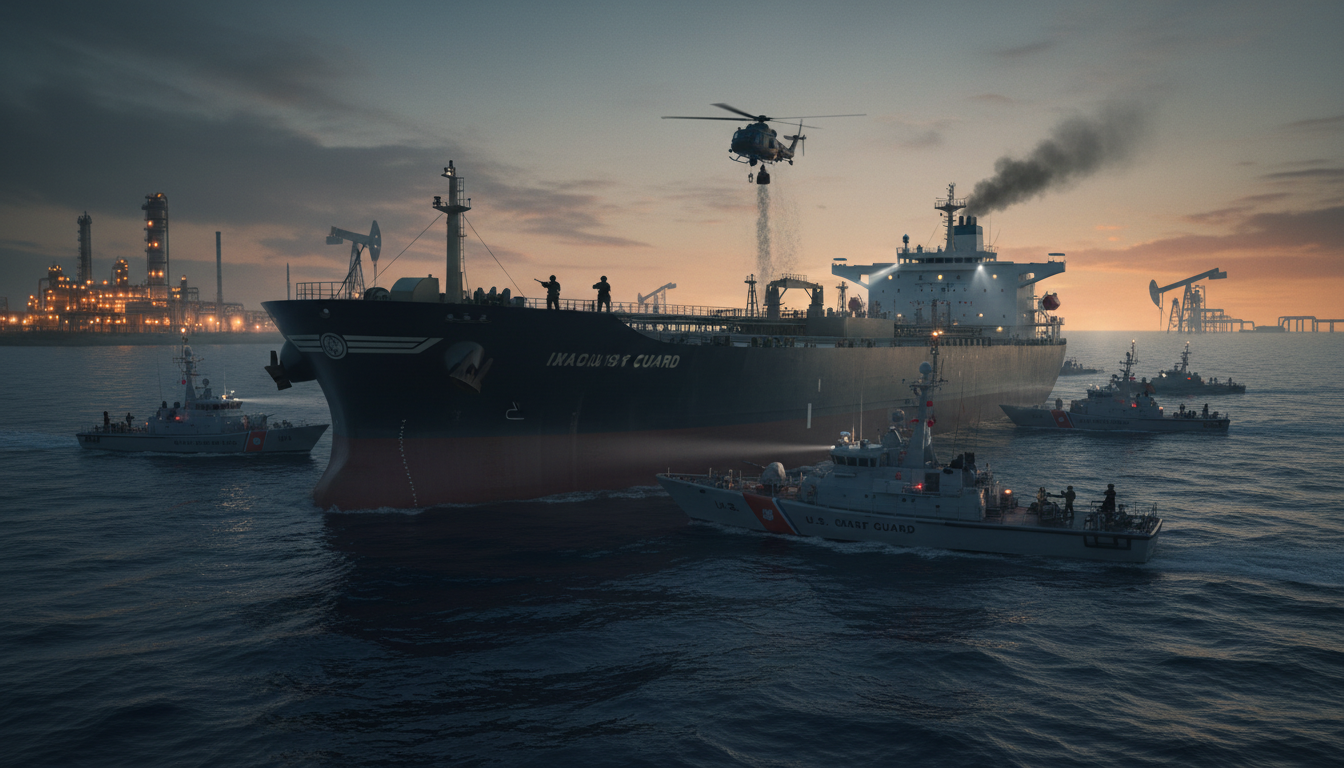
In a powerful demonstration of its commitment to curbing illicit oil flows, U.S. military forces recently intercepted and boarded a sanctioned supertanker in the Indian Ocean, carrying an estimated 2 million barrels of Iranian crude. This latest operation underscores a widening blockade against Tehran’s oil trade, extending far beyond the Persian Gulf and adding another layer of volatility to an already tight global energy market.
The overnight maneuver targeted the M/T Majestic X, also known as the Phonix, a Very Large Crude Carrier (VLCC) infamous for its capacity to transport substantial volumes of crude oil. According to official statements, U.S. forces executed a maritime interdiction and right-of-visit boarding of the vessel, which was described as stateless and reportedly sailing under a false flag within the Indo-Pacific Command’s area of responsibility. This decisive action, occurring hundreds of miles east of Sri Lanka, serves as a stark reminder to oil and gas investors that Washington possesses both the will and the capability to enforce sanctions on Iranian petroleum, irrespective of the distance from Iranian territorial waters.
Expanding the Blockade: A Multi-Front Enforcement Campaign
The interdiction of the Majestic X is not an isolated incident but rather part of an intensified, multi-front enforcement campaign. It follows closely on the heels of several other high-profile interceptions targeting Iranian-linked vessels. Earlier in the week, U.S. Central Command confirmed the interdiction of two other VLCCs, the Hedy and the Hero II, which are now reportedly anchored at Chabahar, an Iranian port on the Gulf of Oman, after attempting to breach the American blockade. Furthermore, another tanker, the Dorena, remains under U.S. Navy escort in the Indian Ocean after a previous attempt to circumvent the cordon.
Since the onset of this concerted American enforcement effort, U.S. forces have directed a total of 29 vessels to alter course or return to port, signifying a significant disruption to Iran’s maritime activities. This broader blockade, designed to curtail Tehran’s ability to finance its regional operations through oil sales, extends its reach well beyond the historically volatile Persian Gulf, projecting American naval power and regulatory authority across a vast expanse of the Indian Ocean. Analytics firms tracking maritime traffic, such as Tankertrackers.com, have independently corroborated the observation of at least six tankers subject to U.S. interdiction in various forms.
Tehran’s Retaliation and the Strait of Hormuz
While the U.S. ratchets up pressure on Iran’s illicit oil exports, Tehran has simultaneously escalated its own disruptive tactics within the critical Strait of Hormuz. This vital chokepoint, through which a substantial portion of the world’s seaborne oil passes, has seen its commercial traffic severely impeded by Iranian actions. Recently, Iran reportedly attacked at least three vessels within the waterway, diverting two of them into its own waters, further highlighting the escalating risks for maritime shipping.
These Iranian provocations have effectively brought commercial passage through the Strait of Hormuz to a near standstill for non-Iranian vessels carrying sanctioned cargo. This critical artery, previously responsible for channeling hundreds of millions of barrels of oil and fuel to global markets, is now operating at a mere fraction of its peacetime capacity. The net effect of both U.S. sanctions enforcement and Iranian retaliatory actions has been a dramatic constriction of oil flows, contributing directly to an environment of elevated oil and gas prices.
Quantifying the Supply Loss and Market Impact
The combined impact of U.S. interdictions and Iranian disruptions has created a significant global oil supply deficit. Analysts estimate that hundreds of millions of barrels of crude have been prevented from reaching international markets, a trend showing little sign of abating. The curtailment of shipping through the Strait of Hormuz, even for a relatively short period, carries profound implications for global energy security and pricing.
Russell Hardy, the chief executive officer of Vitol Group, one of the world’s largest independent oil traders, articulated the gravity of the situation at the FT Commodities Global Summit. Hardy warned of a “guaranteed supply loss of around 1 billion barrels,” emphasizing that even if the Strait were to reopen today, the time required to revive flows to pre-disruption levels would sustain this deficit for an extended period. This substantial, long-term supply loss, coupled with ongoing production cuts by various producer nations, forms a critical consideration for oil and gas investors assessing future price trajectories and market stability.
For investors in the crude oil markets, these ongoing geopolitical tensions represent a significant source of upward price pressure. The active enforcement of sanctions by the U.S., combined with Iran’s willingness to disrupt crucial shipping lanes, highlights the persistent fragility of global energy supply chains. Monitoring these developments, including naval movements, diplomatic efforts, and the ever-present risk of escalation, remains paramount for informed decision-making in the dynamic landscape of oil and gas investing.
Source