Offshore Wind’s Regulatory Gauntlet: A Glimmer of Hope Amidst Broader Energy Volatility
The energy investment landscape is a complex tapestry of technological innovation, geopolitical currents, and shifting regulatory sands. This week, investors witnessed a stark illustration of this complexity as shares of Danish renewables giant Orsted saw a significant uptick following a pivotal U.S. court ruling. While this legal victory offers a much-needed reprieve for a company battered by policy uncertainty and operational setbacks, it arrives against a backdrop of considerable volatility in the broader energy markets, particularly in crude oil. For astute investors, this moment offers a crucial opportunity to assess the inherent risks and rewards across the energy spectrum, from the promise of offshore wind to the enduring influence of traditional hydrocarbons.
Regulatory Reversal Offers Tailwind for Revolution Wind
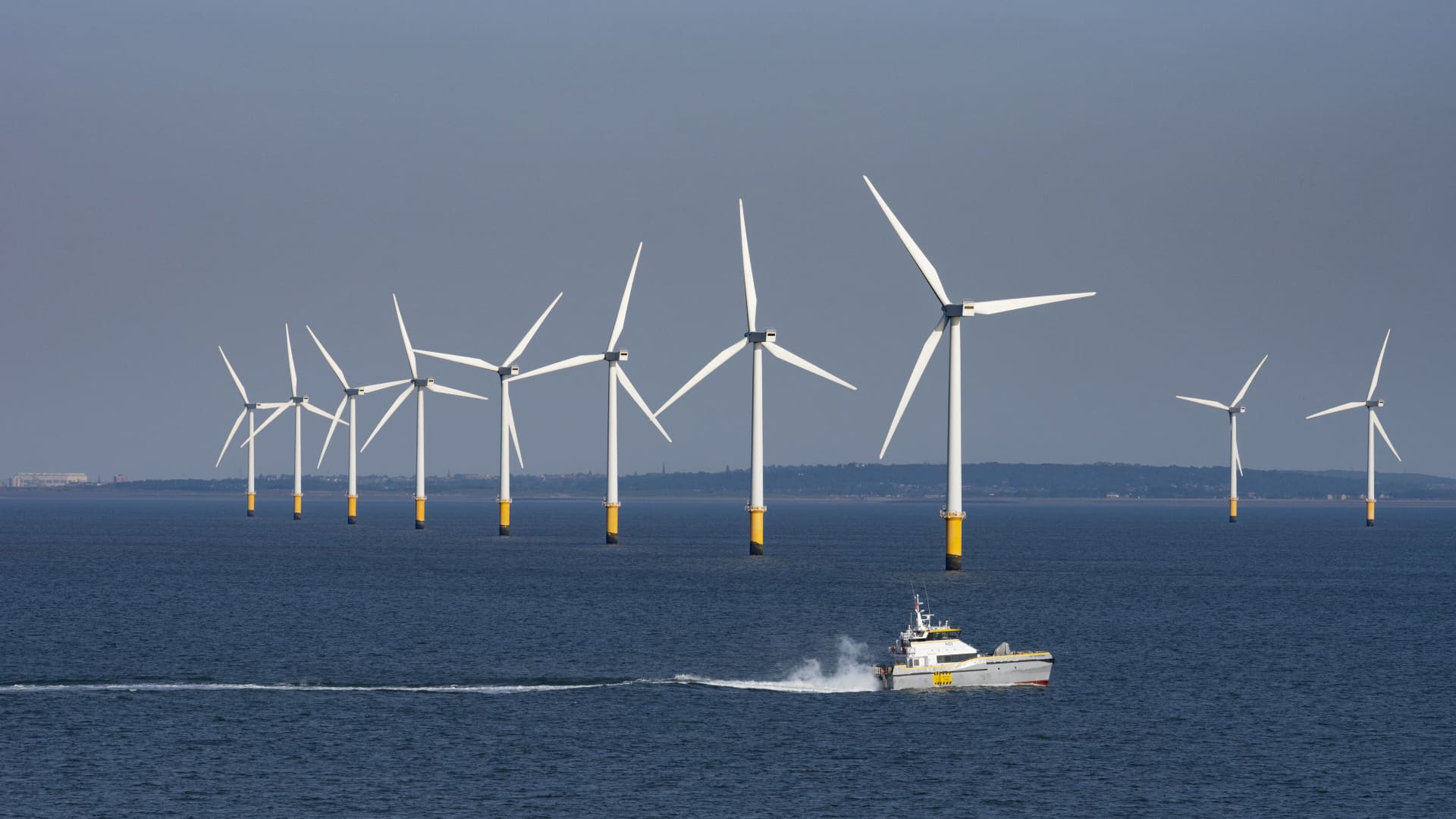
Orsted’s stock experienced a welcome surge this week, climbing approximately 6.6%, a notable rebound for a company whose shares had recently plumbed new record lows. This positive movement was catalyzed by a U.S. District Court ruling that granted a preliminary injunction, effectively overturning a previous stop-work order issued by the Trump administration. The decision allows Orsted to resume construction on its nearly completed Revolution Wind project, situated off the coasts of Rhode Island and Connecticut. This legal victory is significant, allowing the firm to push forward with a key project that had been stalled amidst an aggressive stance from the U.S. president towards renewable energy. The company had previously seen its shares tumble by 22.4% this year, exacerbated by the administration’s policy shifts, lower-than-normal offshore wind speeds in July and August that impacted its full-year operating profit outlook, and a substantial 60 billion Danish krone ($9.48 billion) rights issue to shore up capital. The resumption of work on Revolution Wind provides a tangible step towards project completion and revenue generation, potentially stabilizing investor confidence in the face of ongoing policy challenges.
Crude Markets Under Pressure as Investors Eye OPEC+
While the offshore wind sector grapples with localized regulatory victories and challenges, the broader energy market, particularly crude oil, has faced significant downward pressure. As of today, Brent Crude trades at $90.38 per barrel, marking a sharp 9.07% decline within the day’s trading range of $86.08 to $98.97. Similarly, WTI Crude has fallen to $82.59, down 9.41% from its open, fluctuating between $78.97 and $90.34. This recent slide is part of a more extended trend; over the past 14 days, Brent crude has plummeted by $20.91, or 18.5%, from $112.78 on March 30th to $91.87 on April 17th. This significant correction underscores the inherent volatility in the global oil market, driven by a confluence of demand concerns, inventory data, and geopolitical developments. Investors are keenly observing these price movements, with many asking about the trajectory of oil prices for the remainder of 2026. The recent decline, despite ongoing geopolitical tensions, suggests a recalibration of market expectations, perhaps signaling concerns over global economic growth or a perceived easing of supply constraints.
Addressing Investor Concerns: Policy, Quotas, and Predictions
Our proprietary reader intent data reveals a clear focus among investors on understanding the forces shaping both traditional and new energy markets. Questions ranging from specific stock performance predictions for companies like Repsol to broad inquiries about the price of oil per barrel by the end of 2026 highlight a desire for clarity in an uncertain environment. This week’s court victory for Orsted, while positive, reminds us that regulatory risk remains a major factor for renewable energy investments. The Trump administration’s initial actions, including the suspension of new wind leases and the withdrawal of $679 million in funding for offshore wind infrastructure, illustrate the profound impact political shifts can have on project viability and investor returns. Meanwhile, in the oil sector, investors are also closely monitoring OPEC+’s influence, with frequent queries about current production quotas. This dichotomy underscores a fundamental investment challenge: navigating the overt policy interventions in renewables versus the more opaque, yet equally impactful, supply management strategies of oil cartels. Both sectors demand a vigilant eye on policy and market fundamentals, as political will and cartel decisions can override other market signals.
Upcoming Catalysts and Forward-Looking Analysis
Looking ahead, the energy market is set for several key events that will undoubtedly shape price action and investor sentiment. The immediate focus for the oil market shifts to the upcoming OPEC+ meetings. The Joint Ministerial Monitoring Committee (JMMC) convenes tomorrow, April 18th, followed by the full OPEC+ Ministerial Meeting on Sunday, April 19th. These meetings are critical for investors seeking clarity on production quotas and overall supply strategy, especially given the recent downward pressure on crude prices. Following these, the market will turn its attention to weekly inventory data, with the API Weekly Crude Inventory reports scheduled for April 21st and April 28th, and the EIA Weekly Petroleum Status Reports on April 22nd and April 29th. These reports offer vital insights into U.S. supply and demand dynamics, often leading to immediate price reactions. Further insights into drilling activity will come from the Baker Hughes Rig Count on April 24th and May 1st. For the renewable sector, while there isn’t a single “OPEC+” equivalent event, the ongoing legal proceedings surrounding Revolution Wind and similar projects will continue to be a significant forward-looking catalyst. The court’s preliminary injunction is not a final ruling, meaning continued legal battles could introduce further delays or uncertainty. Investors in Orsted and the broader offshore wind space must remain attuned to policy statements, funding allocations, and legal developments, as these will dictate the pace and profitability of the energy transition in key markets.