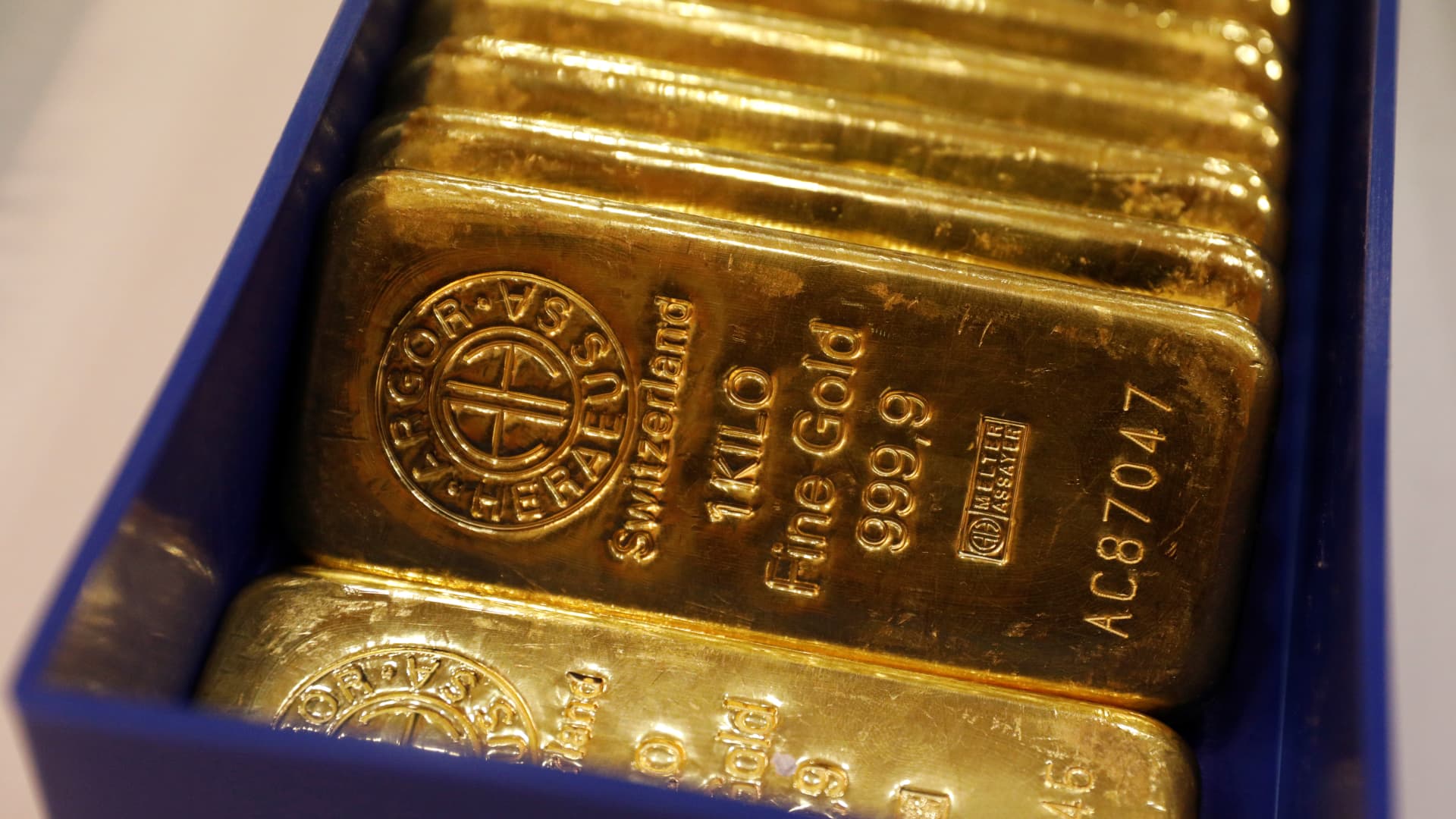
The investment landscape is rarely static, and recent analysis from a major financial institution, highlighting gold miners as a top trade, certainly captures attention. For oil and gas investors, this recommendation prompts a crucial question: What does a bullish outlook on gold signify for the energy market, and how should it influence portfolio strategy as we approach the year-end?
Gold’s Shimmer Amidst Broader Market Shifts
The allure of gold as a safe-haven asset, particularly during periods of economic uncertainty or geopolitical tension, is well-documented. Recent analysis points to the precious metal’s impressive performance, with spot gold already soaring 38% this year, pushing its value above $3,600 per ounce. This robust rally is attributed to sustained demand from central banks and exchange-traded funds, with expectations for an additional 14% price appreciation through 2026. This optimism naturally extends to gold mining stocks, which are anticipated to rally in tandem with the underlying commodity. Indeed, several miners have seen extraordinary gains this year, with Dakota Gold, Anglogold Ashanti, and Newmont experiencing a doubling in value, while SSR Mining has impressively tripled. Even Perpetua Resources and Royal Gold have posted significant gains of approximately 75% and 41%, respectively. This performance underscores a clear market sentiment favoring perceived stability and store-of-value assets, a sentiment that energy investors must consider in their own strategic planning.
Energy Market Dynamics: A Contrasting Narrative
While gold shines, the oil and gas sector presents a more nuanced and, at times, volatile picture. Unlike the steady upward trajectory seen in precious metals, crude prices have recently faced headwinds. As of today, Brent crude trades at $98.17, reflecting a 1.23% decline within a day range of $97.92 to $98.58. WTI crude similarly saw a dip, currently at $89.89, down 1.4% within its daily range of $89.57 to $90.21. Even gasoline prices have softened slightly to $3.09, a 0.32% decrease. This recent snapshot is part of a broader trend: over the past 14 days, Brent crude has shed a significant $14, moving from $112.57 to $98.57, representing a notable 12.4% decrease. This divergence in performance raises critical questions for investors: Is capital rotating out of cyclical commodities like oil and into defensive assets, or does this dip in energy prices present a compelling buying opportunity for those with a long-term view? The answer likely lies in a careful evaluation of upcoming catalysts and fundamental market drivers unique to the energy sector.
Anticipating Key Catalysts: A Look Ahead for Oil & Gas
For oil and gas investors, the immediate future is packed with critical events that could significantly influence market direction. Our proprietary reader intent data highlights a strong focus on OPEC+ production quotas and the intricate factors powering current Brent crude prices, signaling a clear investor appetite for clarity on supply-side dynamics. This makes the upcoming OPEC+ Joint Ministerial Monitoring Committee (JMMC) on April 18th, followed by the full Ministerial Meeting on April 20th, particularly pivotal. These gatherings will provide crucial insights into whether current production agreements will be maintained, adjusted, or even tightened, directly impacting global crude supply and, consequently, prices. Beyond OPEC+, the industry’s pulse is regularly monitored through the Baker Hughes Rig Count reports, scheduled for April 17th and April 24th. These reports offer a granular view of drilling activity and potential future production trends in North America. Complementing this, the weekly API and EIA crude inventory reports, slated for April 21st/22nd and April 28th/29th, will provide essential data on U.S. supply and demand balances, offering a real-time gauge of market health. Each of these events serves as a potential market mover, requiring active monitoring and strategic positioning from energy investors, who are constantly seeking to understand the underlying data that drives market movements, as evidenced by questions about our platform’s data sources and models.
Portfolio Strategy: Diversification vs. Deep Dive in Energy
Given the strong recommendation for gold miners and the contrasting performance in the energy sector, oil and gas investors are faced with strategic choices. Is this a signal to diversify some capital into precious metals, or does it underscore a potential undervaluation in energy assets that warrants a deeper dive? The broader market context, including an expectation for the S&P 500 to rise by 2% through year-end and 6% through mid-2026, suggests a generally constructive outlook for equities, yet with a distinct preference for certain segments. The gold call can be seen as a defensive play within this positive market, seeking assets with less correlation to economic cycles or offering inflation protection. However, for those focused on the energy sector, the recent dip in crude prices, coupled with upcoming events that could introduce significant volatility or upside, presents a different kind of opportunity. The keen interest from our readers in OPEC+ quotas and detailed market data underscores a desire to understand and capitalize on the fundamental drivers of oil and gas. While the broader market may favor plays on improving capital markets or companies with high floating rate debt benefiting from potential interest rate cuts, energy investors must weigh these against the specific supply-demand dynamics and geopolitical influences that uniquely shape the oil and gas landscape. Strategic positioning now, informed by both global market sentiment and granular energy data, will be key to navigating the final quarter of the year.